What “Gourmet” Means on a Pizza Menu
On most menus it does not mean better ingredients. It means a named, fixed combination that the kitchen has already worked out — which is more useful than it sounds.
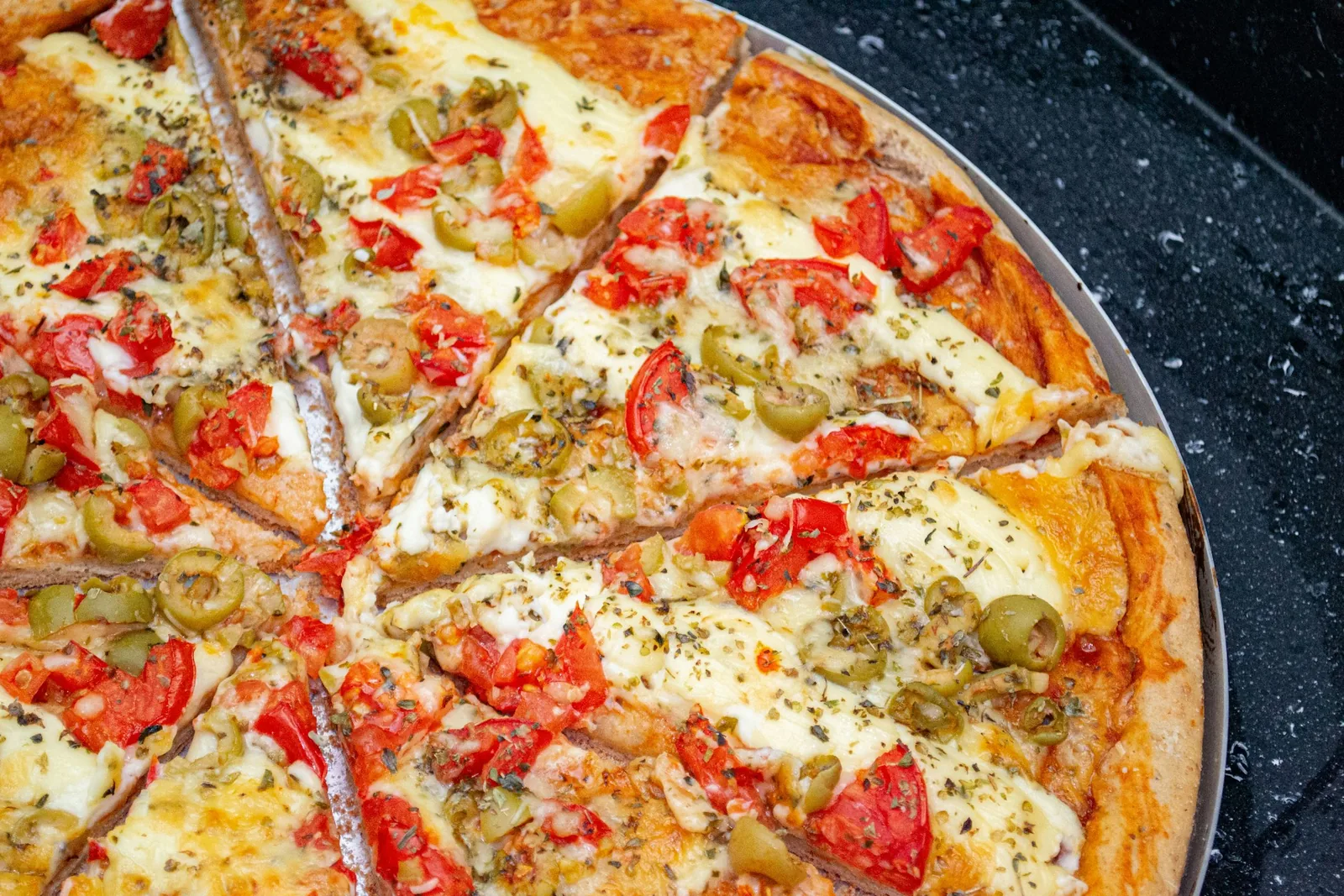
“Gourmet” on a pizza menu is doing a job, but it is rarely the job people assume. It almost never means the kitchen uses a better grade of flour or a more expensive mozzarella than it uses on the plain cheese pizza.
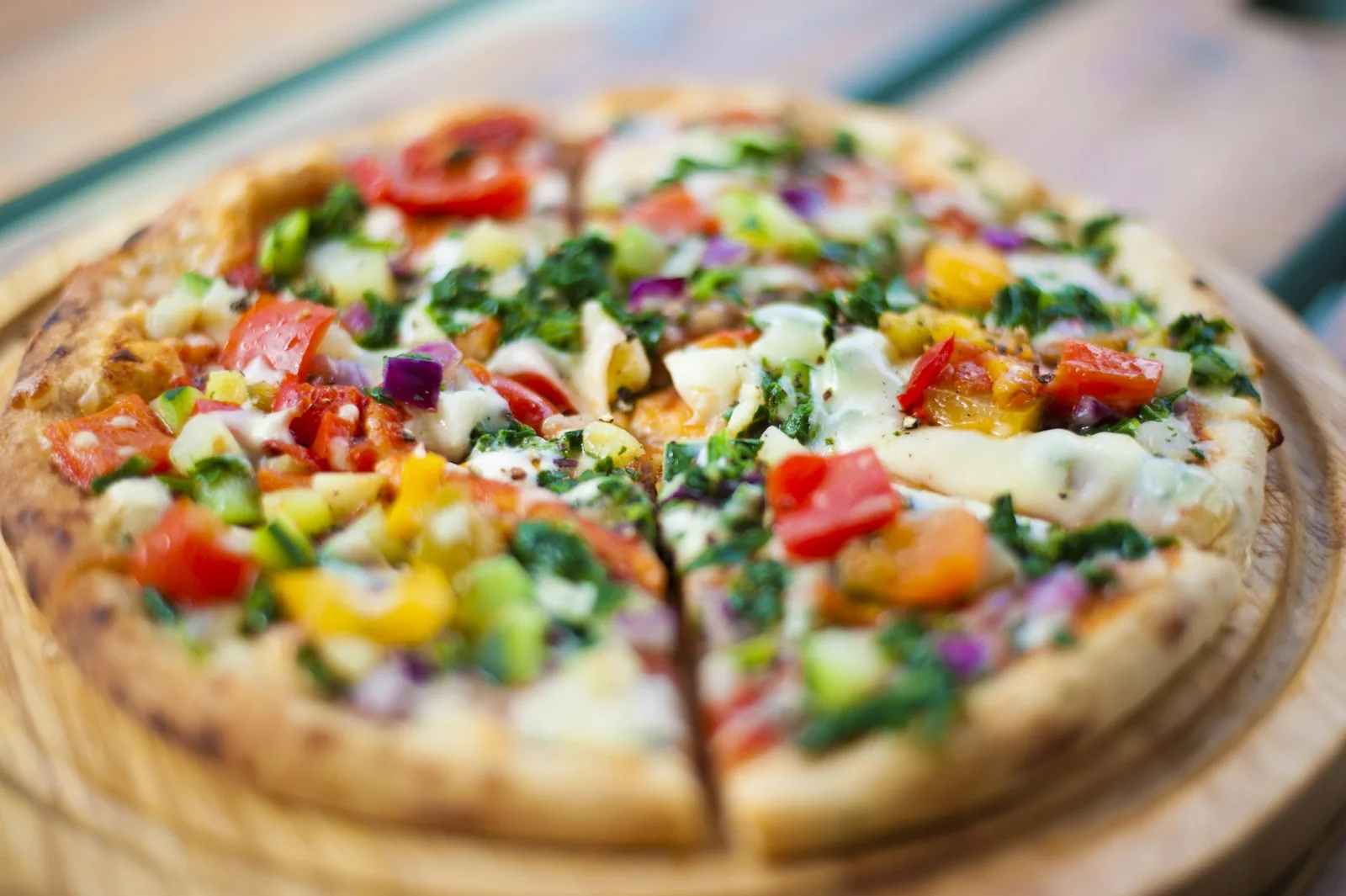
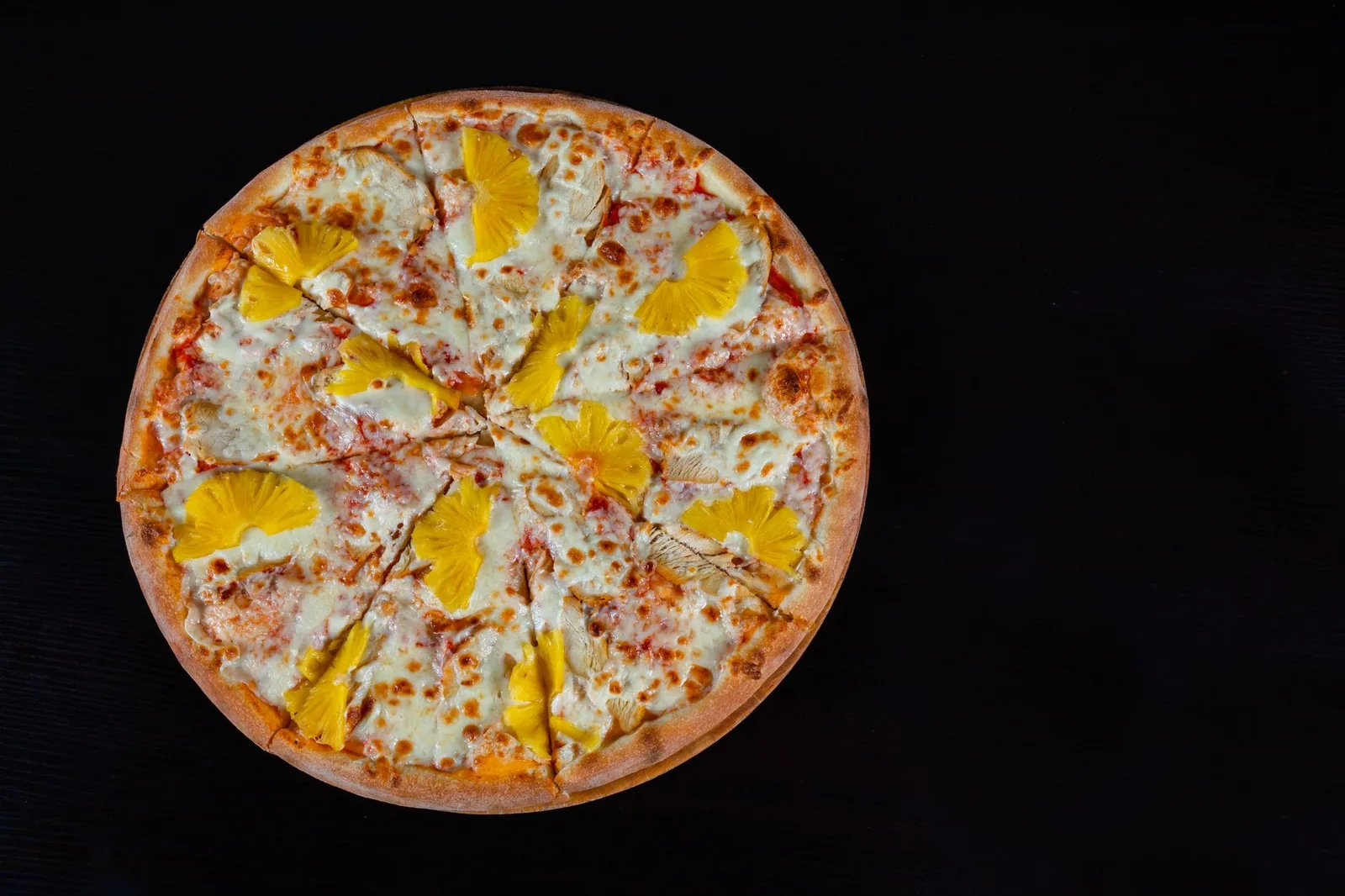
What it usually signals is a named, fixed combination — a pizza someone assembled deliberately, gave a name, and put on the menu as a single item rather than a list of toppings you assemble yourself.
| Plain / build your own | Gourmet / specialty | |
|---|---|---|
| Toppings | You choose | Fixed by the kitchen |
| Named | No | Yes |
| Balance | Your responsibility | Already worked out |
| Ingredients | Standard | Usually the same, sometimes wider range |
| Best for | Knowing what you want | Not wanting to decide |
What the word actually signals
Three things, in rough order of reliability.
It is a set combination. This is the only part that is true almost everywhere. A gourmet pizza comes as listed.
It may use ingredients the standard list does not. Ricotta, artichoke, roasted peppers, fresh basil and cured meats often appear only in this section, because they are held for it.
It costs more. Usually because it carries more toppings, not because the base ingredients differ.
Someone already did the work
This is the genuine value, and it is underrated.
Building a good pizza is a balancing problem. Too many wet toppings and the middle goes soft; two heavily seasoned meats and they argue; no salt anywhere and the whole thing tastes flat. Our guide to topping combinations goes through the reasoning.
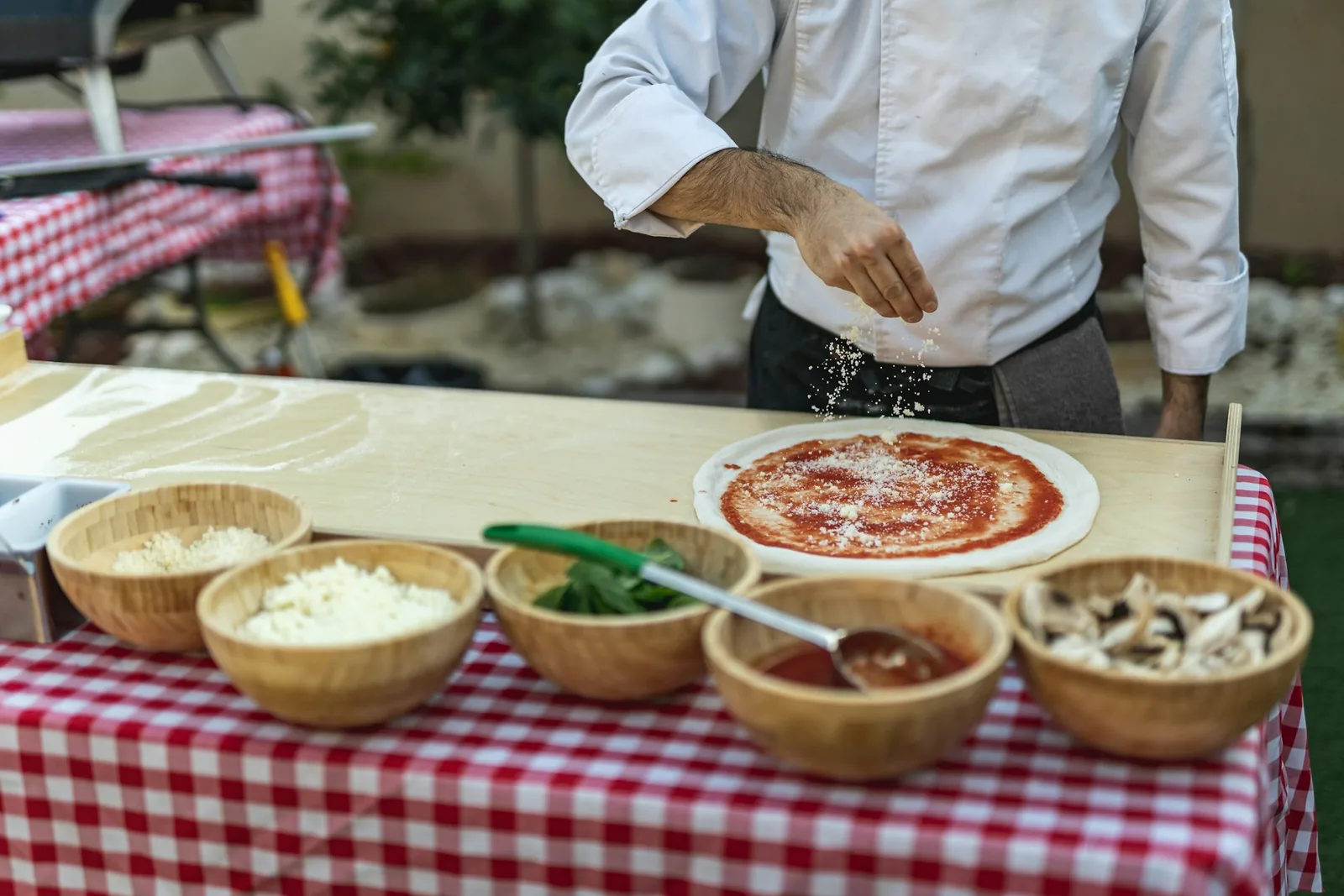
A named pizza has been through that already. Someone chose those toppings, made it repeatedly, watched how it bakes in that particular oven, and kept it on the menu because it worked. You are buying a decision, not an ingredient.
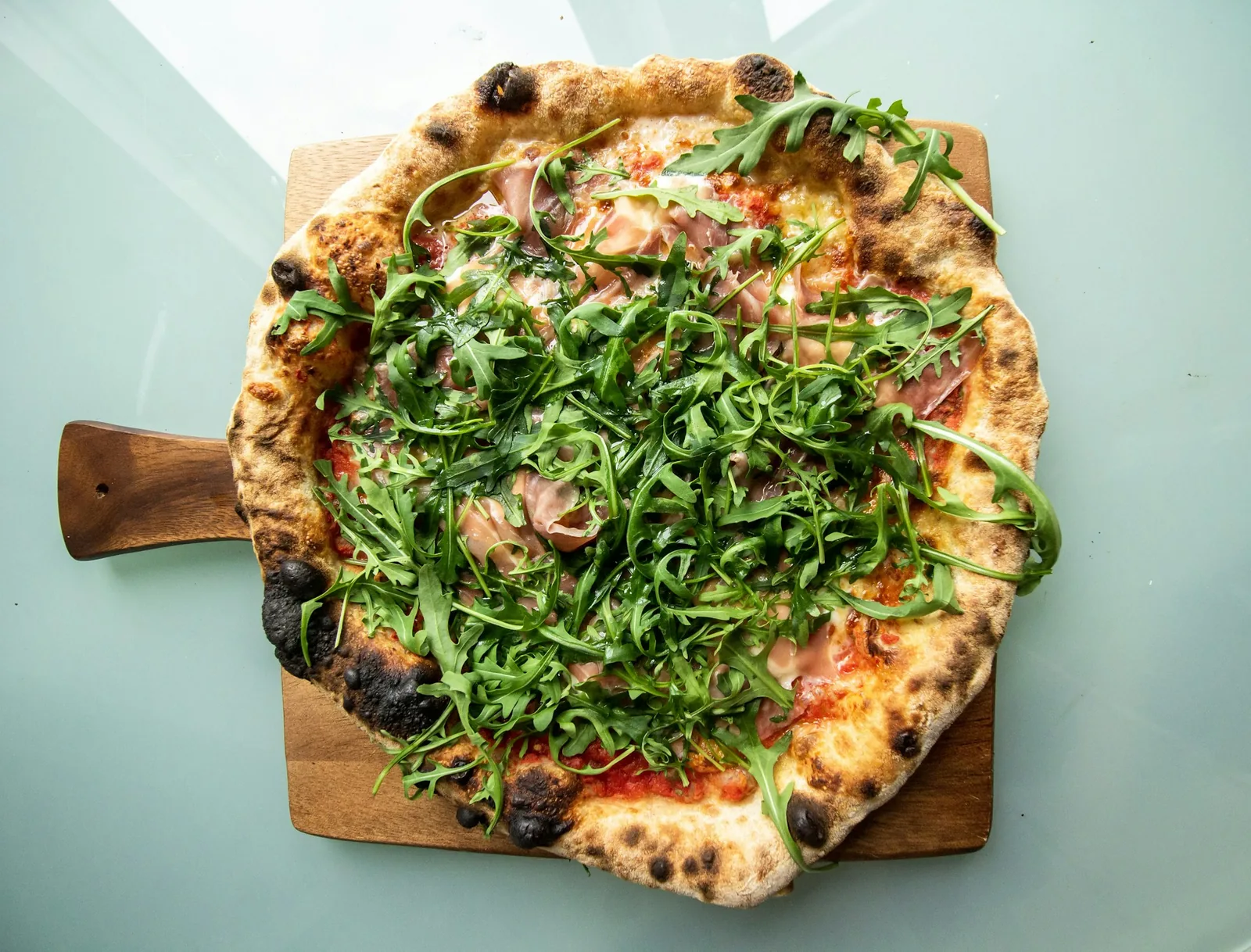
Some combinations also depend on things you cannot request. A pizza finished with fresh leaves after it leaves the oven cannot be ordered as toppings, because the sequence is the recipe.
Named or build your own
Neither is better. They answer different questions.
Build your own when you know exactly what you want, when you are avoiding an ingredient, or when you want fewer toppings than any named pizza carries. Two toppings you actually like beats five you are ambivalent about.
Order a named one when you do not want to decide, when you are feeding a group with mixed tastes, or when the combination includes something the build-your-own list does not offer.
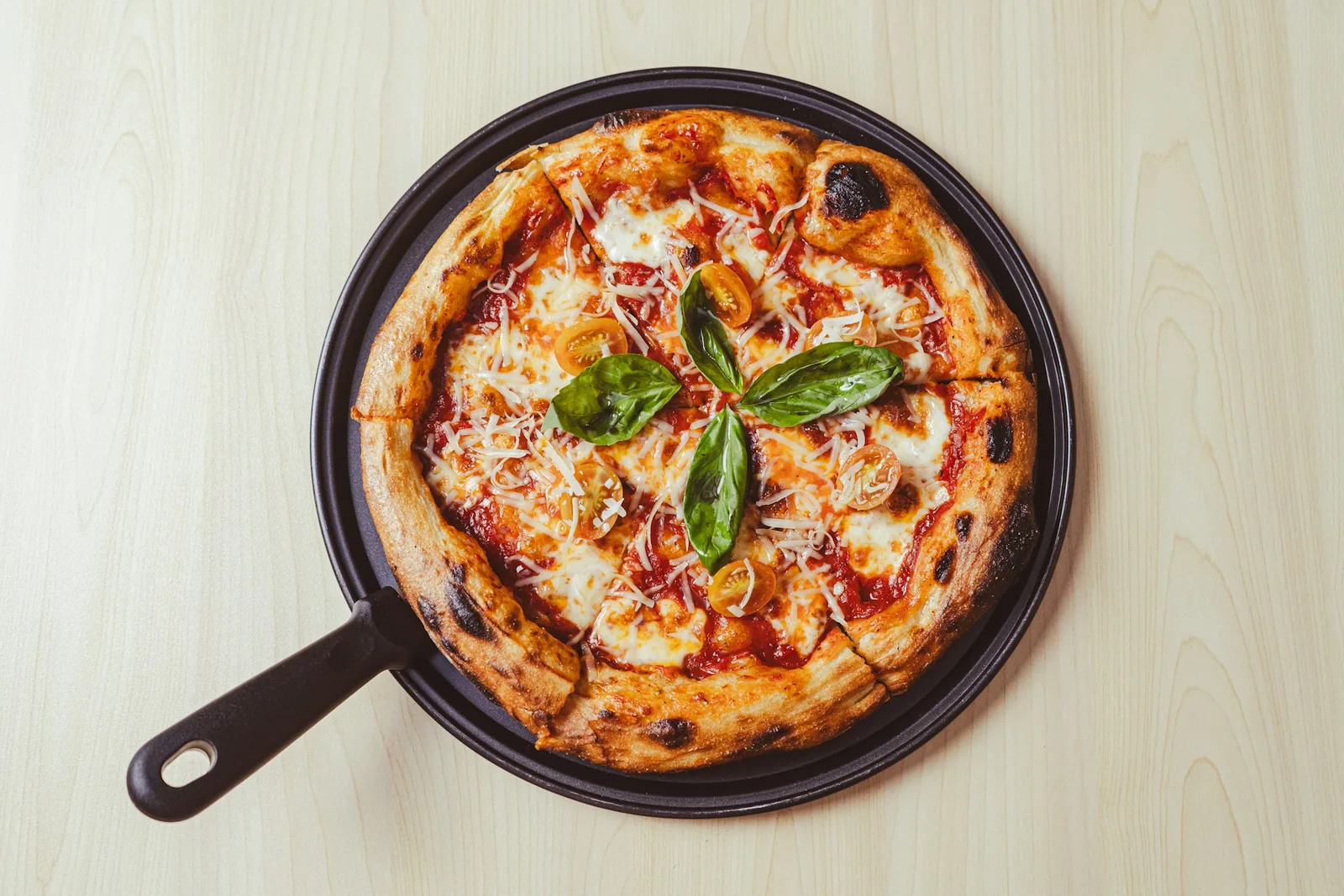
The mistake worth avoiding is treating the gourmet section as the “good” part of the menu and the plain pizza as the compromise.
Why the plain pizza is the real test
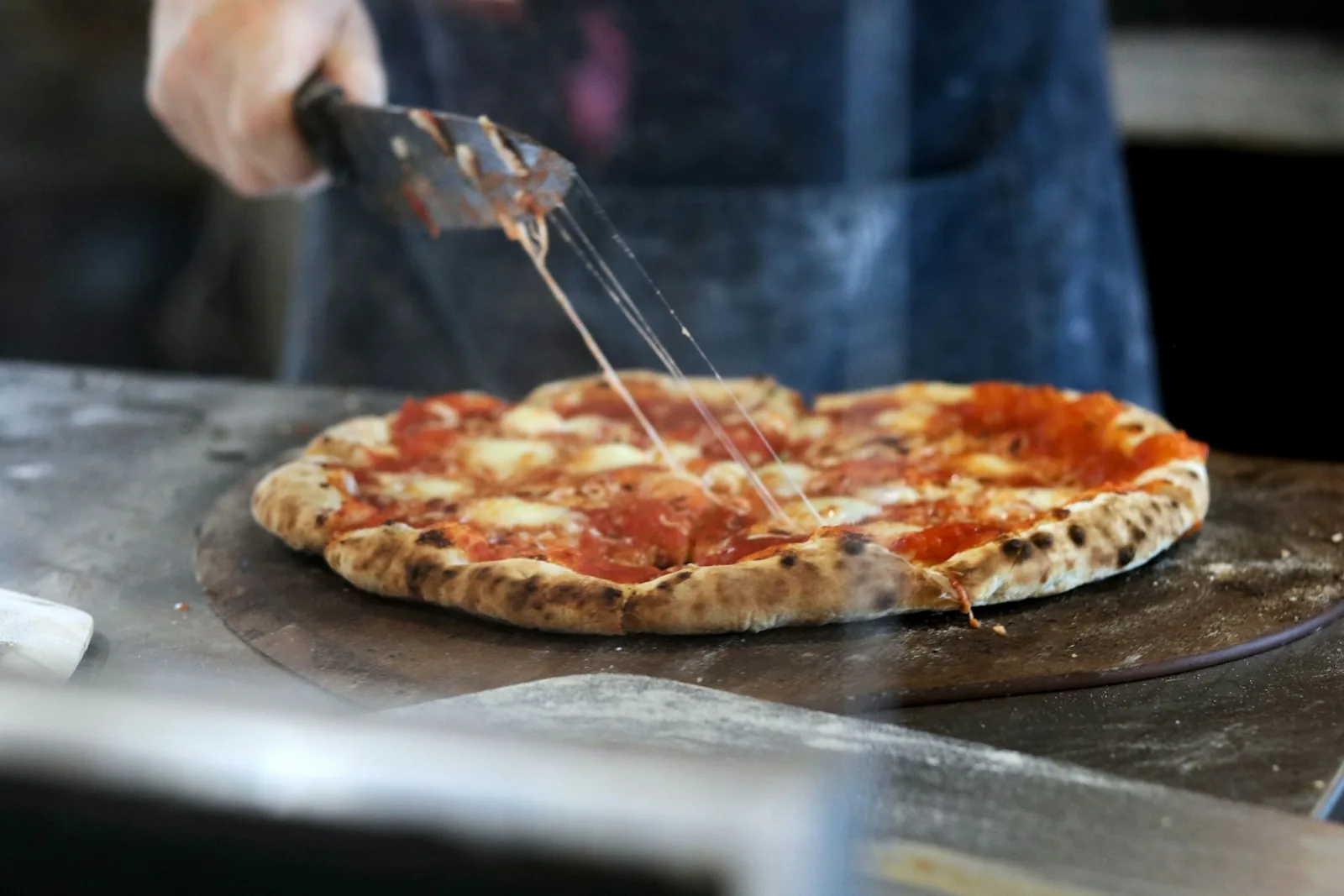
A cheese pizza has three components and nowhere to hide. If the dough is underproved you taste it; if the sauce is thin you taste it; if the cheese is wrong the whole thing is wrong. There is no fifth topping distracting from any of it.
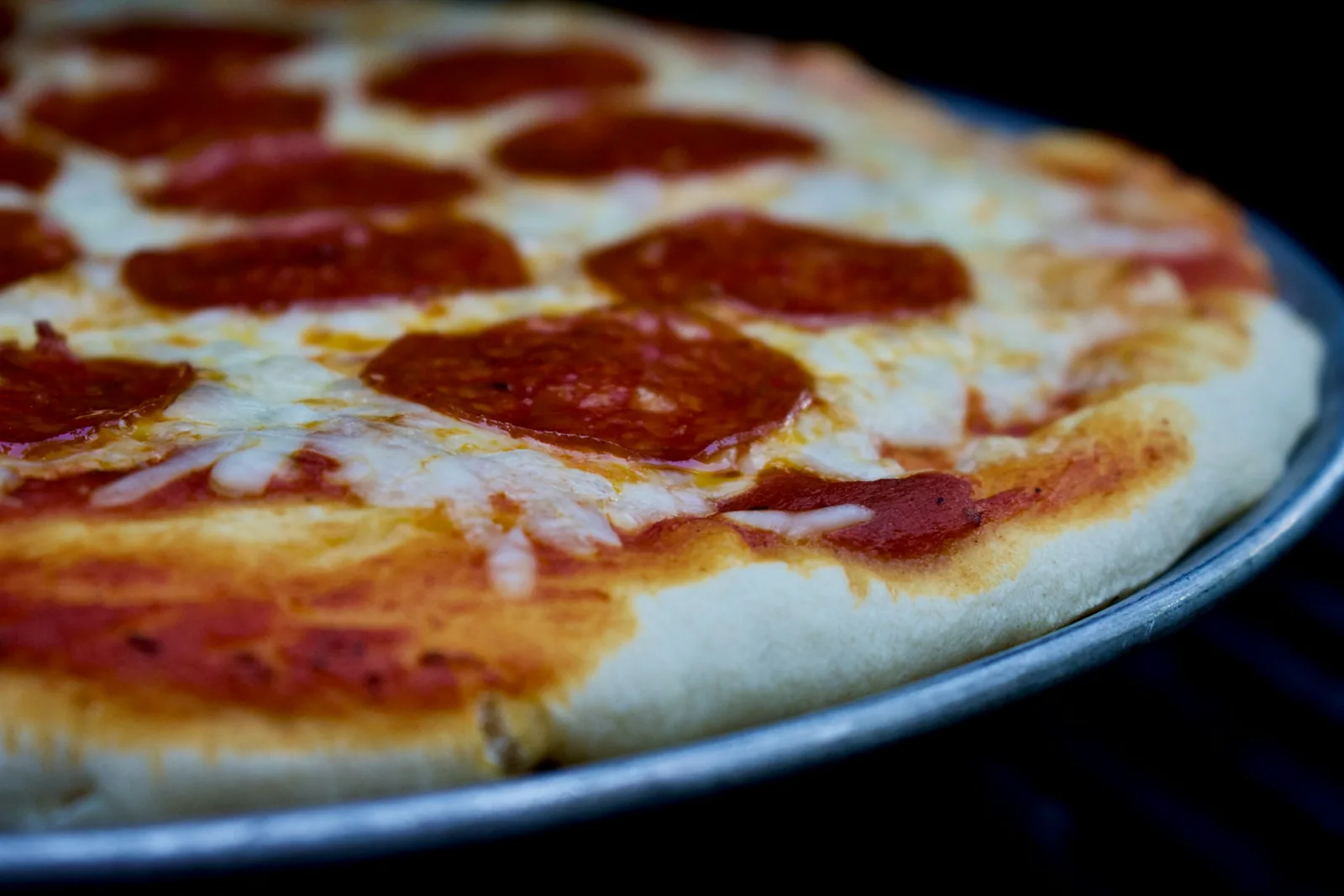
A heavily loaded pizza is considerably more forgiving. Salt from cured meat, sweetness from onion and acid from peppers cover a great deal, and a mediocre base carrying six toppings still eats acceptably.
That is why people who know pizzerias tend to order a plain cheese pizza the first time. It is the cheapest thing on the menu and it tells you the most about the kitchen — which is roughly the argument our guide to judging a pizzeria makes at greater length.
Why the section exists at all
There is a practical reason beyond marketing, and it explains the pricing.
A kitchen holding artichokes, ricotta and roasted peppers is holding stock that turns over slowly compared with pepperoni and mushrooms. Concentrating those ingredients into a handful of named pizzas means they get used predictably, which is the only way a small kitchen can carry them without waste.
Put them on the general build-your-own list and demand becomes impossible to forecast — some weeks nobody orders artichoke and it is thrown away. That is why the interesting ingredients cluster in the specialty section rather than being offered everywhere.
Reading a gourmet list
A few things tell you what you are looking at.
- Count the toppings. Four or more usually explains the price on its own.
- Look for ingredients absent elsewhere. That is the section carrying them.
- Look for a finishing step — leaves, oil, or a cheese added after the bake. That is a real recipe, not a topping list.
- Check the sizes offered. Specialty pizzas are often made in fewer sizes, because the topping quantities are fixed.
Ray’s lists its gourmet pizzas separately from the standard range, in Medium and Large.
Pizza Questions, Answered.
What does gourmet pizza actually mean?
On most menus it means a named, fixed combination rather than a premium grade of ingredient. The dough and cheese are usually the same as the plain pizza.
Is a gourmet pizza worth the extra cost?
Usually the price reflects more toppings rather than better ones. It is worth it if you want the combination; if you want two specific toppings, building your own is cheaper.
What is the difference between gourmet and specialty pizza?
Nothing consistent. Both describe a named pizza with a set topping combination, and menus use the two words interchangeably.
Can you change the toppings on a gourmet pizza?
Often you can remove one, but a combination built around a finishing step – leaves or oil added after the bake – may not survive being altered. It is worth asking.
The short version
The word describes a combination, not a grade. You are paying for a decision someone else already tested, plus usually a couple of extra toppings. That is worth having when you do not want to think, and worth skipping when you do.
The Ray’s menu is open daily 10:30am to 9:00pm.
Ray’s Pizza Team
Ray’s Pizza & Sub Shop is a neighborhood pizzeria at 95 Woodstown Rd, Swedesboro, New Jersey, serving pizza, stromboli, hot and cold subs and dinners seven days a week from 10:30am to 9:00pm. These guides are written by the people behind the counter.
Visit Ray’sMore From Ray’s