What Makes a Good Pizzeria
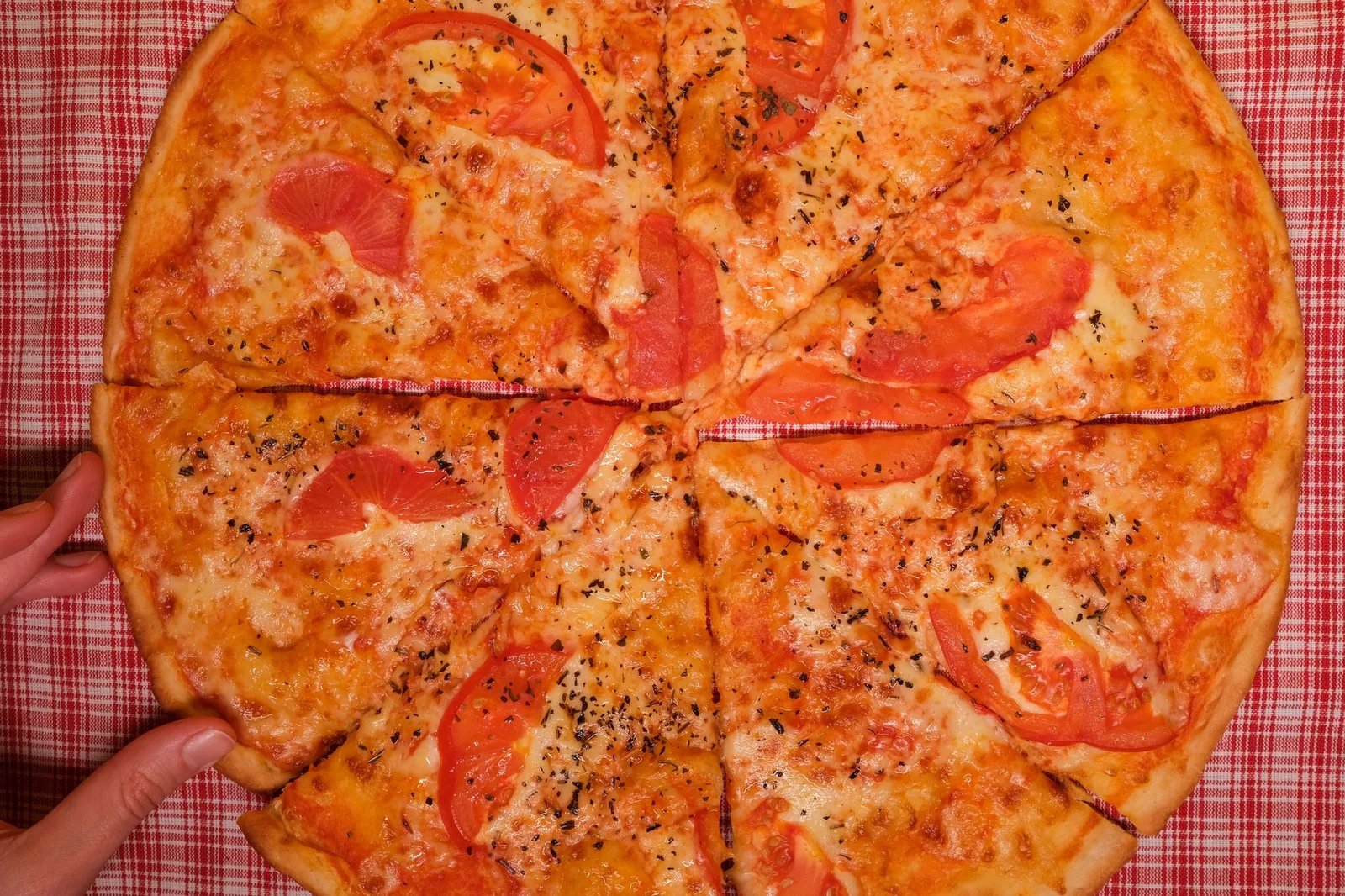
Order the plain cheese slice. It has nothing to hide behind, and it tells you everything the menu photographs cannot.
Every pizzeria puts its best foot forward with toppings. Toppings are also where a weak base hides — enough salt, fat and char on top and you will not notice what is underneath.
So the test is the plain cheese pizza. Dough, sauce, cheese. If those three are good, everything built on them will be.
| Look at | Good sign | Warning sign |
|---|---|---|
| The rim | Uneven, blistered, airy | Uniform, pale, dense |
| The underside | Dry, spotted, firm | Damp, uniformly pale |
| A held slice | Bends, does not flop | Collapses at the tip |
| The cheese | Browned in patches | Uniformly orange or oily |
| The sauce | Bright, distinct | Sweet, jammy, absent |
Why the plain slice
A cheese pizza is three ingredients and no distractions. There is nowhere for a poorly fermented dough or an over-sweet sauce to hide.
It is also the pizza a shop makes most often, so it is the one their process is tuned for. If the thing they make a hundred times a day is mediocre, the speciality with eight toppings is not going to rescue them.
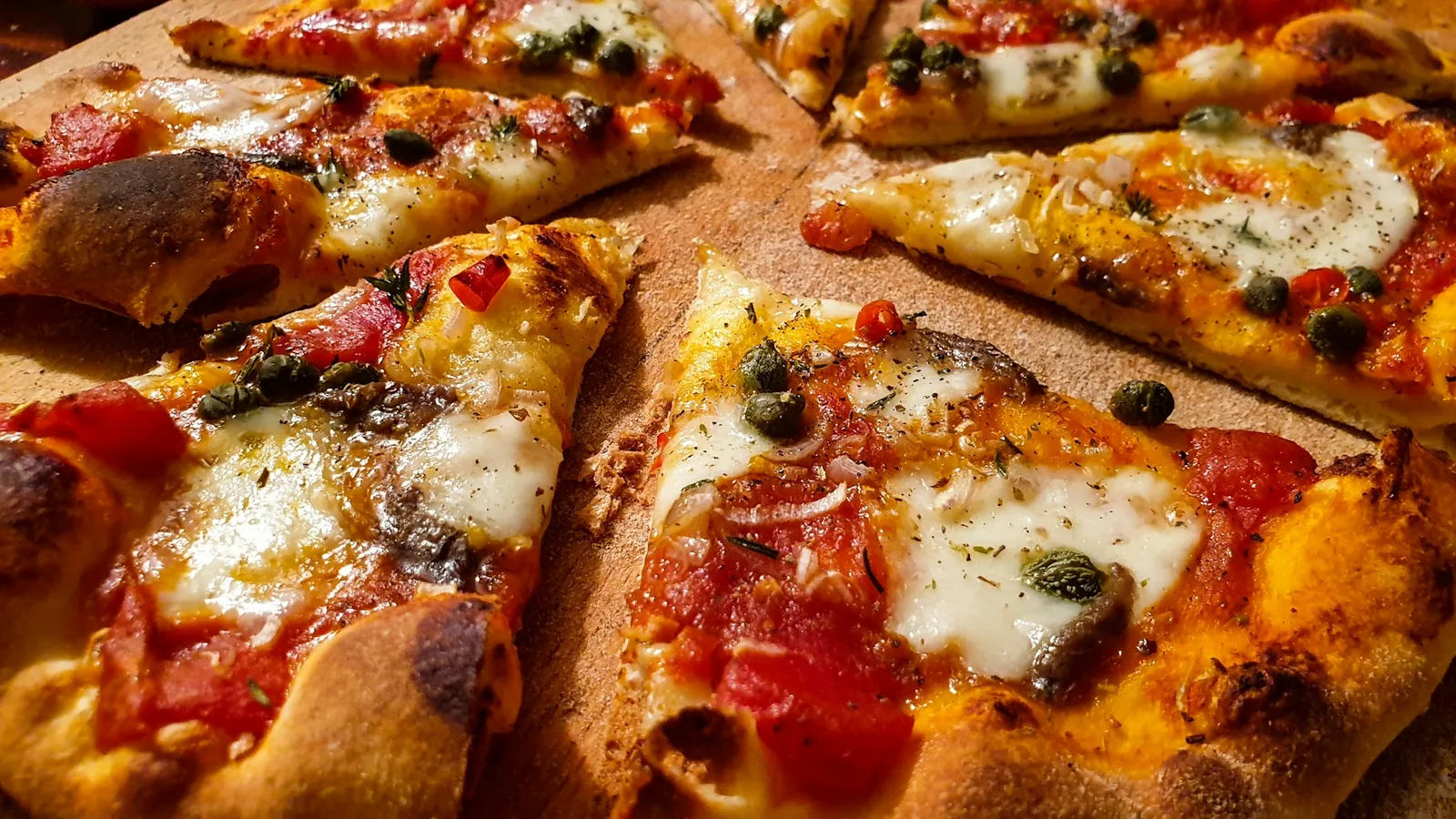
What to actually look at
Pick a slice up by the crust. It should bend under its own weight and hold. If the tip drops straight down, the base is underbaked or overloaded. If it is rigid like a cracker, it is overbaked or was rolled rather than stretched.
Look at the underside. It should be dry to the touch, firm, and unevenly spotted where it met the oven floor. A damp, uniformly pale underside means it baked in air rather than against heat, which is what a deck or stone is for.
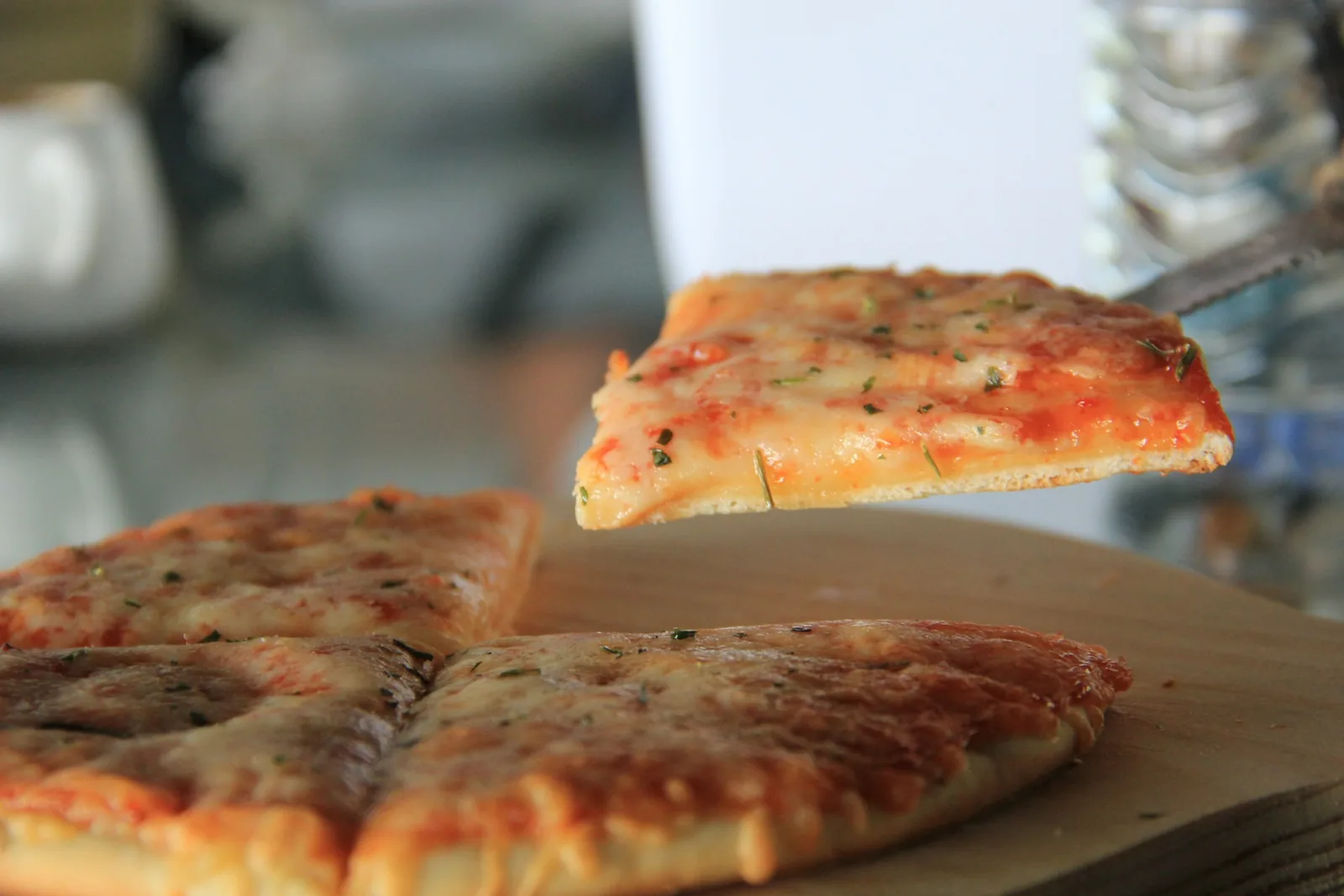
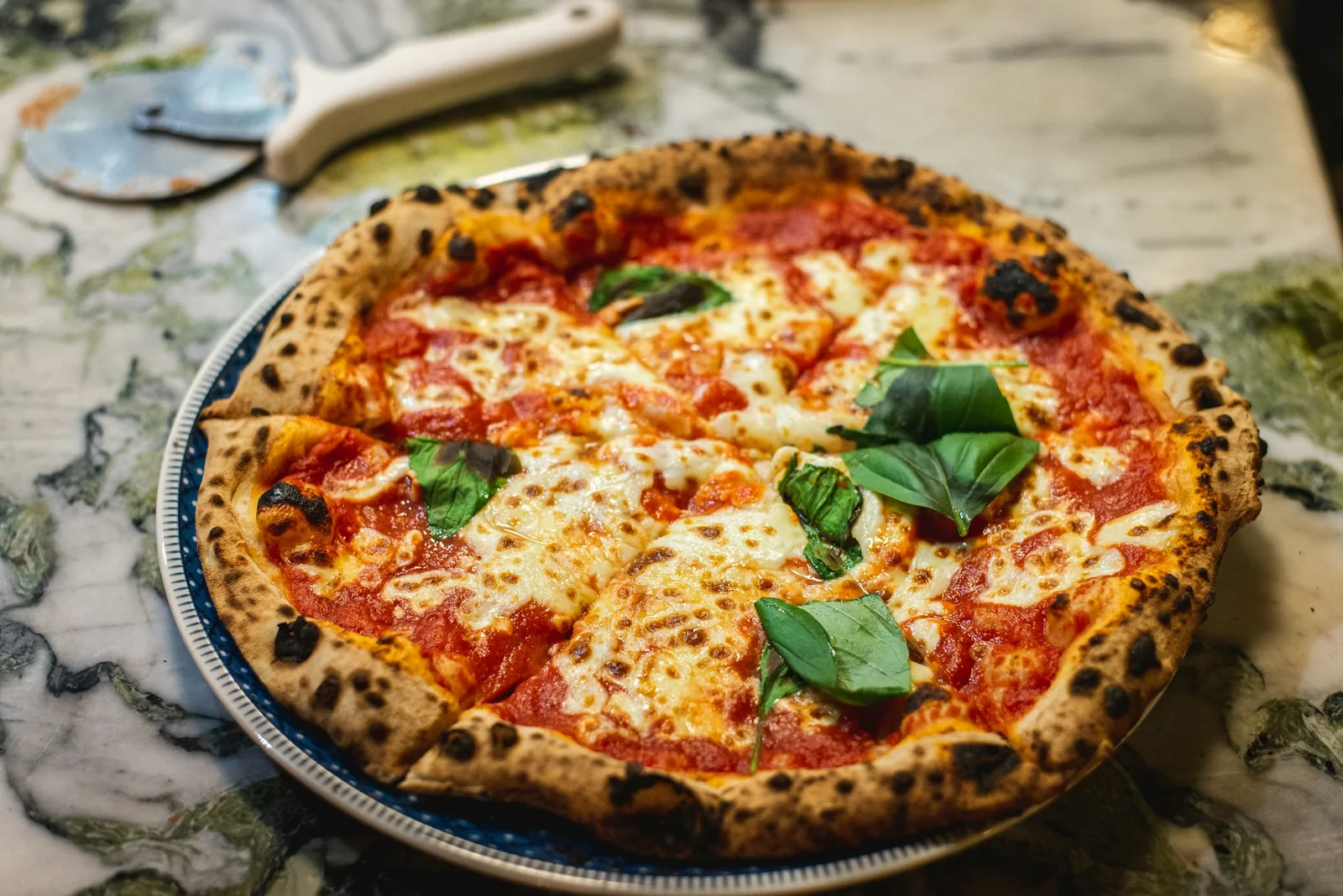
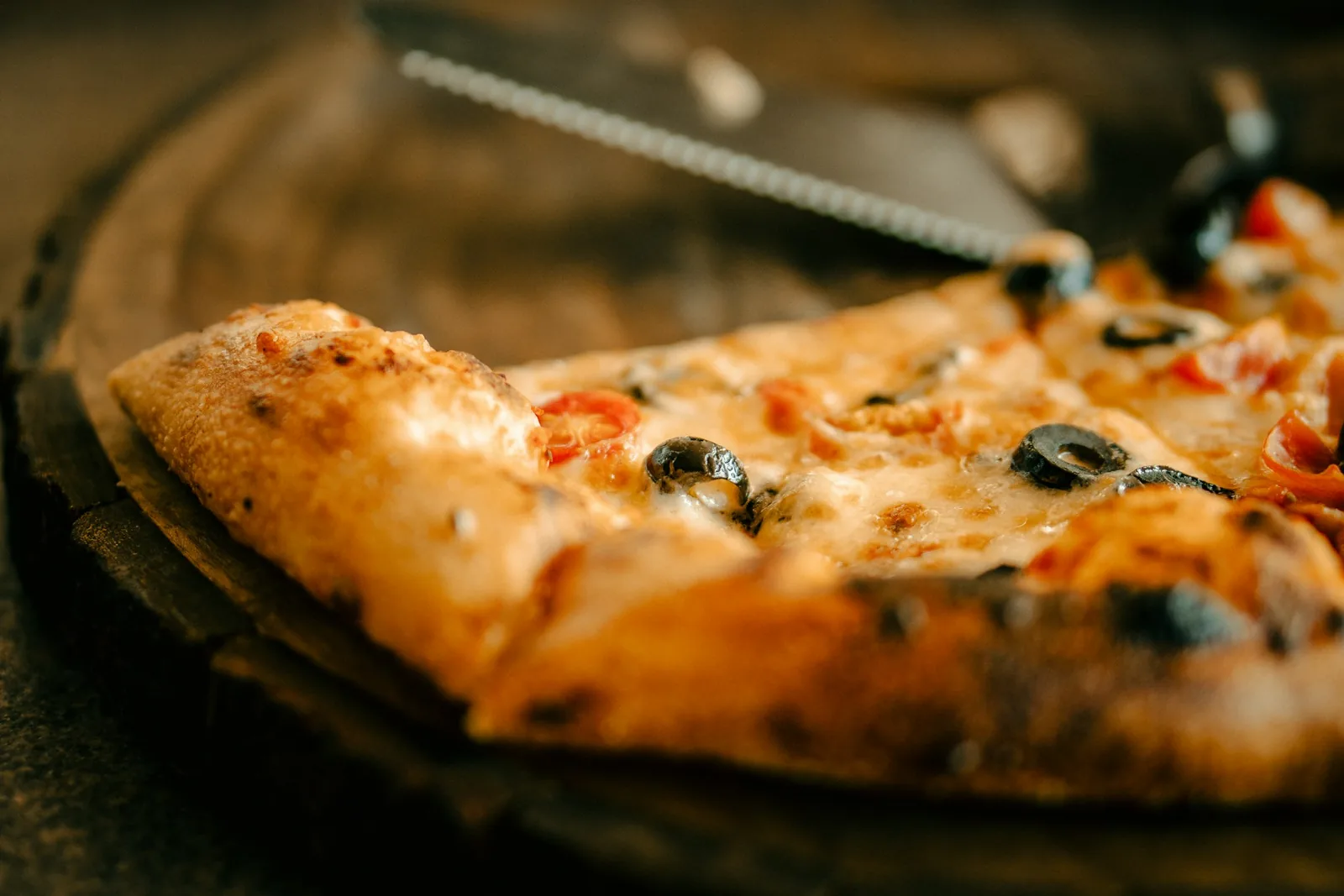
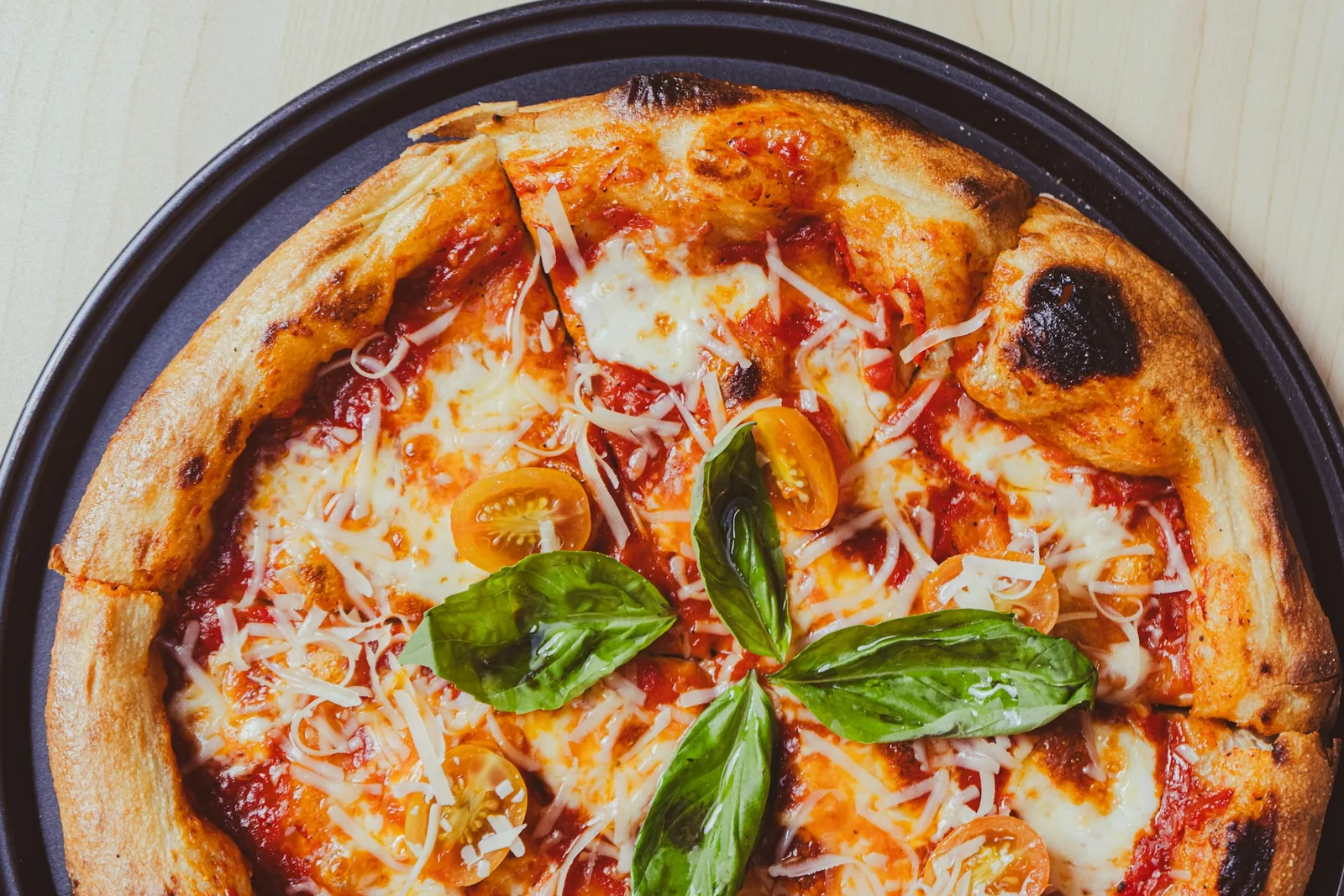
Look at the rim. An uneven, blistered, slightly irregular rim means the dough was stretched by hand and had time to ferment. A perfectly uniform rim usually means it was pressed or rolled from a machine-portioned ball.
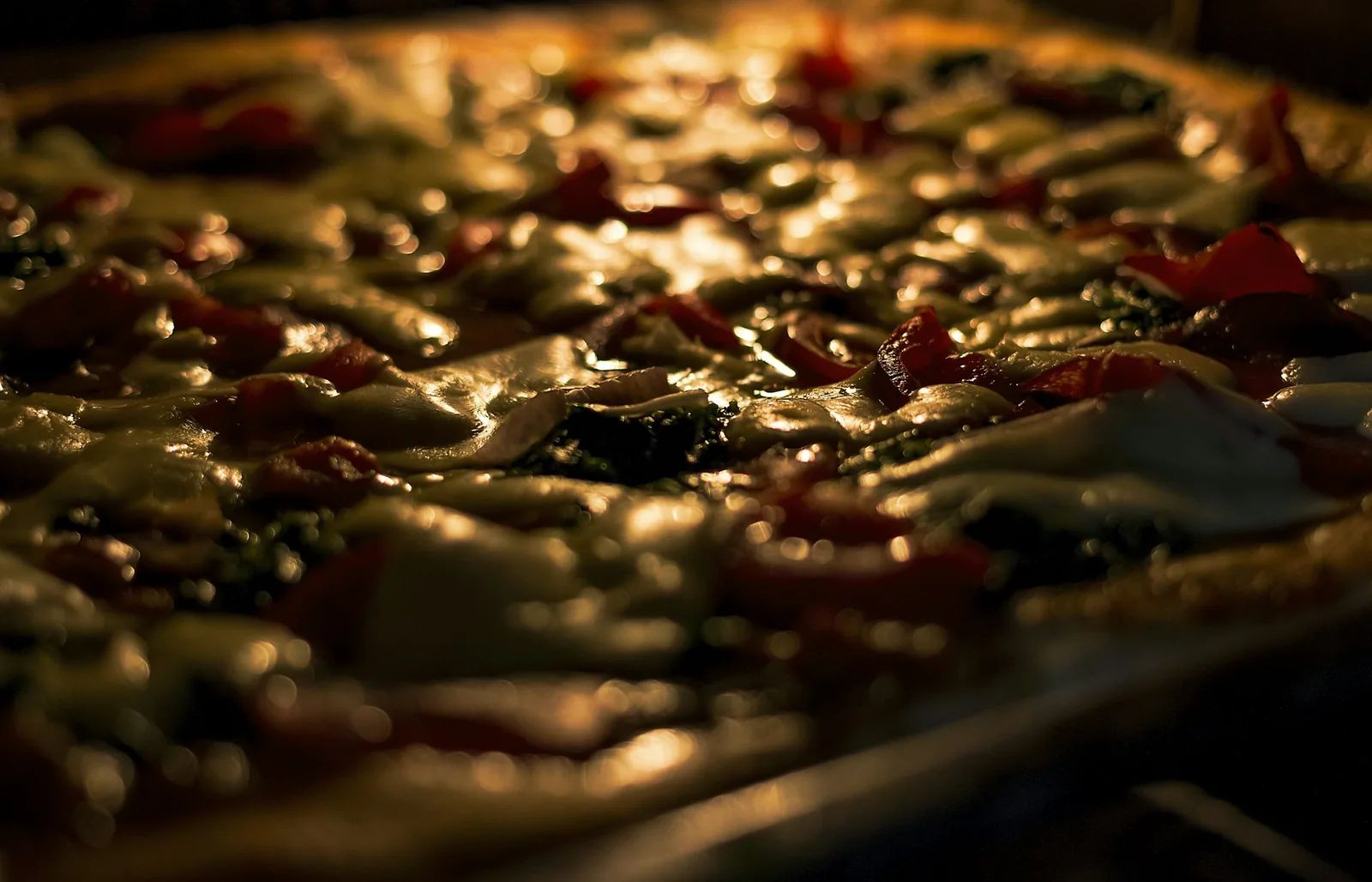
The cheese tells you a lot
Good mozzarella browns in patches, not evenly. Blistered, uneven colour means the cheese melted properly at a real temperature.
A flat, uniform orange colour across the whole surface generally means a cheese blend built for colour rather than melt. A large pool of orange oil means either too much cheese, too long a bake, or a high-fat blend that separated — covered in our guide to pizza cheese.
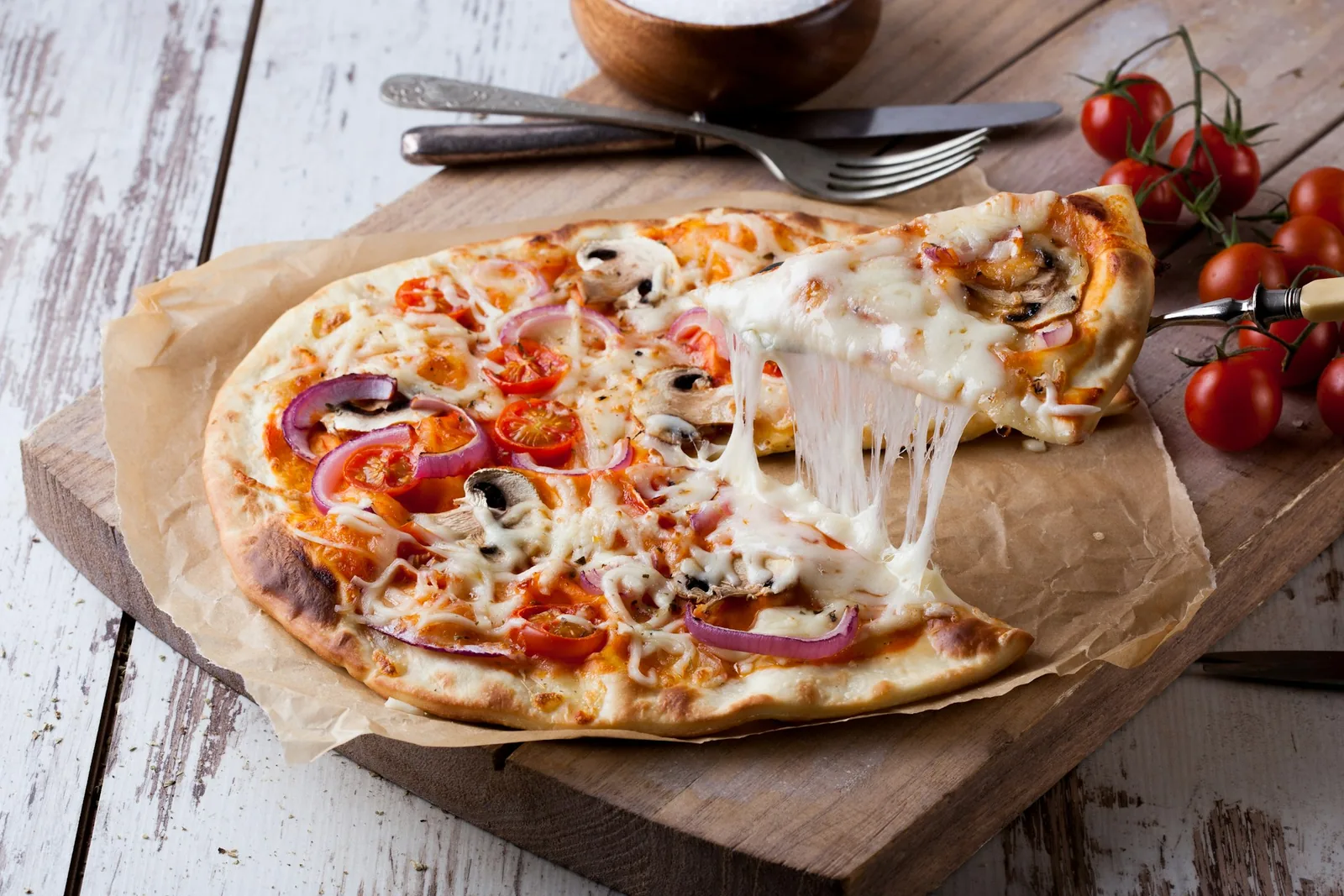
Turnover matters more than decor
This is the least glamorous signal and one of the most reliable.
A busy pizzeria makes dough more often, so the dough is fresher and the fermentation schedule is consistent. Its oven is hot and has been hot for hours, which is exactly what stored heat requires. Its cheese and toppings turn over rather than sitting.
A quiet shop is fighting all three. The oven has cooled between orders, the dough may be a day older than intended, and the first pizza of a slow afternoon is rarely the best one they make.
None of that is a judgement about the people running it. It is just what volume does to a process that depends on heat and timing.
The practical version: if you are trying somewhere new and have a choice of when, go at a busy hour rather than a quiet one. You will get a better pizza from the same kitchen.
Ask one question at the counter
There is a single question that tells you more than any amount of looking: what are you known for?
A shop with a clear answer — the Sicilian, the white pie, the cheesesteak — has a thing it makes constantly and has therefore got good at. Order that, and separately order the plain slice, and you have a complete picture in one visit.
A shop with no answer is not necessarily bad, but it means nothing is turning over faster than anything else, which brings you back to the volume problem above.
It is also simply a fair question to ask someone standing behind a counter all day. They know, and most people never ask.
What not to bother with
- Wood-fired as a guarantee. It is a heat source, not a quality mark. A well-run deck oven beats a badly run wood one.
- Long menus. They tell you nothing either way. Plenty of good shops sell subs, wings and dinners alongside the pizza.
- Decor. Some of the best pizza in the country is sold from rooms with strip lighting and paper plates.
- “Authentic”. A word doing no work. American pizza is its own tradition, and a tomato pie is not less real than a margherita.
Pizza Questions, Answered.
How can you tell if a pizza is good?
Order the plain cheese slice. Pick it up by the crust – it should bend and hold. Look for a dry, spotted underside and cheese that has browned unevenly.
Does a wood-fired oven mean better pizza?
Not on its own. It is a heat source. A well-run deck oven produces better pizza than a badly run wood-fired one.
Why does the first pizza of the day taste different?
The oven and its deck may not have fully saturated with heat, and the dough may be at a different stage than it is mid-service.
Should I judge a pizzeria on its speciality pizza?
Judge it on the plain one. Toppings hide a weak base; a cheese pizza has nowhere to hide.
The short version
Plain slice, held by the crust. Bend not flop, dry spotted underside, uneven blistered rim, patchy browned cheese. Busy beats handsome, and “authentic” means nothing.
The Ray’s menu lists Cheese, White and Tomato pies in Medium, Large and Sicilian, open daily 10:30am to 9:00pm.
Ray’s Pizza Team
Ray’s Pizza & Sub Shop is a neighborhood pizzeria at 95 Woodstown Rd, Swedesboro, New Jersey, serving pizza, stromboli, hot and cold subs and dinners seven days a week from 10:30am to 9:00pm. These guides are written by the people behind the counter.
Visit Ray’sMore From Ray’s