How Pizza Became American
Pizza arrived with Neapolitan immigrants and then changed almost beyond recognition. The interesting part is why it changed differently in different cities.
Pizza came to the United States with Neapolitan immigrants in the late nineteenth century. It was food for people from Naples, sold in the neighbourhoods where they settled, and for decades almost nobody else ate it.
What happened afterwards is the more interesting story, because pizza did not spread as one thing. It spread as a method that each city adapted to what it had.
Arrival
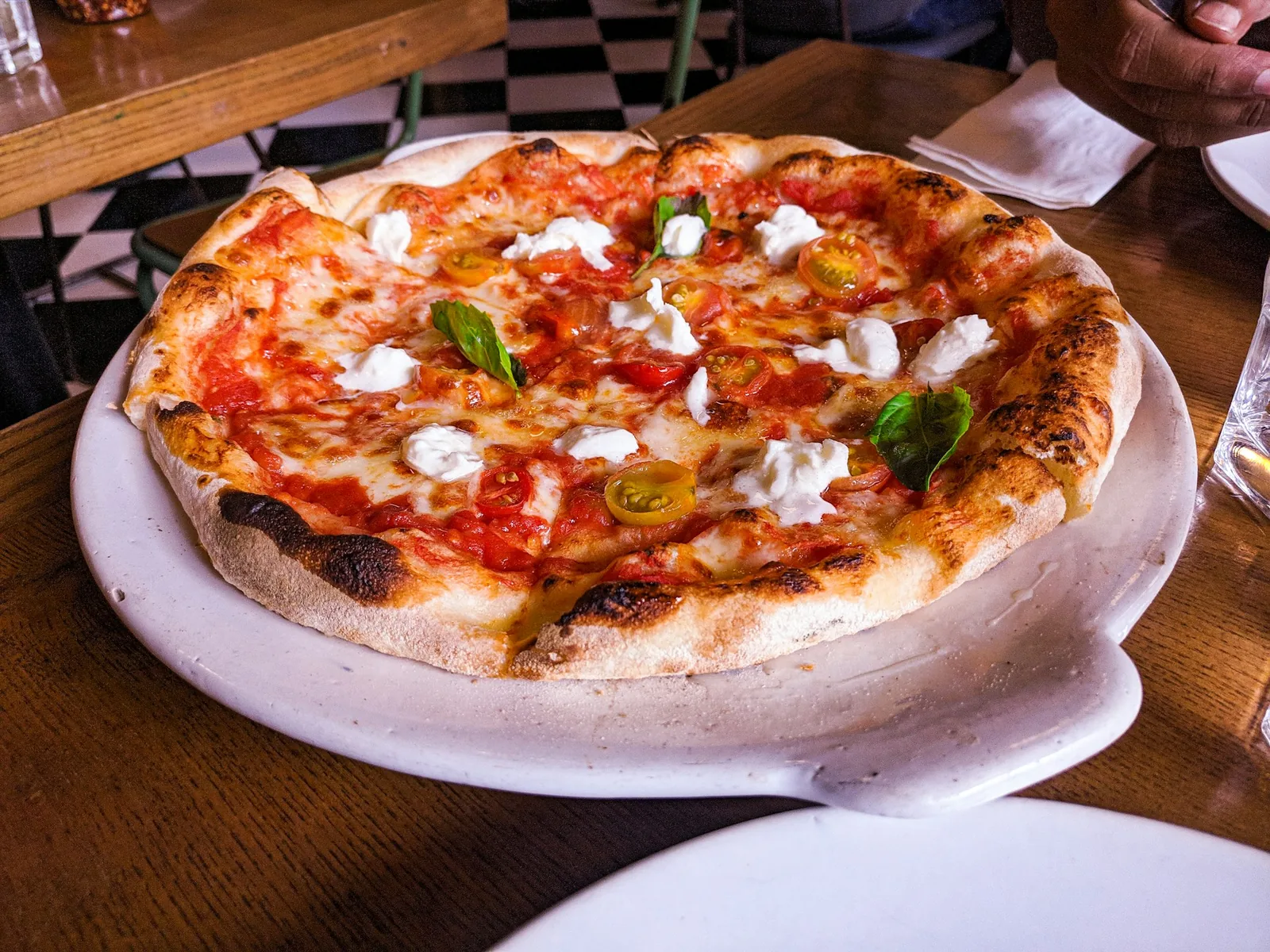
Neapolitan pizza was already a working-class street food in Naples — cheap, quick, eaten standing up. It travelled with the people who ate it.
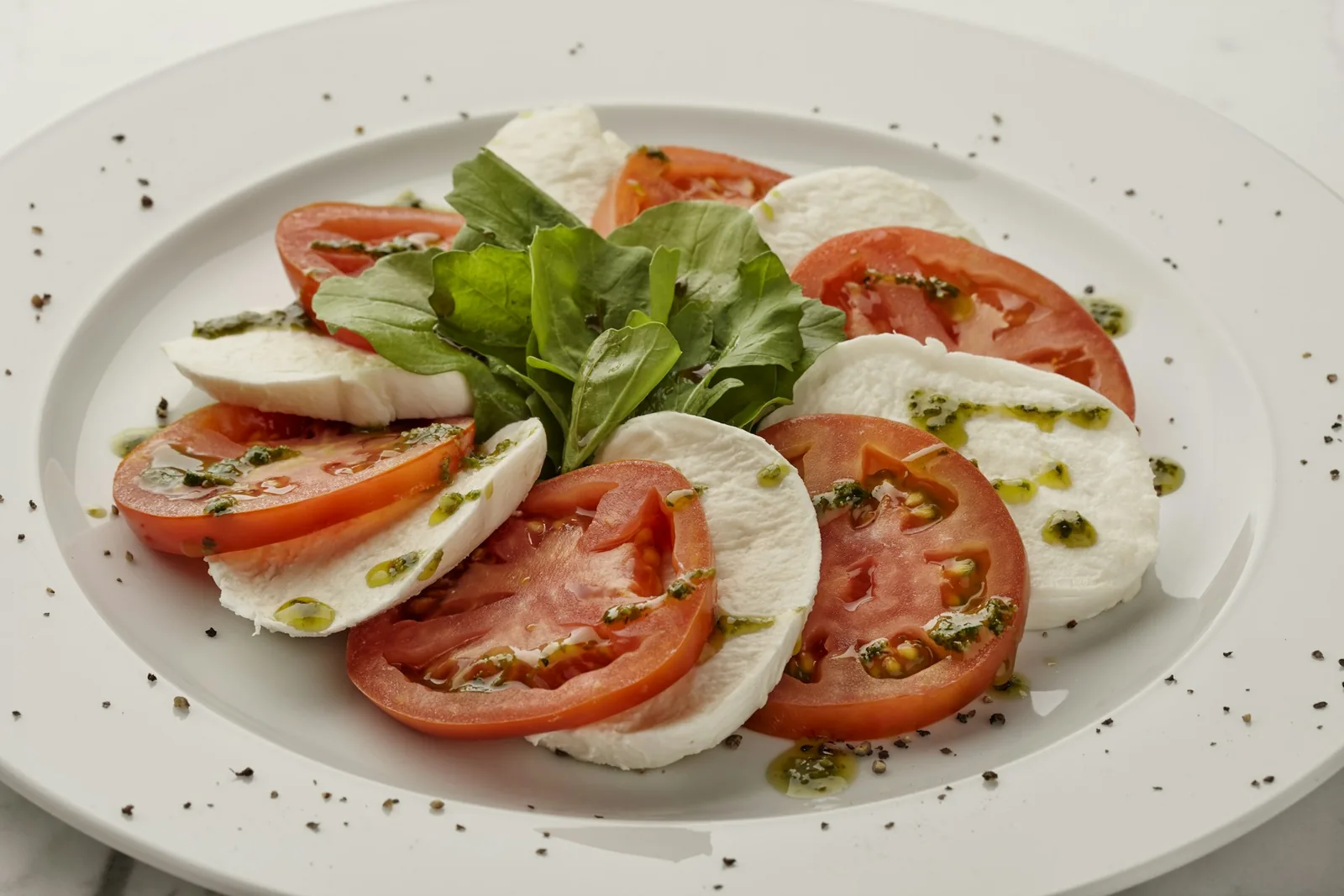
In America the ingredients were different from the start. Different flour, different tomatoes, and crucially different cheese. Fresh mozzarella of the Neapolitan kind was hard to get and did not keep, so American pizzerias moved to the drier, aged, low-moisture version.
That one substitution changed the dish permanently. Low-moisture mozzarella melts and browns differently, and it tolerates being spread across a whole pizza in a way fresh mozzarella does not.
The first pizzerias
Lombardi’s in Manhattan is generally credited as the first licensed pizzeria in the United States, opening in 1905. It baked in a coal-fired oven, which was what a New York bakery had rather than what a Naples pizzeria used.
Coal burns hotter and drier than wood. Pizzas came out with a different char and a drier base, and because coal ovens were large, the pizzas got larger too.
That is the pattern for everything that followed: the equipment available in a given city shaped the pizza that city ended up with.
After the war
The common story is that American soldiers discovered pizza in Italy and brought the taste home. That is at best half the explanation.
Pizza was already established in Italian-American neighbourhoods before the war. What changed afterwards was that it moved out of them — helped by suburbanisation, by the growth of car ownership and takeout, and by a generation of Italian-Americans opening businesses outside the old districts.
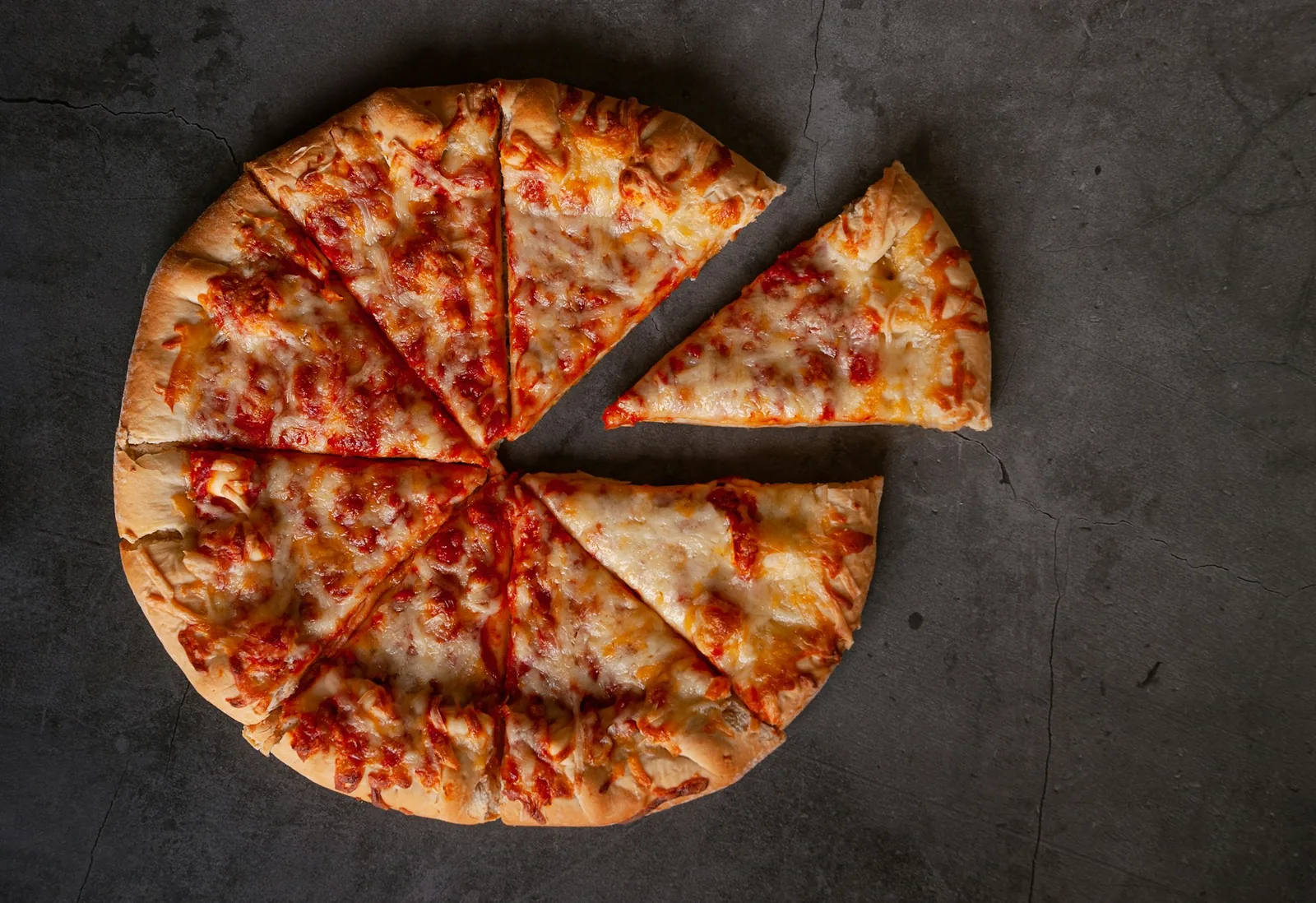
Sale by the slice mattered enormously. A whole pie is a commitment; a slice is an impulse, and it let pizza reach people who would never have sat down in a pizzeria.
The method travelled intact even as the ingredients changed around it, which is why an American pizza is still recognisably related to a Neapolitan one despite sharing almost none of its components.
Why the styles diverged
Regional styles are not stylistic choices. They are what happened when the same method met different constraints.
- New York — large coal and gas ovens, sale by the slice, so pizzas got wide and thin enough to fold.
- Chicago — a sit-down restaurant format rather than a street food, so the pizza became deep, slow-baked and eaten with cutlery.
- Detroit — baked in steel trays from the motor industry, which is why the edges caramelise the way they do.
- New Haven — coal ovens run very hot, producing a charred, irregular base sold as “apizza”.
None of these was designed. Each is the residue of what a particular city had in its kitchens.
South Jersey and Philadelphia
This region ended up with its own vocabulary, and it explains a lot about what a local menu looks like.
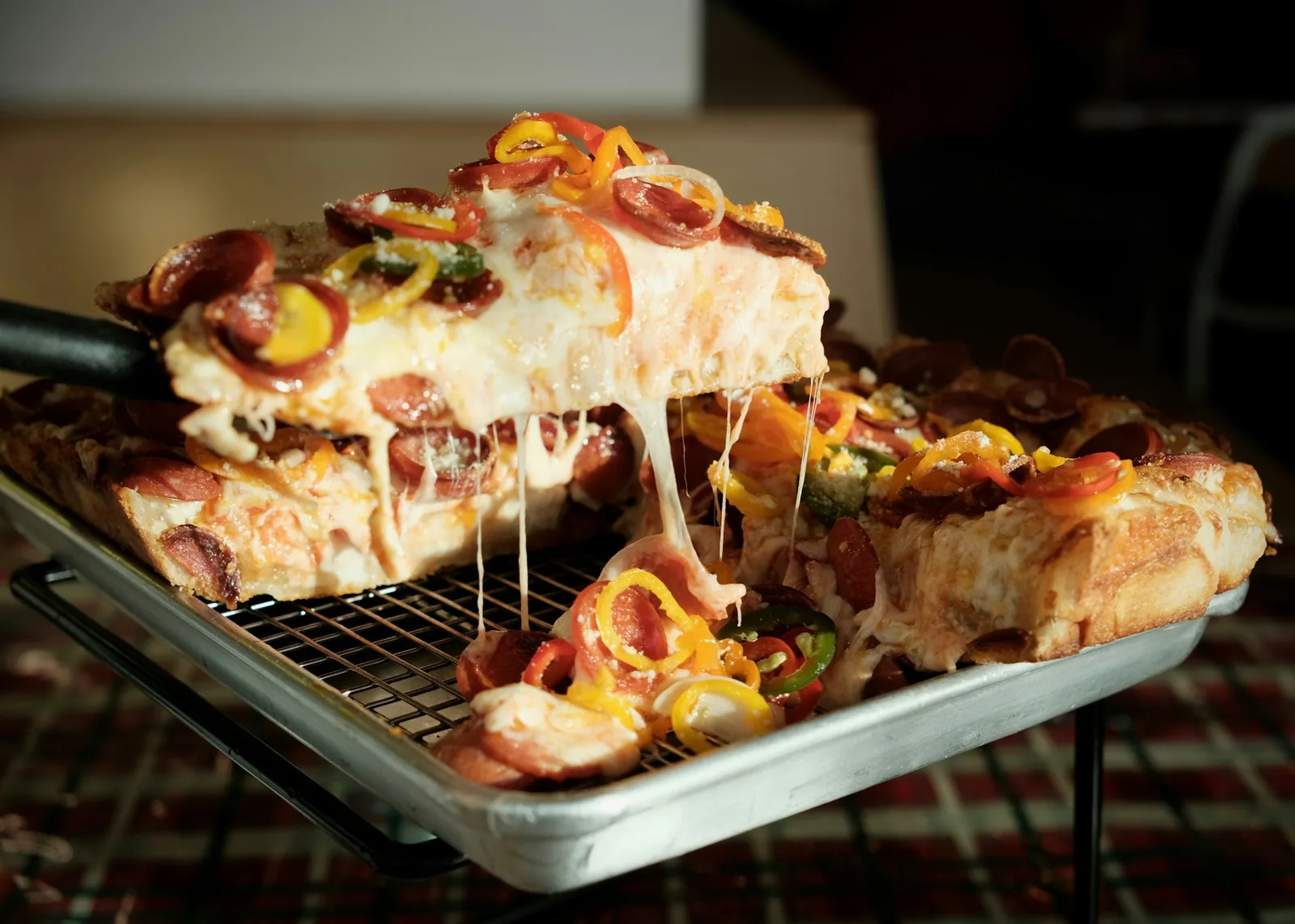
Tomato pie — cheese underneath, sauce over the top, often baked in trays and cut into squares — comes out of the Italian-American bakery tradition rather than the restaurant one. Bakeries had trays and ovens already, and a tray pie keeps and travels in a way a delicate round one does not.
Stromboli is generally traced to Philadelphia in the 1950s, which puts its origin about thirty miles from Swedesboro. It is not an Italian dish at all.
That is why a menu around here carries cheese, white and tomato pies alongside stromboli and calzone, and why a cheesesteak sits on the same page. These are not additions to an Italian menu. They are what the region’s Italian-American food actually became.
Thicker, tray-baked formats travel and reheat better than delicate round ones, which is exactly why bakeries favoured them and why they persist here.
Where it stands
Pizza is now so thoroughly American that the Neapolitan version is treated here as a speciality — something a restaurant advertises rather than the default.
Both directions are alive at once. Regional American styles keep evolving, while a parallel movement works backwards toward Naples with wood ovens and protected-designation ingredients.
Neither is more authentic than the other, which is worth saying plainly. A tomato pie made the way a South Jersey bakery has made it for eighty years has exactly as much claim to being real as a margherita cooked in ninety seconds. Both are the end of a long chain of adaptations; they simply adapted in different directions.
Pizza Questions, Answered.
When did pizza come to America?
With Neapolitan immigrants in the late nineteenth century. It stayed largely within Italian-American neighbourhoods for several decades.
What was the first pizzeria in America?
Lombardi’s in Manhattan, generally credited as the first licensed pizzeria, opening in 1905 and baking in a coal-fired oven.
Did soldiers bring pizza back from Italy?
That is part of the story but not most of it. Pizza was already established in American cities; what changed after the war was that it spread beyond Italian-American neighbourhoods.
Why are there so many regional pizza styles?
Because each city adapted the same method to different ovens, formats and ingredients. The styles are consequences of local constraints rather than deliberate inventions.
The short version
A Neapolitan street food arrived with immigrants, changed when the cheese and the ovens changed, and then diverged city by city according to what each kitchen had. South Jersey’s tomato pies and stromboli are part of that, not departures from it.
The Ray’s menu carries a fair amount of that history, and the shop is open daily 10:30am to 9:00pm.
Ray’s Pizza Team
Ray’s Pizza & Sub Shop is a neighborhood pizzeria at 95 Woodstown Rd, Swedesboro, New Jersey, serving pizza, stromboli, hot and cold subs and dinners seven days a week from 10:30am to 9:00pm. These guides are written by the people behind the counter.
Visit Ray’sMore From Ray’s