Bacon on Pizza
Cured like pepperoni, but sliced thin and mostly fat. That combination makes bacon the one meat topping that can burn before the pizza is finished.
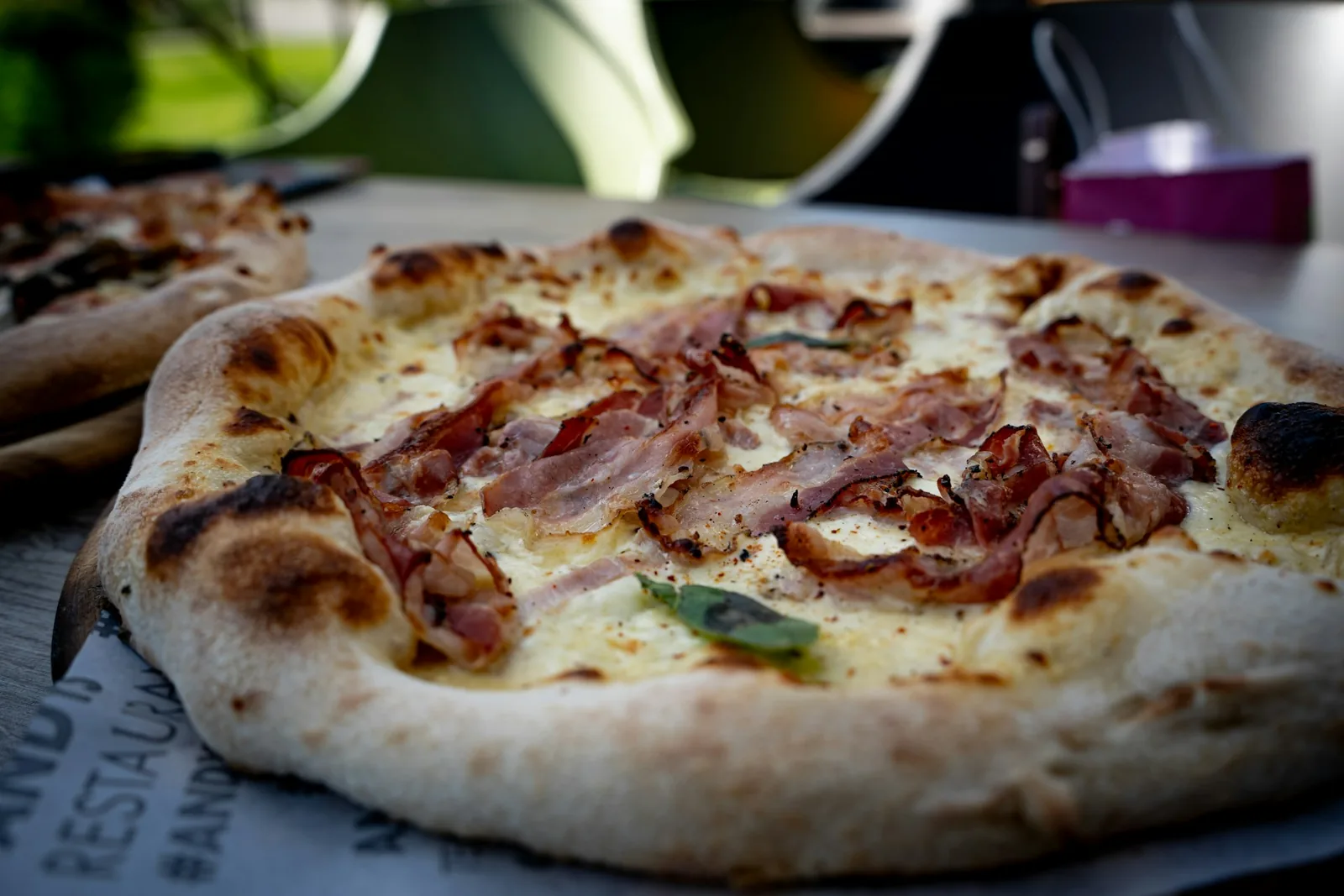
Bacon is cured pork, which puts it in the same family as pepperoni. But it behaves nothing like it on a pizza, and the reason is thickness.
Pepperoni is sliced into firm discs a few millimetres thick. Bacon is sliced into thin sheets that are largely fat, and thin fatty things in a very hot oven go from browned to burnt in under a minute.
| Bacon | Pepperoni | |
|---|---|---|
| Cut | Thin sheets | Firm discs |
| Fat content | High, in visible layers | High, dispersed |
| Raw on a pizza | Risky – burns or stays flabby | Fine, it is ready to eat |
| Usually added | Pre-cooked | Straight from the fridge |
| Finishes | Crisp and shattering | Firm, cupped, chewy |
Thin is the whole problem
A rasher of bacon is a thin sheet of muscle laid between thin sheets of fat. There is very little mass in it, so it has almost no thermal inertia — it reaches oven temperature almost immediately.
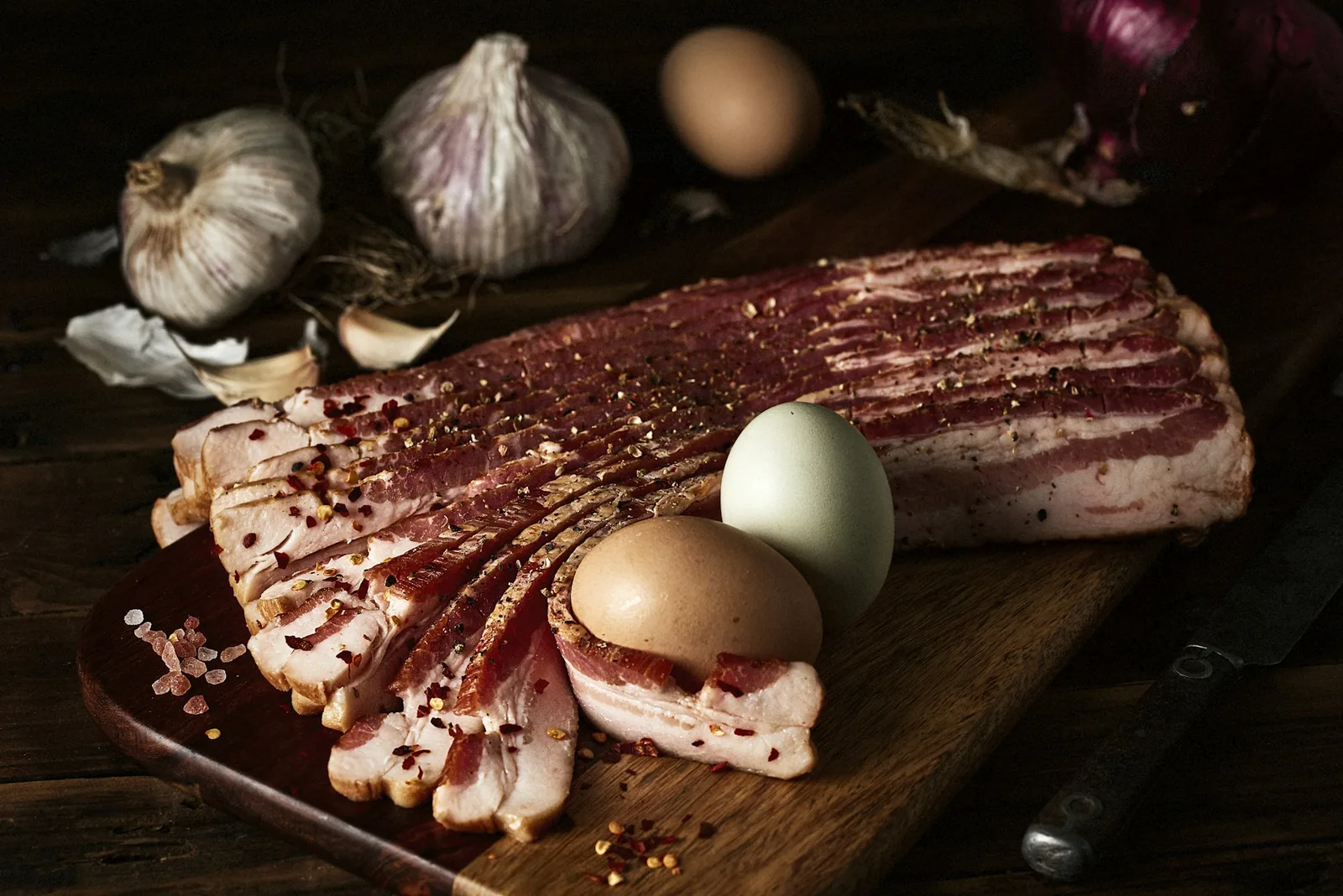
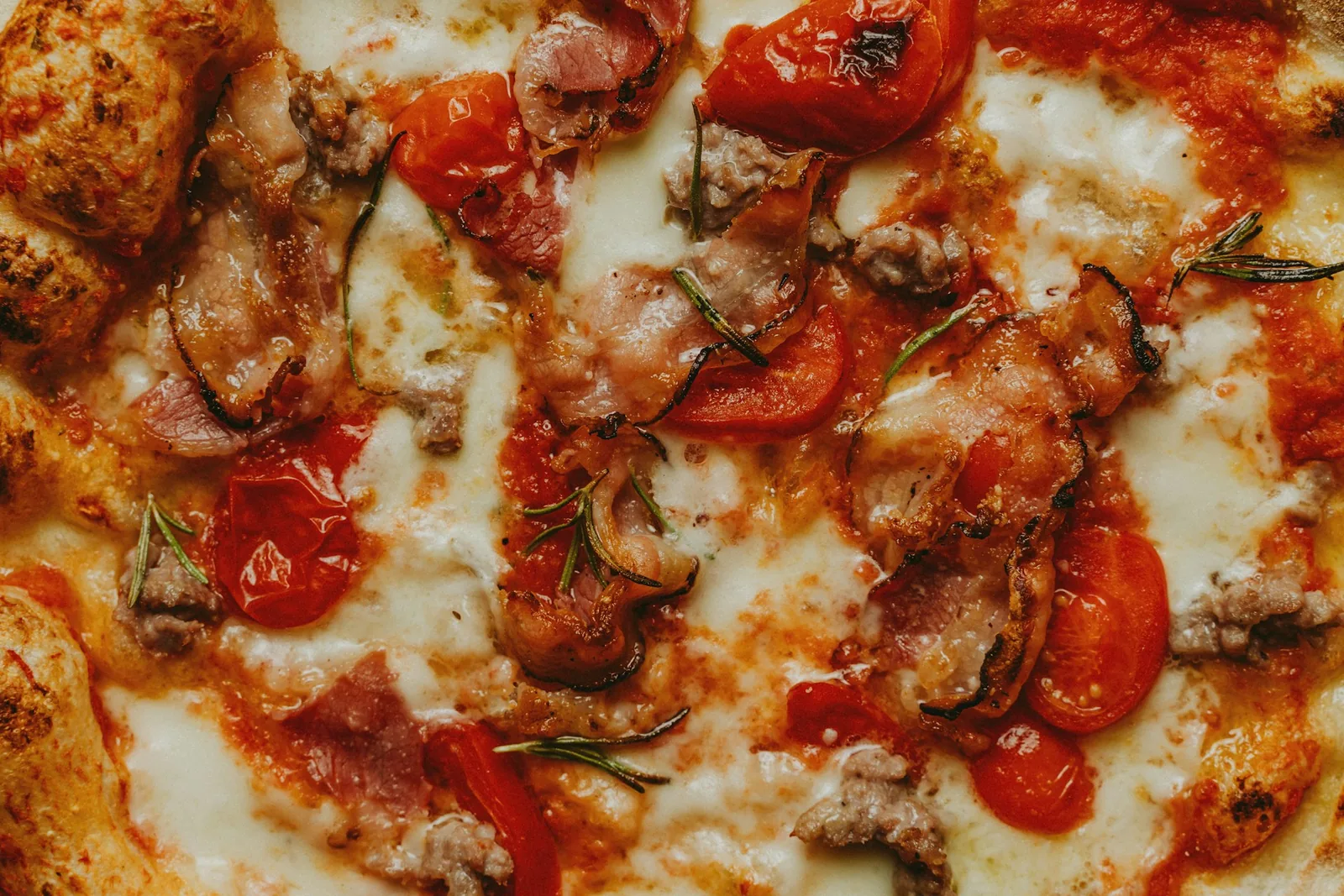
On a base going into a deck oven, that means the edges of a raw rasher are past crisp and into burnt while the cheese underneath is still setting. What you get is black lace on top of an underdone pizza.
Left thick enough to survive the bake, the opposite happens: the fat never fully renders, and you bite into something flabby and greasy rather than crisp. There is no thickness that solves both.
Why it goes on cooked
Most kitchens solve the problem by cooking bacon before it ever meets a pizza.
Rendered on a griddle or in a pan, the fat comes out, the water evaporates and what remains is mostly protein — which is stable in an oven in a way raw bacon is not. It has already done the thing that would otherwise happen too fast.
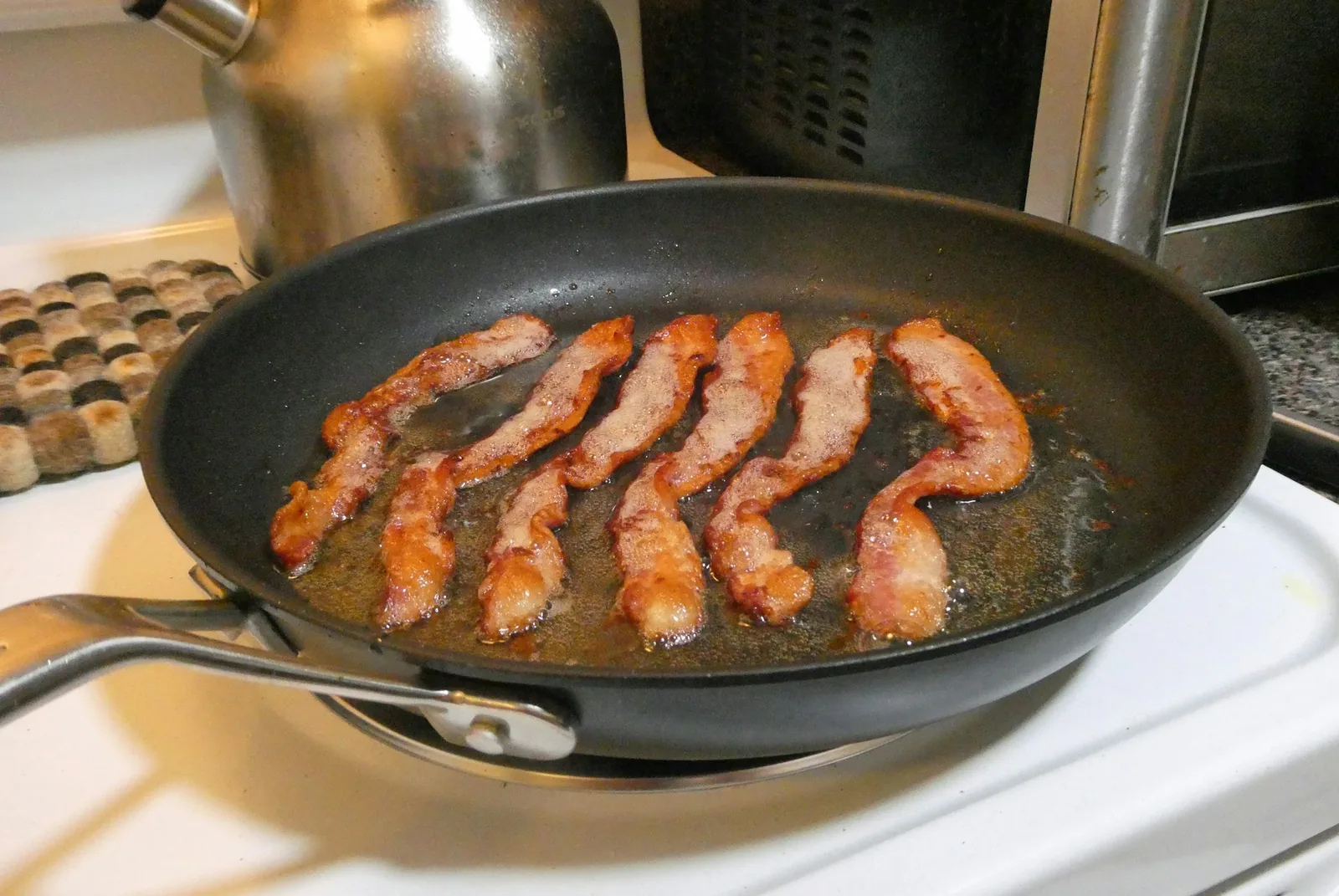
This is the mirror image of how sausage is handled. Sausage goes on raw specifically so its fat lands on the pizza; bacon is cooked first specifically so its fat does not. Same animal, opposite decisions, both correct.
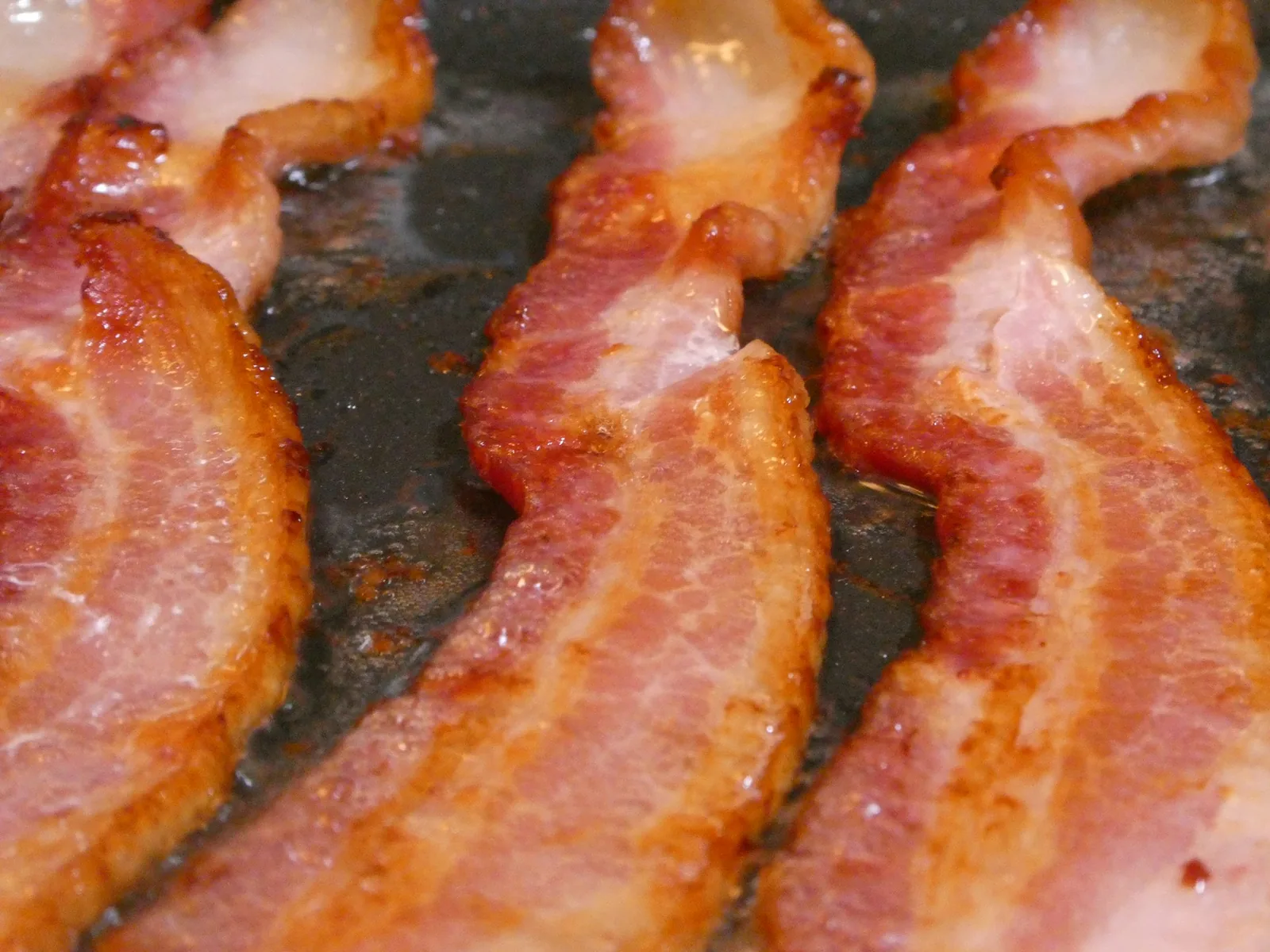
There is a cost. Pre-cooked bacon contributes far less fat to the pizza than a raw topping would, so it is a flavour and texture addition rather than a richness one. That is worth knowing when you are balancing an order.
Bacon against pepperoni
Both are cured pork, both are salty, and they do genuinely different things.
Pepperoni is seasoned assertively — paprika, chilli, fennel — and it holds its shape, cups, and releases spiced red fat that spreads across the cheese. It is a loud topping.
Bacon is smoke and salt with very little spicing. It brings a shattering texture that nothing else on a pizza provides, and it does not colour the cheese around it.
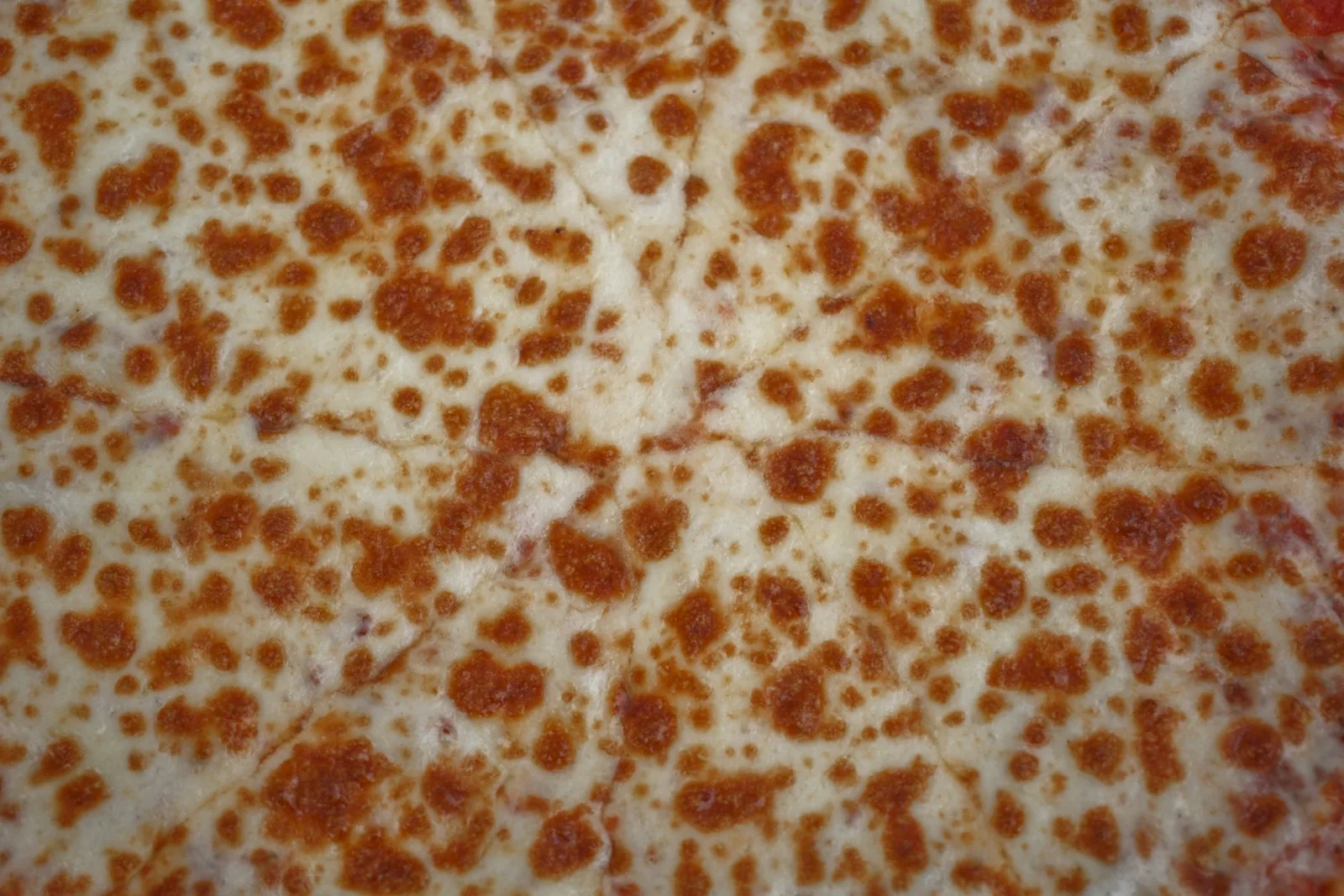
The practical consequence is that bacon layers with other things far more easily. Pepperoni plus a second strongly seasoned meat is usually a mistake, as our guide to topping combinations argues. Bacon plus almost anything works, because it is not competing.
Strips, pieces or lardons
Three forms turn up and they eat differently.
Whole or half strips laid across the pizza look impressive and eat badly. A strip of bacon is stronger than melted cheese, so pulling a slice drags the whole strip off the neighbouring slice with it.
Crumbled pieces are the practical standard. They distribute into most bites, they do not pull, and the irregular surfaces crisp well.
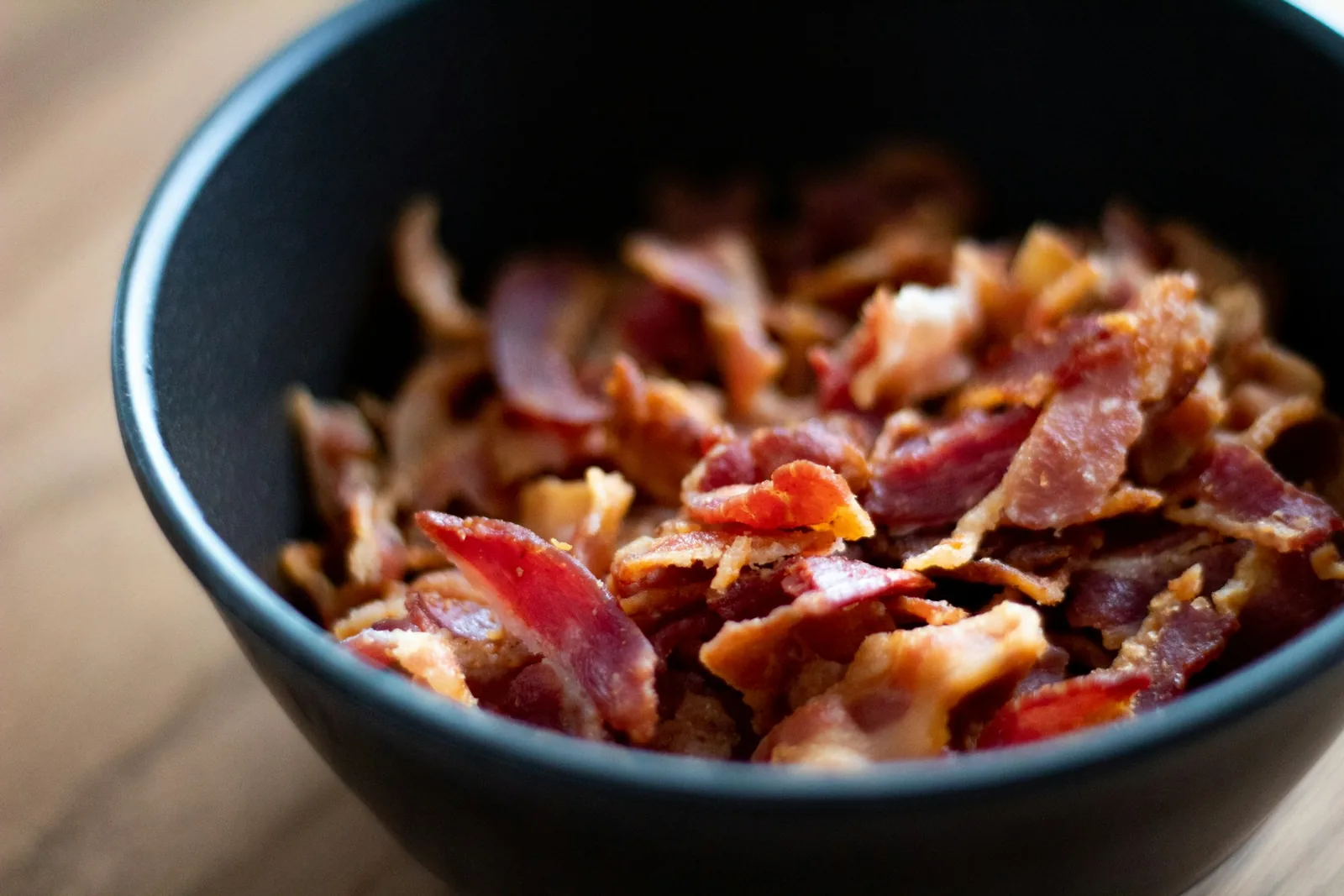
Lardons — thicker cut cubes rather than thin slices — are a different ingredient in practice. Being chunky, they keep some softness in the middle and can go on with less pre-cooking.
What bacon goes with
It is the most agreeable meat topping on any list, so the question is less what works than what is worth doing.
- Onion — sweetness against smoke and salt, and it holds up in the oven.
- Chicken — bacon supplies the fat that lean chicken lacks.
- Pineapple — the salt-against-sweet argument our guide to it makes, with smoke added.
- Mushroom — earthy against smoky, though watch the water.
What it does not need is more salt. Bacon, cured meat and olives together produce a pizza that is genuinely difficult to finish, and the fix is to pick one salty element rather than three.
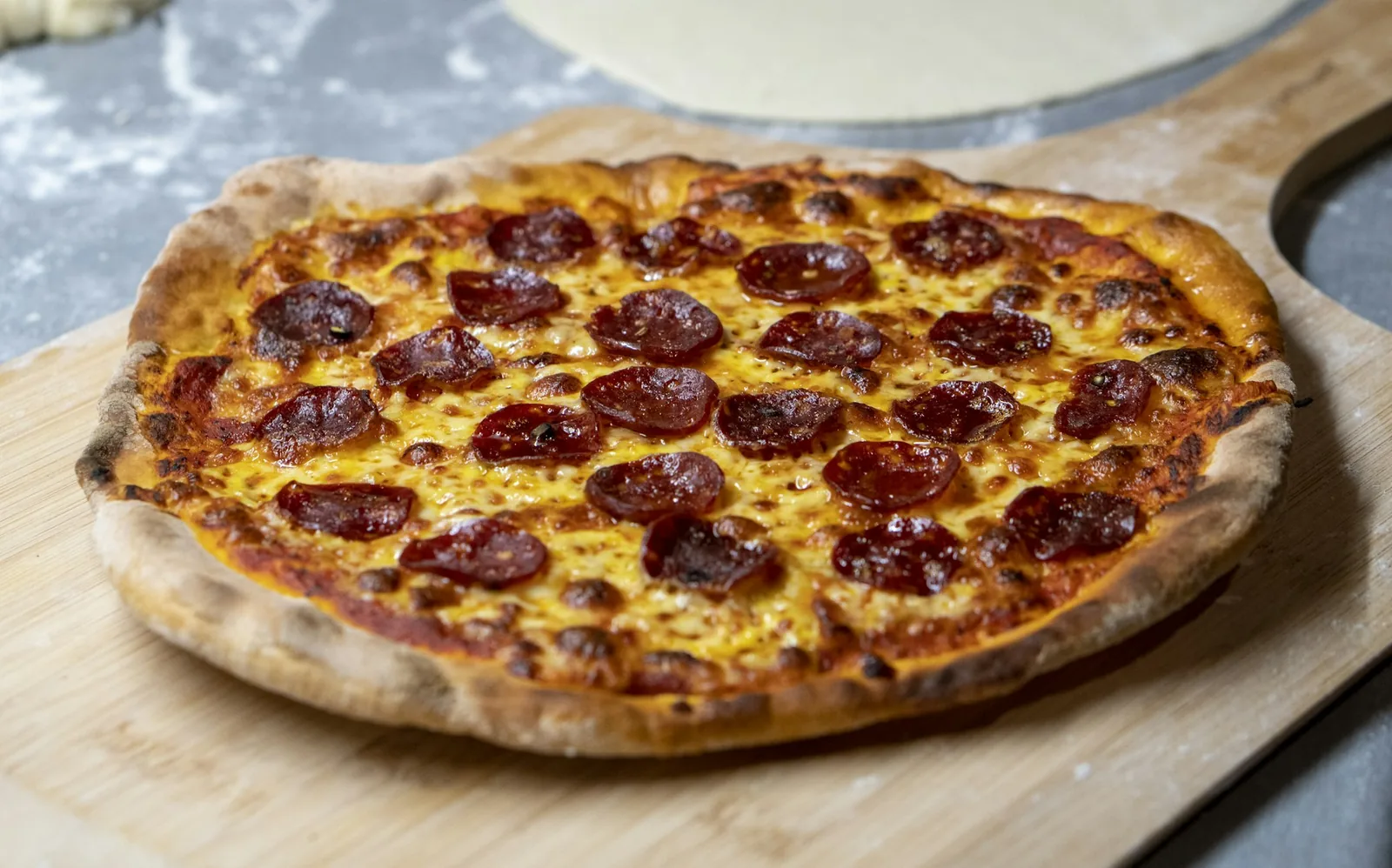
Why bacon on a takeaway pizza is different
Crispness is the thing bacon brings, and crispness is the thing a closed box destroys fastest.
A pizza continues releasing steam for several minutes after it is boxed, and that steam has to go somewhere. Anything crisp on top of the cheese absorbs it first. Bacon that shattered at the counter can be merely chewy by the time it reaches a table twenty minutes away.
Nothing fully prevents it, but ordering the pizza well done helps, because a drier pizza produces less steam in the box to begin with. Eating it sooner helps more.
If a pizza is travelling a long way, bacon is one of the toppings that gains the least from the journey — which is a reason to order it when you are eating in and something more robust when you are not.
Pizza Questions, Answered.
Does bacon go on pizza raw or cooked?
Usually cooked first. Raw bacon is thin and mostly fat, so it burns at the edges before the pizza finishes, or stays flabby if left thicker.
What is the difference between bacon and pepperoni on pizza?
Both are cured pork, but pepperoni is heavily spiced, holds its shape and releases red fat across the cheese. Bacon is smoke and salt with a crisp texture and does not colour the pizza around it.
Why does bacon come in pieces rather than strips?
A whole strip is stronger than the melted cheese holding it, so it drags off the neighbouring slice when you pull one. Crumbled pieces reach more bites and stay put.
What goes well with bacon on a pizza?
Onion, chicken and pineapple all work – sweetness or mildness against smoke and salt. Avoid pairing it with several other salty toppings at once.
The short version
Thin, fatty and quick to burn, so it is cooked before it goes on. That makes it a texture topping rather than a richness one, and an unusually easy partner for almost everything else on the list.
Bacon is on the Ray’s topping list, and the kitchen is open daily 10:30am to 9:00pm.
Ray’s Pizza Team
Ray’s Pizza & Sub Shop is a neighborhood pizzeria at 95 Woodstown Rd, Swedesboro, New Jersey, serving pizza, stromboli, hot and cold subs and dinners seven days a week from 10:30am to 9:00pm. These guides are written by the people behind the counter.
Visit Ray’sMore From Ray’s