The Meatball Sub
The hardest sandwich on any menu to build well. Wet filling, long roll, and roughly ten minutes before physics starts winning.
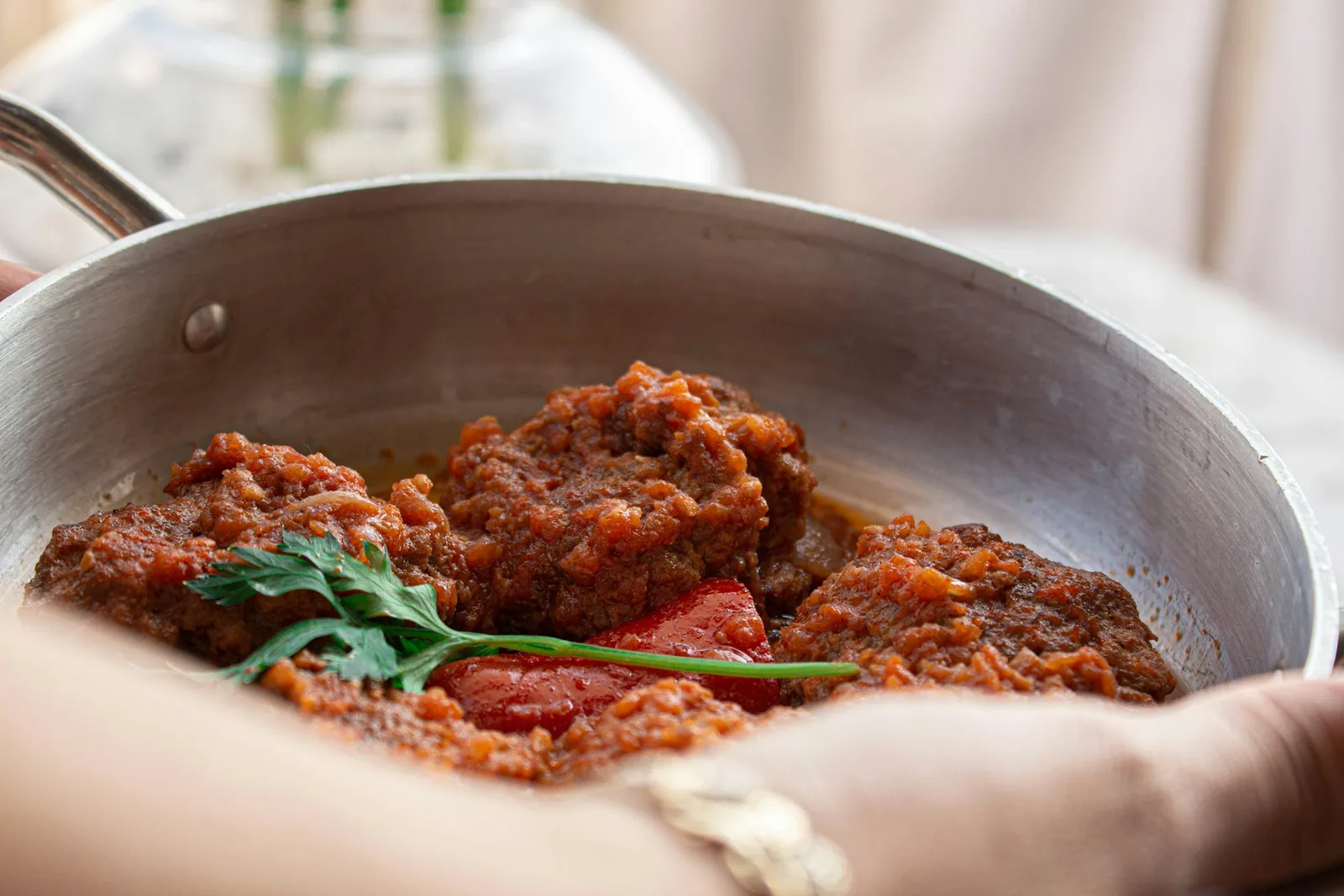
A meatball sub is meatballs and sauce in a long roll. That is the whole specification, and it is why it is difficult — there is nowhere to hide.
Every other hot sub puts something relatively dry into bread. This one puts wet sauce into bread, deliberately, and then asks the bread to hold together while you eat it.
| Meatball sub | A typical hot sub | |
|---|---|---|
| Filling | Wet, sauced | Griddled, relatively dry |
| Main risk | Base of the roll soaks through | Filling cools |
| Toasting | Structural necessity | Nice to have |
| Eaten within | About ten minutes | Comfortably longer |
Why it’s the hardest one
Bread absorbs liquid. That is not a flaw in the sandwich, it is what bread does, and a tomato sauce is mostly liquid held together by pulp.
Put sauced meatballs into an untoasted roll and the bottom crust begins softening immediately. Within a few minutes the base is saturated; within ten it will tear when you pick it up.
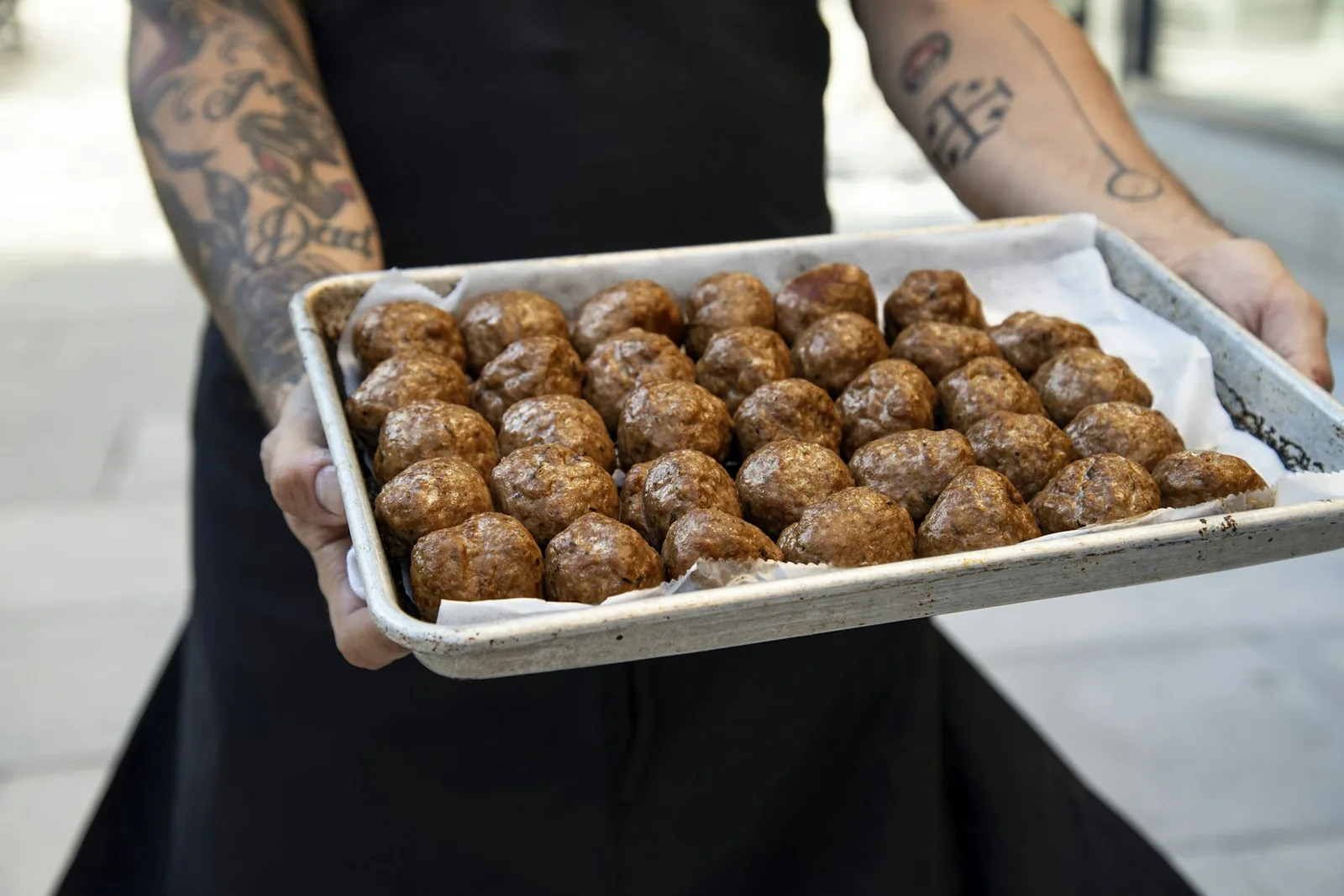
There is a second problem stacked on the first. Meatballs are round, and round things roll. A cylinder of loose spheres inside a split tube is mechanically unstable in a way that sliced meat in the same roll is not.
The roll decides it
More than the meatballs, more than the sauce.
What you need is a roll with a firm crust and a relatively tight crumb. The crust is the barrier; the crumb is the thing that soaks. A soft, open, fluffy roll has a weak barrier and an absorbent interior, which is the worst combination available.
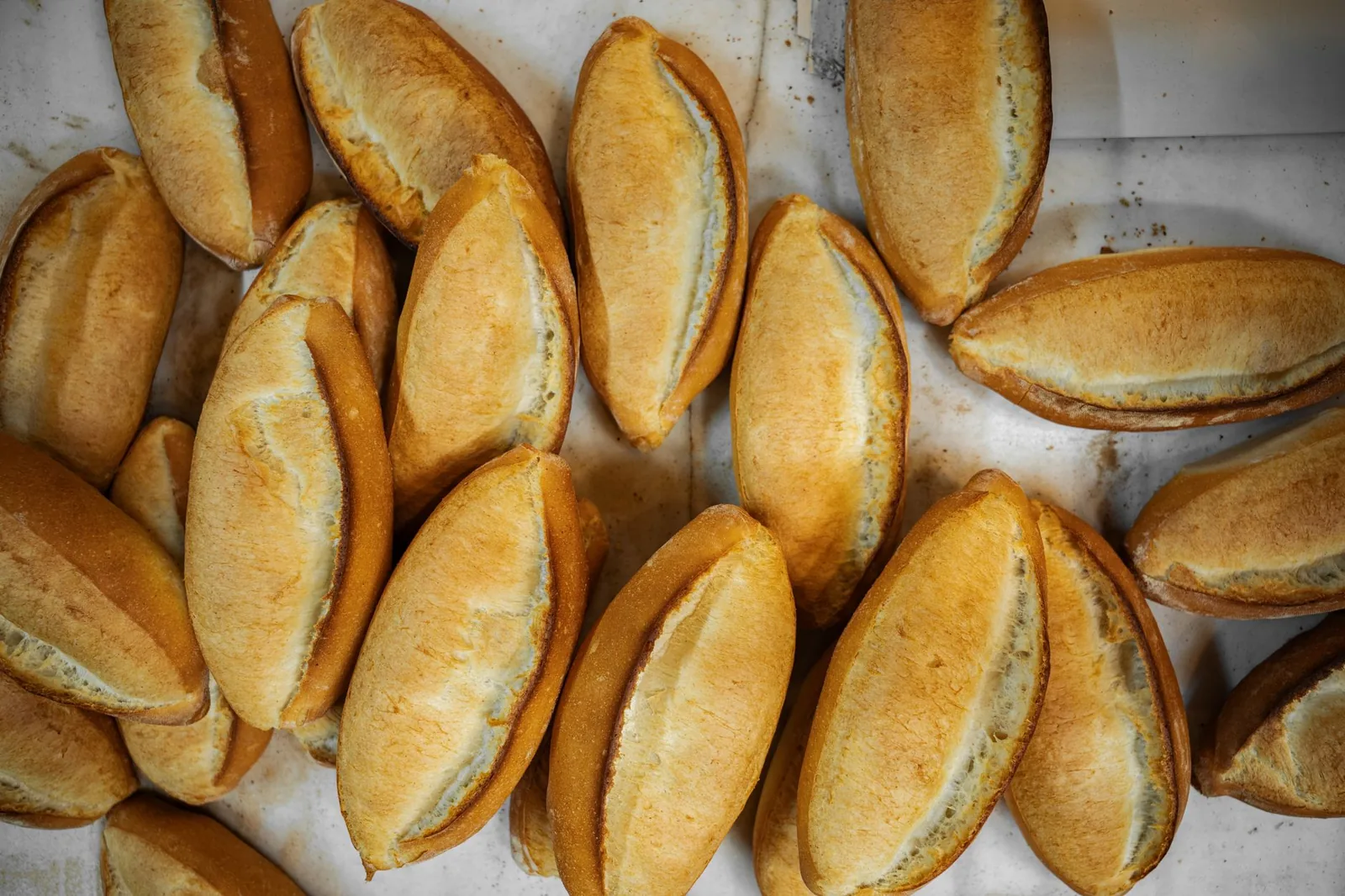
This is the same reason a long roll holds a hot filling better than a burger bun would. The shape distributes weight along its length, and the crust does structural work rather than just containing things.
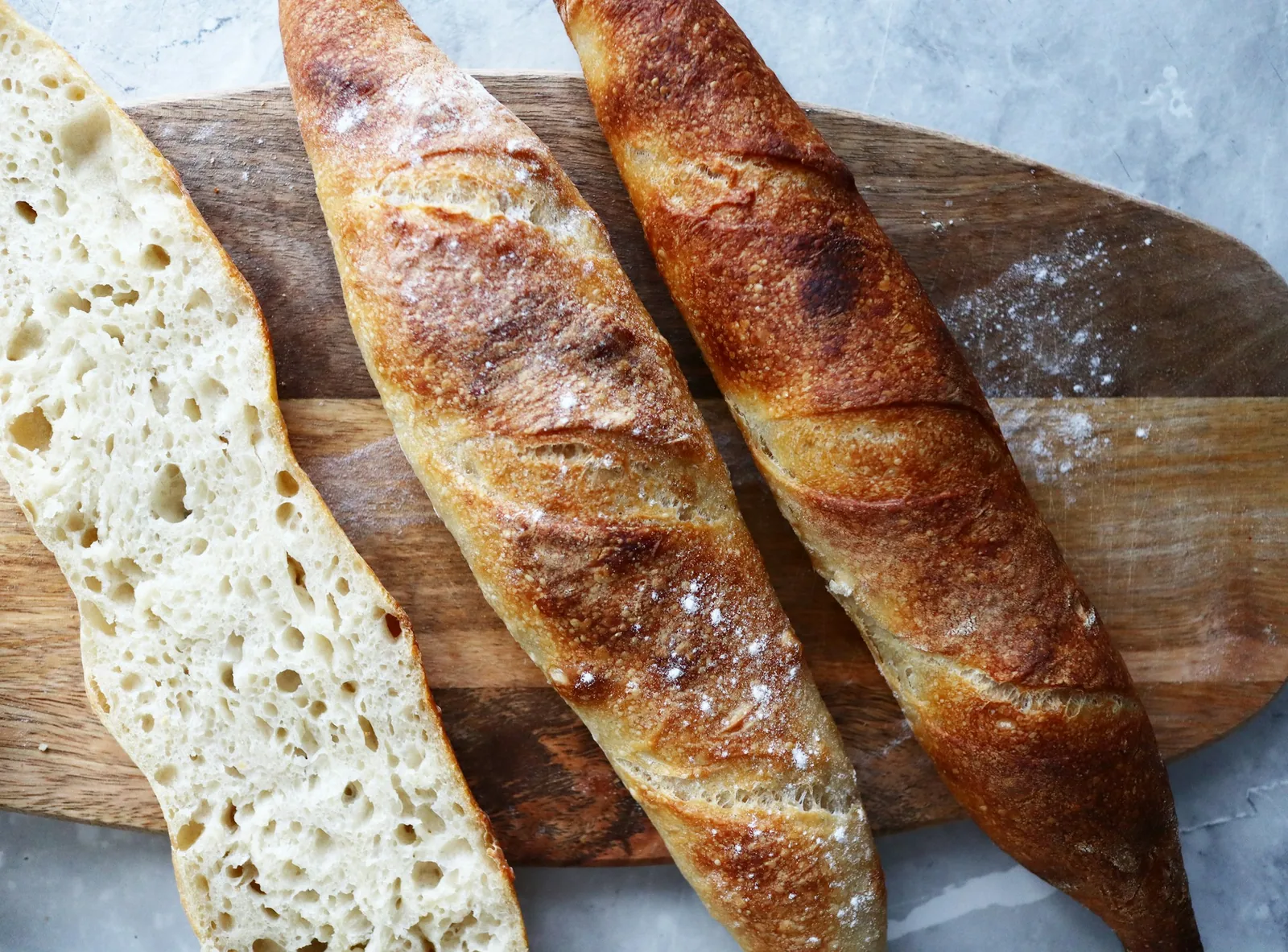
How it is split matters too. A roll cut most of the way through but left hinged along one side holds far better than one cut into two separate halves, because the hinge stops the load spreading the sandwich open.
Toasting is the actual fix
This is the step that separates a good meatball sub from a disappointing one, and it is barely mentioned anywhere.
Toasting the cut faces of the roll dries and firms the exposed crumb. That surface becomes a partial barrier — not waterproof, but enough to slow absorption from immediate to gradual. It buys you the difference between five minutes and twenty.
The sauce matters for the same reason. A thick sauce coats the meatballs and stays with them; a thin one runs to the bottom of the roll and pools there. If you have a choice, less sauce on a meatball sub is almost always better than more.
What the cheese is actually doing
Melted cheese on a meatball sub is not only a flavour decision.
Laid over the meatballs and melted, it forms a soft blanket that holds them in position — the roll-out problem, largely solved. It also sits between the sauce and the upper half of the roll, which is a second small barrier.
Flavour-wise it wants to be mild. The meatballs and sauce are already carrying garlic, herbs and salt, so a strongly flavoured cheese adds noise rather than balance — the same logic our cheese guide applies to pizza.
Why it only works in a roll
The meatball sub is one of the few sandwiches with no viable alternative format, and the reason is geometry rather than tradition.
Round objects need something rigid around them. A long roll with a firm crust forms a channel that holds spheres in a line; the crust is load-bearing. A thin flatbread has no rigidity at all, so as a wrap the meatballs simply roll toward whichever end is lowest and force the seam open.
Cutting the meatballs down solves the rolling but creates a worse problem — more cut surface means more sauce in contact with more bread, and a flatbread has none of the crust that slows absorption.
It is the clearest case on the menu of the bread being chosen by the filling rather than the other way round.
Ordering it to go
This is where it most often goes wrong, because the clock starts at the counter rather than at your table.
- Ask for it toasted if that is not standard. It is the single highest-value request.
- Ask for sauce on the light side. Less liquid, less soaking.
- Eat it soon. Ten to fifteen minutes is the realistic window, wrapped.
- Keep it level. Carried tilted, the sauce migrates to one end and saturates it.
If the journey is long, a cold sub travels considerably better, and that is not a compromise so much as a different sandwich for a different situation.
Ray’s carries meatballs and hot subs and is open daily 10:30am to 9:00pm.
Pizza Questions, Answered.
Why do meatball subs get soggy?
Tomato sauce is mostly liquid and bread absorbs it. Without toasting, the base of the roll starts softening immediately and is saturated within about ten minutes.
What is the best bread for a meatball sub?
A long roll with a firm crust and a relatively tight crumb. The crust acts as a barrier; a soft, open, fluffy roll soaks through fastest.
Should a meatball sub be toasted?
Yes, if you have the choice. Toasting the cut faces dries and firms the crumb, which slows how quickly the sauce soaks in.
Why is the cheese melted over the top?
It holds the meatballs in place so they do not roll out, and it sits between the sauce and the upper half of the roll as a second barrier.
The short version
Wet filling in bread, fighting a clock. A firm roll, toasted faces, thick sauce used sparingly and cheese melted over the top are the four things that decide it — and it wants eating sooner than anything else on the menu.
The Ray’s menu is open daily 10:30am to 9:00pm.
Ray’s Pizza Team
Ray’s Pizza & Sub Shop is a neighborhood pizzeria at 95 Woodstown Rd, Swedesboro, New Jersey, serving pizza, stromboli, hot and cold subs and dinners seven days a week from 10:30am to 9:00pm. These guides are written by the people behind the counter.
Visit Ray’sMore From Ray’s