What Happens After You Order
Most of the work happened yesterday. What follows an order is assembly and a very short bake — which is why the wait is shorter than people expect and longer than they want.
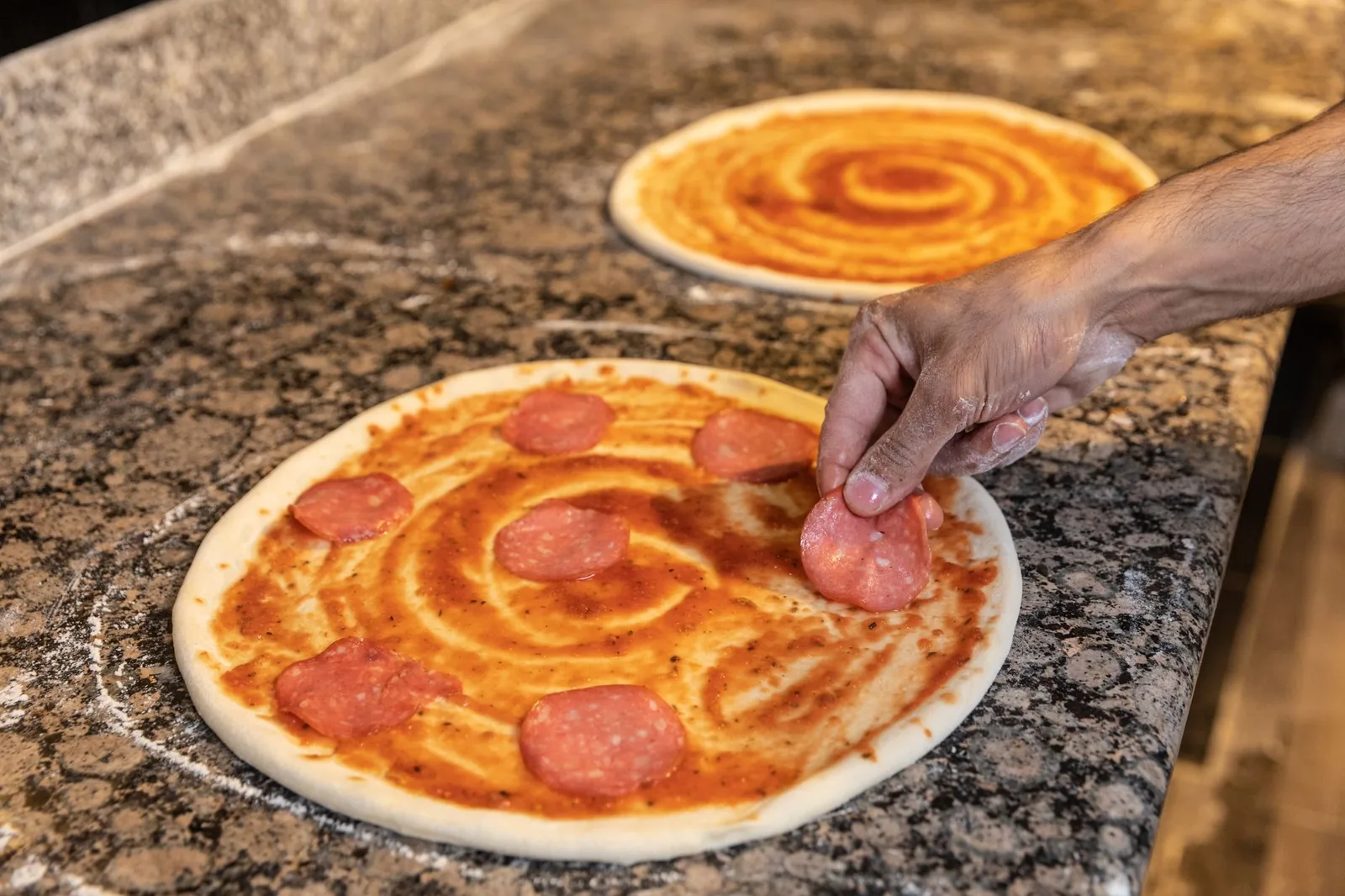
An order arrives and a pizza appears some minutes later. What happens in between is less cooking than assembly, because the slowest ingredient was made long before you decided to eat.
Dough needs hours. Sauce needs to sit. Cheese needs grating and vegetables need cutting. None of that can happen between an order and a pizza, so none of it does.
| Stage | Takes | When it happens |
|---|---|---|
| Dough made and proved | Many hours | The day before |
| Prep – cheese, vegetables, sauce | Hours | Before service |
| Stretching and topping | A minute or two | After you order |
| Bake | A few minutes | After you order |
| Cutting and boxing | Under a minute | After you order |
Most of it happened yesterday
Dough is the constraint everything else is arranged around. It is mixed, divided into balls and left to prove for a long time — often overnight, in a cold room, because slow and cold builds better flavour and structure than fast and warm.
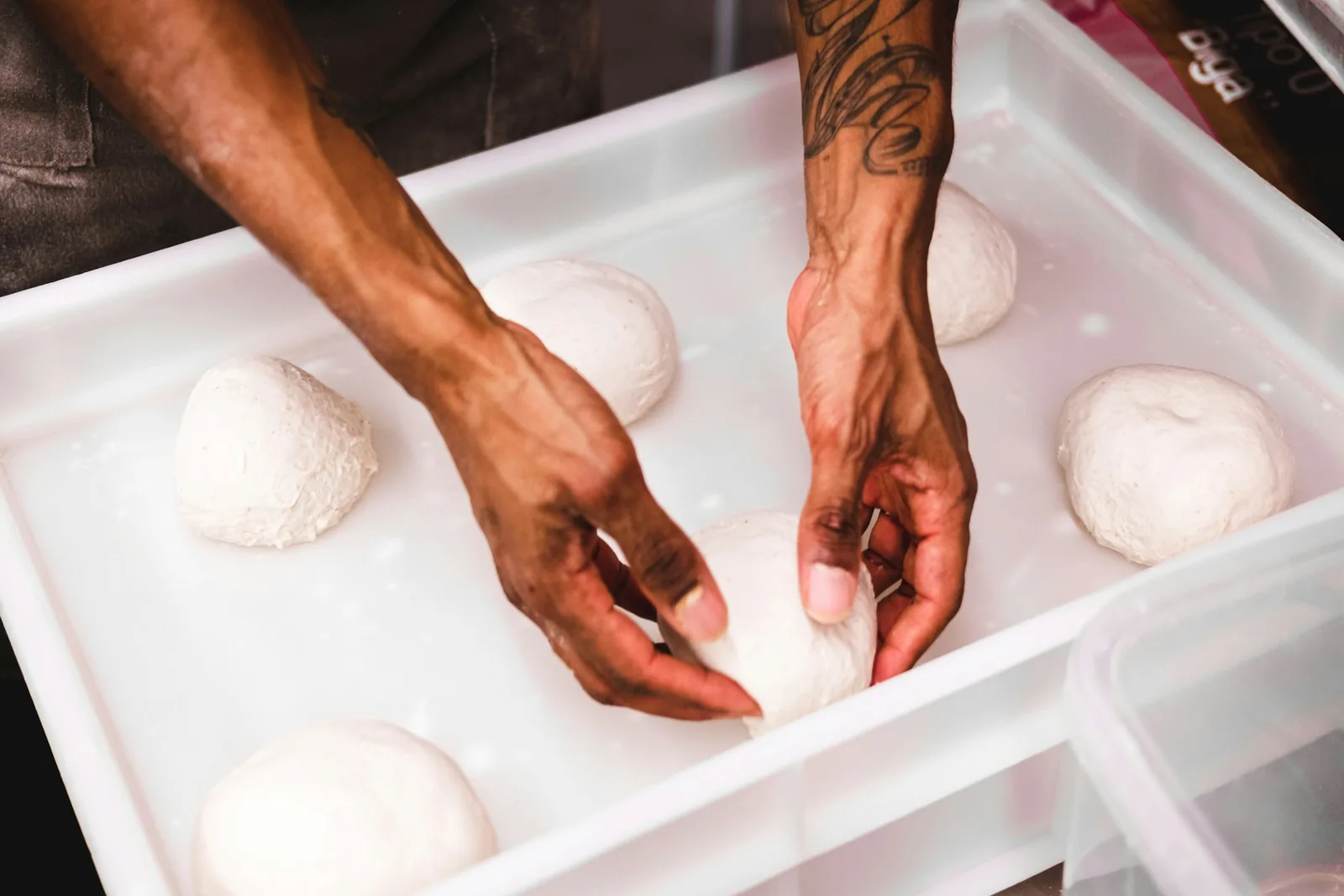
That means a pizzeria is committing to a quantity of dough a day ahead, based on what it expects to sell. Our dough guide covers why the long prove matters; the operational point is that it forces a guess.
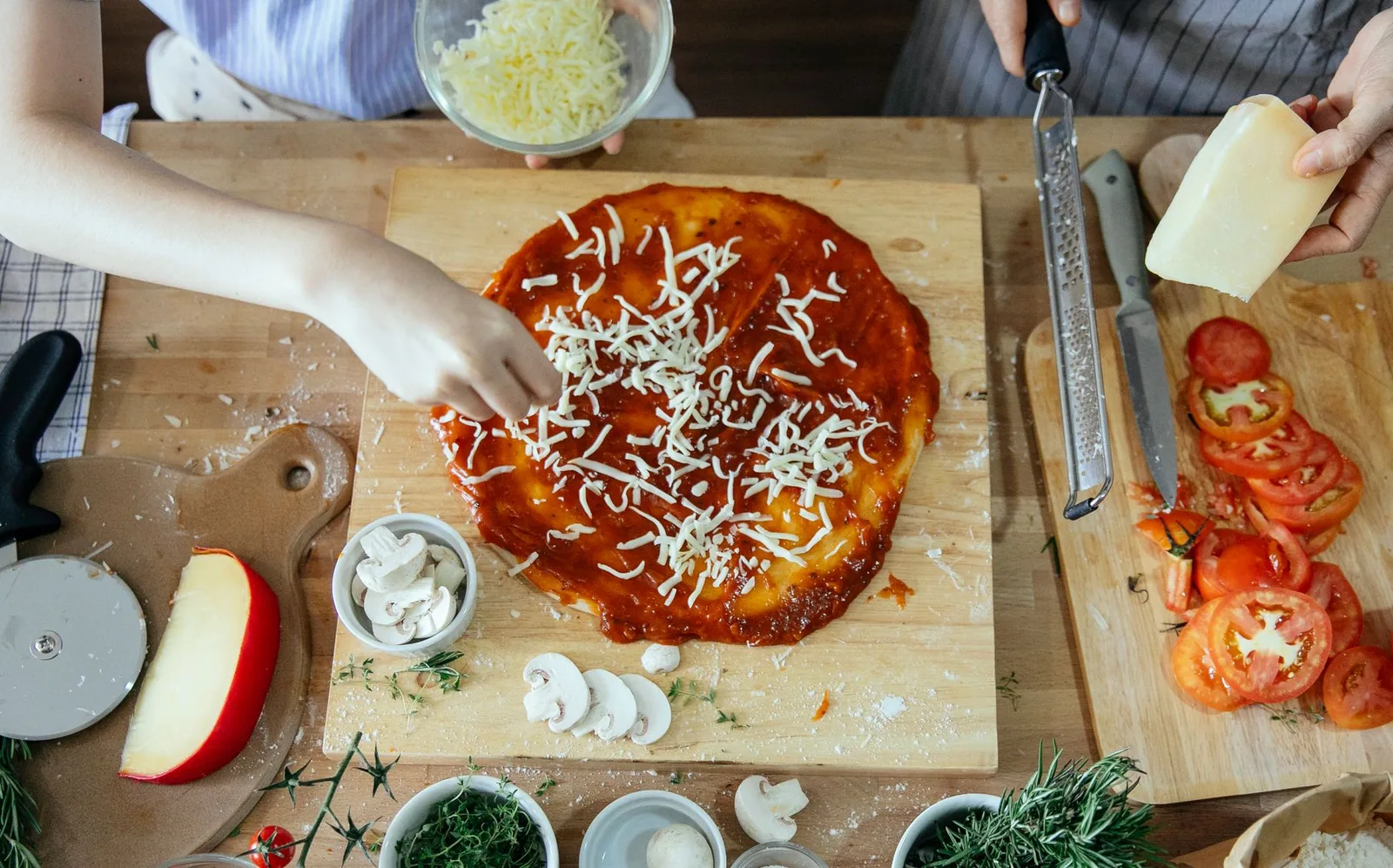
Prep is the same principle compressed. Cheese grated, vegetables sliced, meats portioned, sauce brought out — all done before the doors open, arranged in a chilled well within arm’s reach of where the pizzas are built.
Assembly is the fast part
Once an order lands, the sequence is fixed and quick.
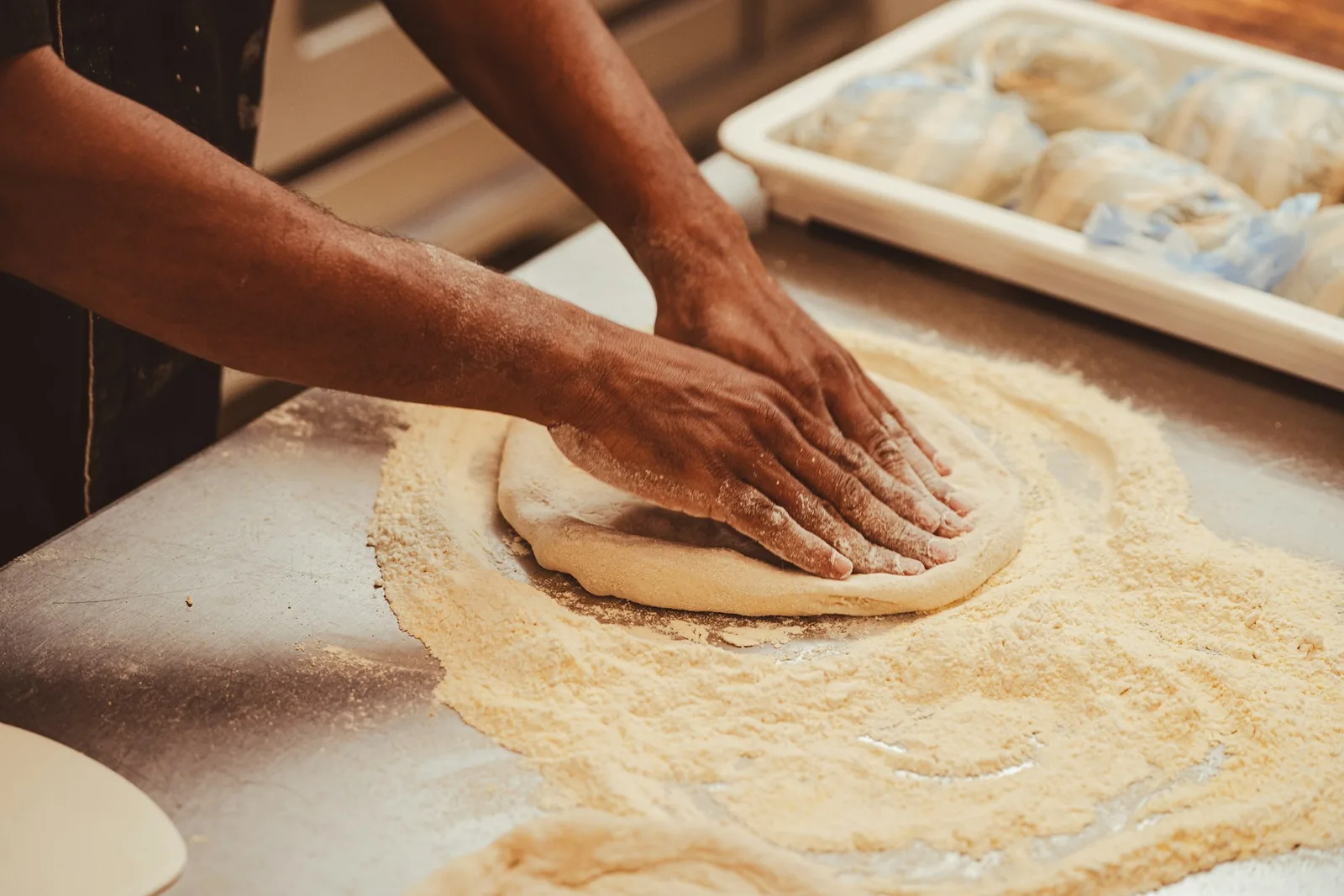
A dough ball comes out and is pressed and stretched from the centre outward — the process our guide to why pizza is round explains. Thirty seconds, done by feel rather than measurement.
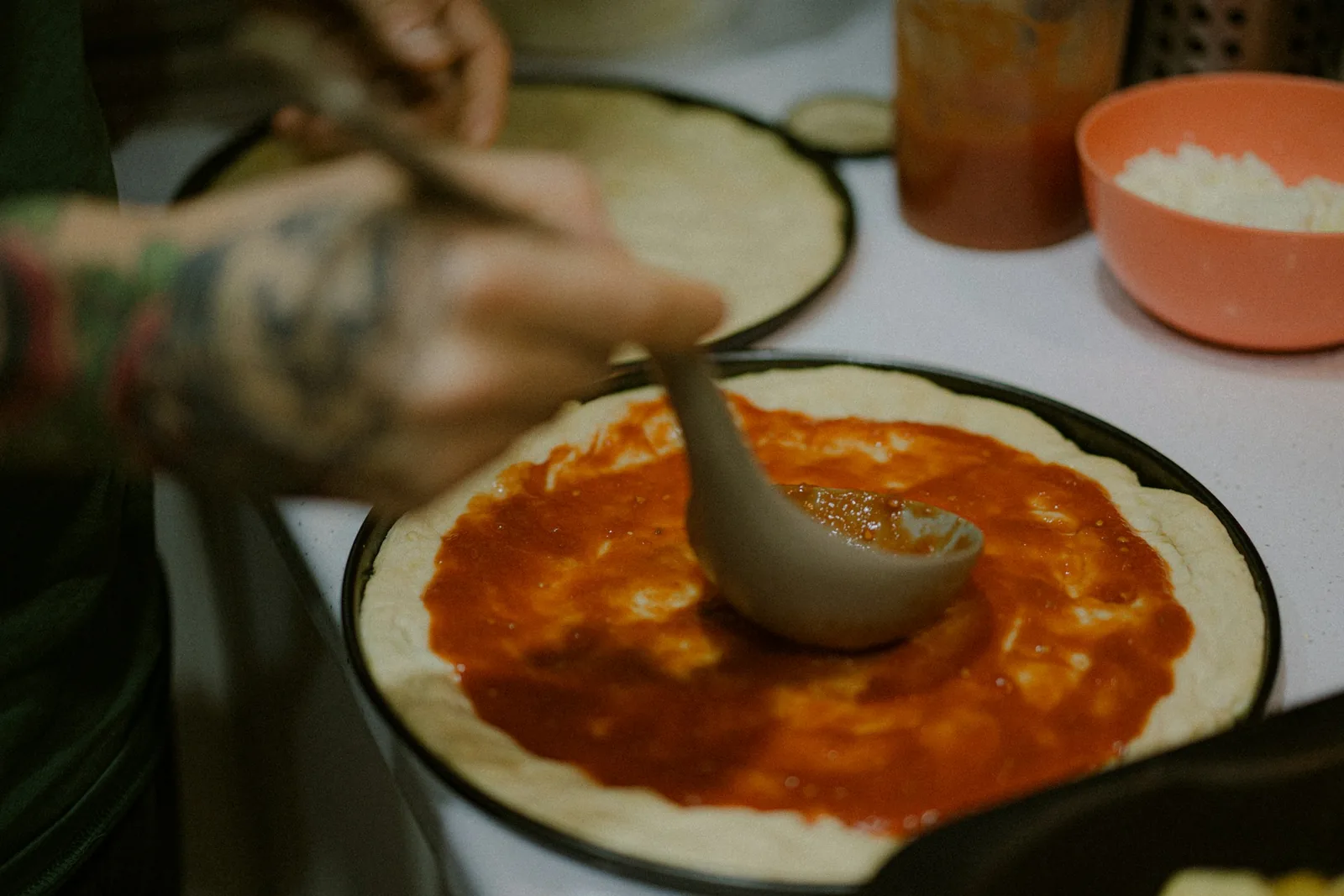
Then sauce, spread outward with the back of a ladle, leaving a clear border. Then cheese, scattered rather than placed. Then toppings, in an order that is not arbitrary: things that need protecting go under the cheese, things that want direct heat go on top.
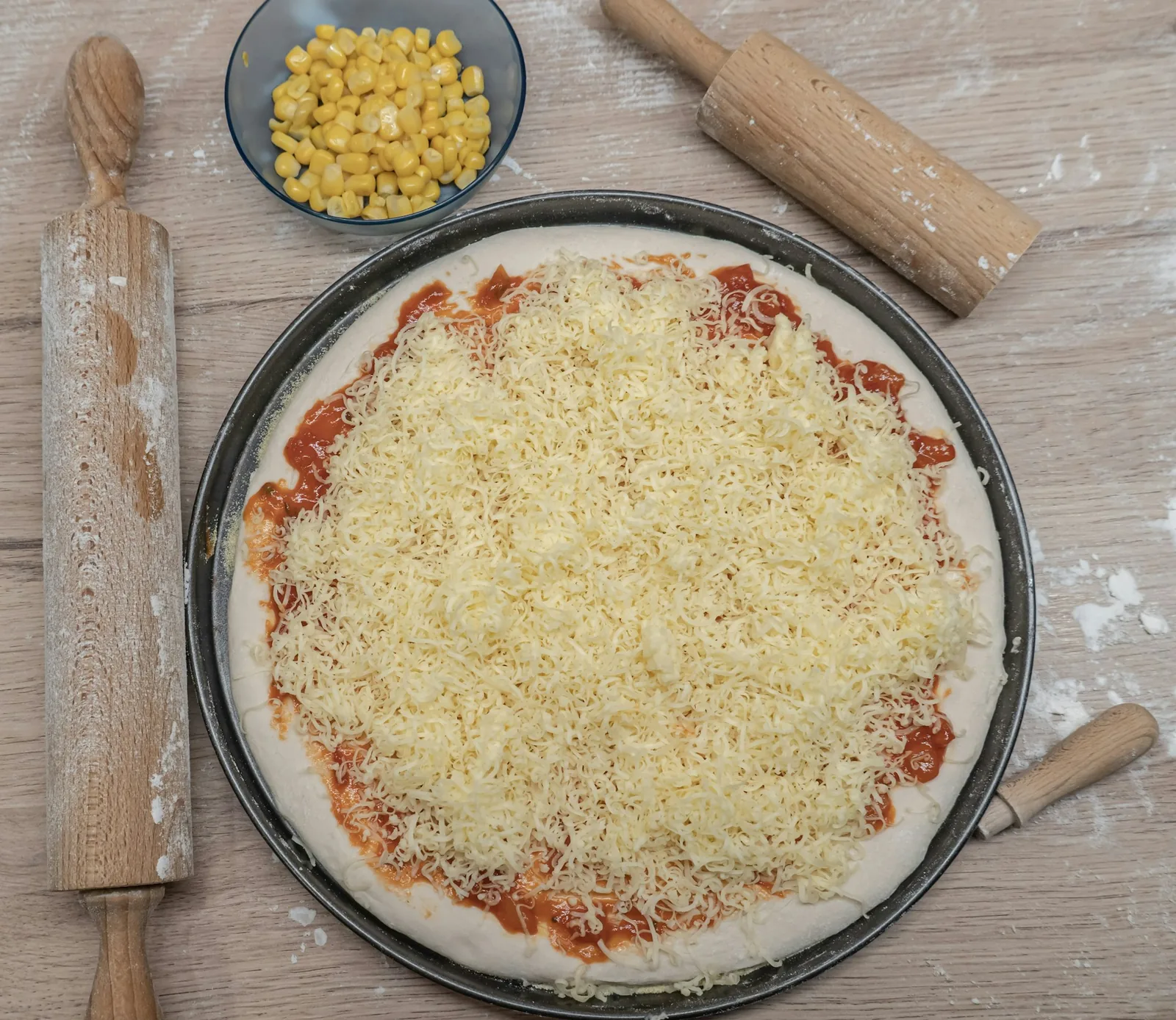
The whole build takes a minute or two. A practised hand does it without looking at the pizza much, because the constraint is the oven behind them rather than the bench in front.
The bake is shorter than you think
This is the part people assume dominates the wait, and it is usually the shortest stage of the whole process.
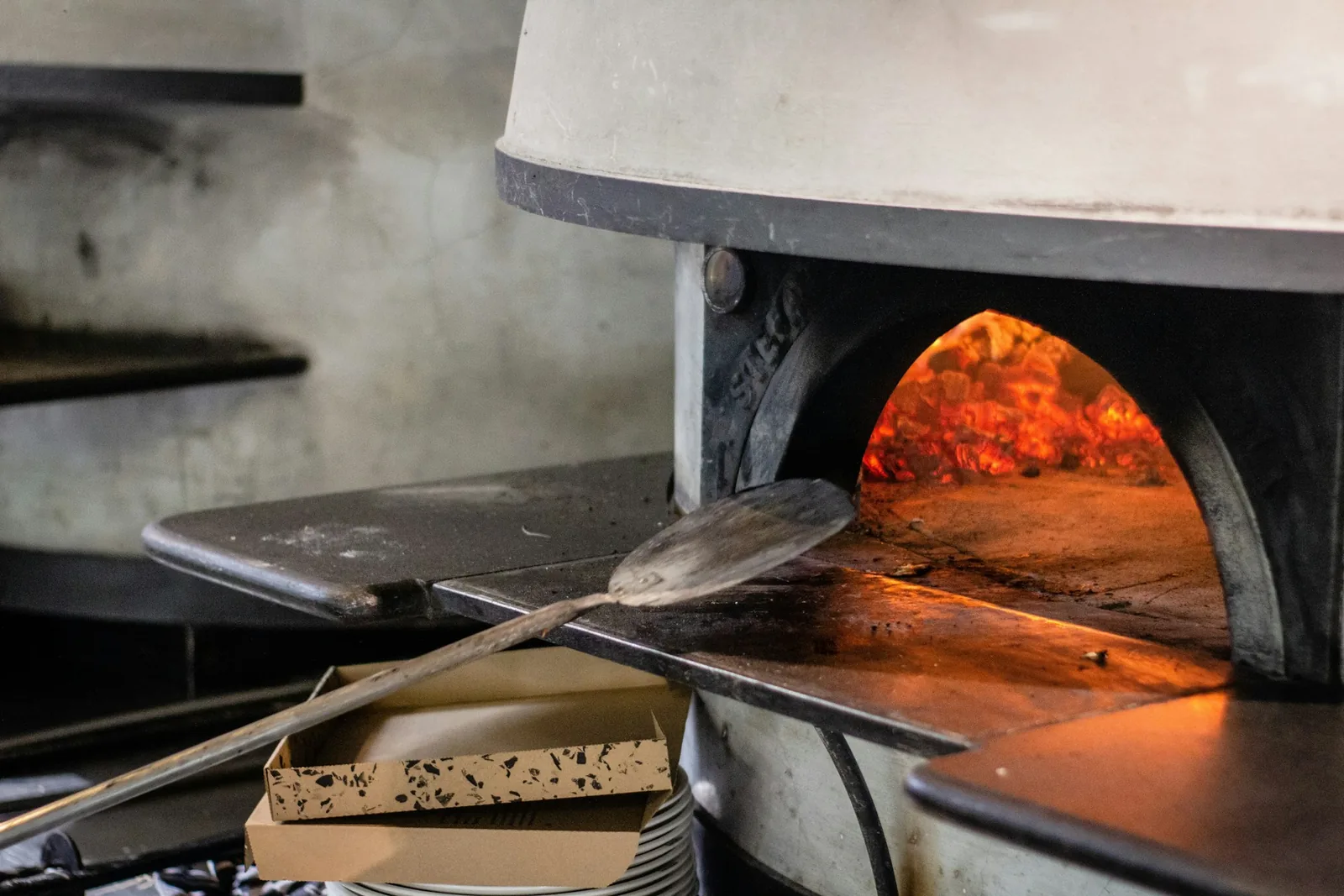
A commercial deck oven runs hot enough to finish a pizza in a handful of minutes. That is not impatience — as our comparison with frozen pizza sets out, the speed is what keeps the base crisp, because it sets before the sauce can soak in.
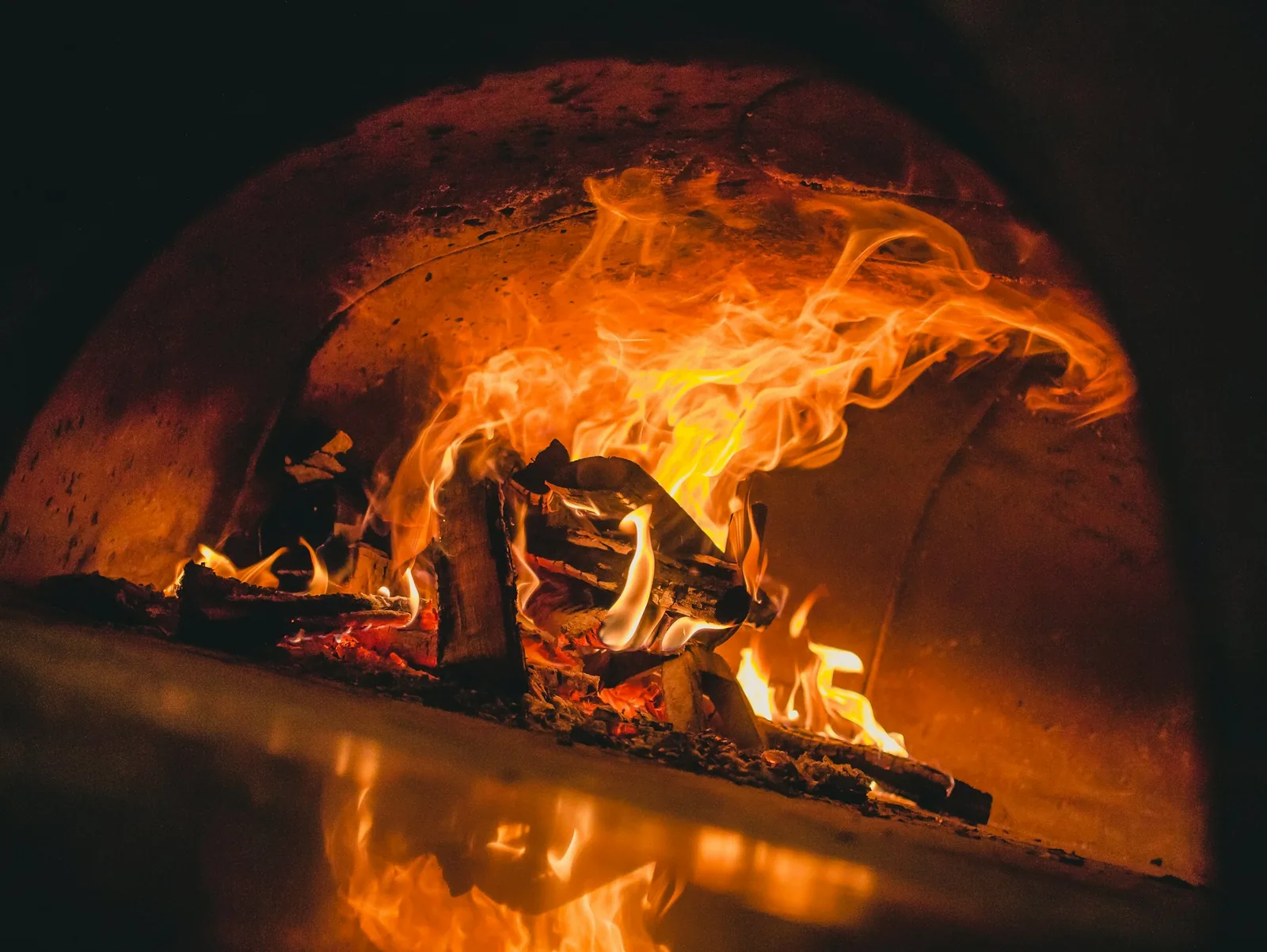
What takes the time on a busy night is not the bake but the queue for the oven. A deck holds a fixed number of pizzas and they go in when there is room, so your wait is mostly other people’s pizzas finishing.
The two minutes after the oven
A pizza out of the oven is not finished, and what happens next matters more than most people realise.
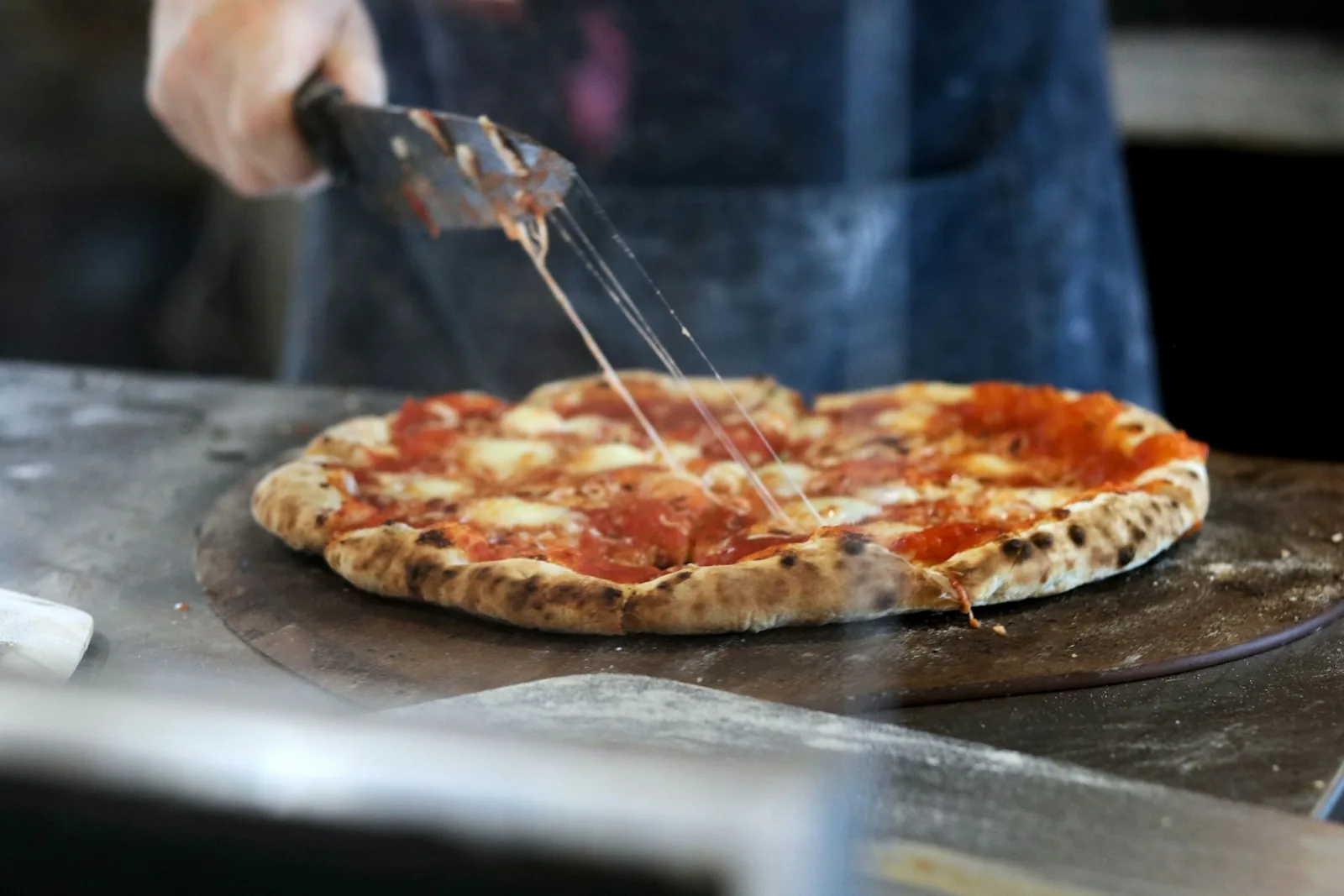
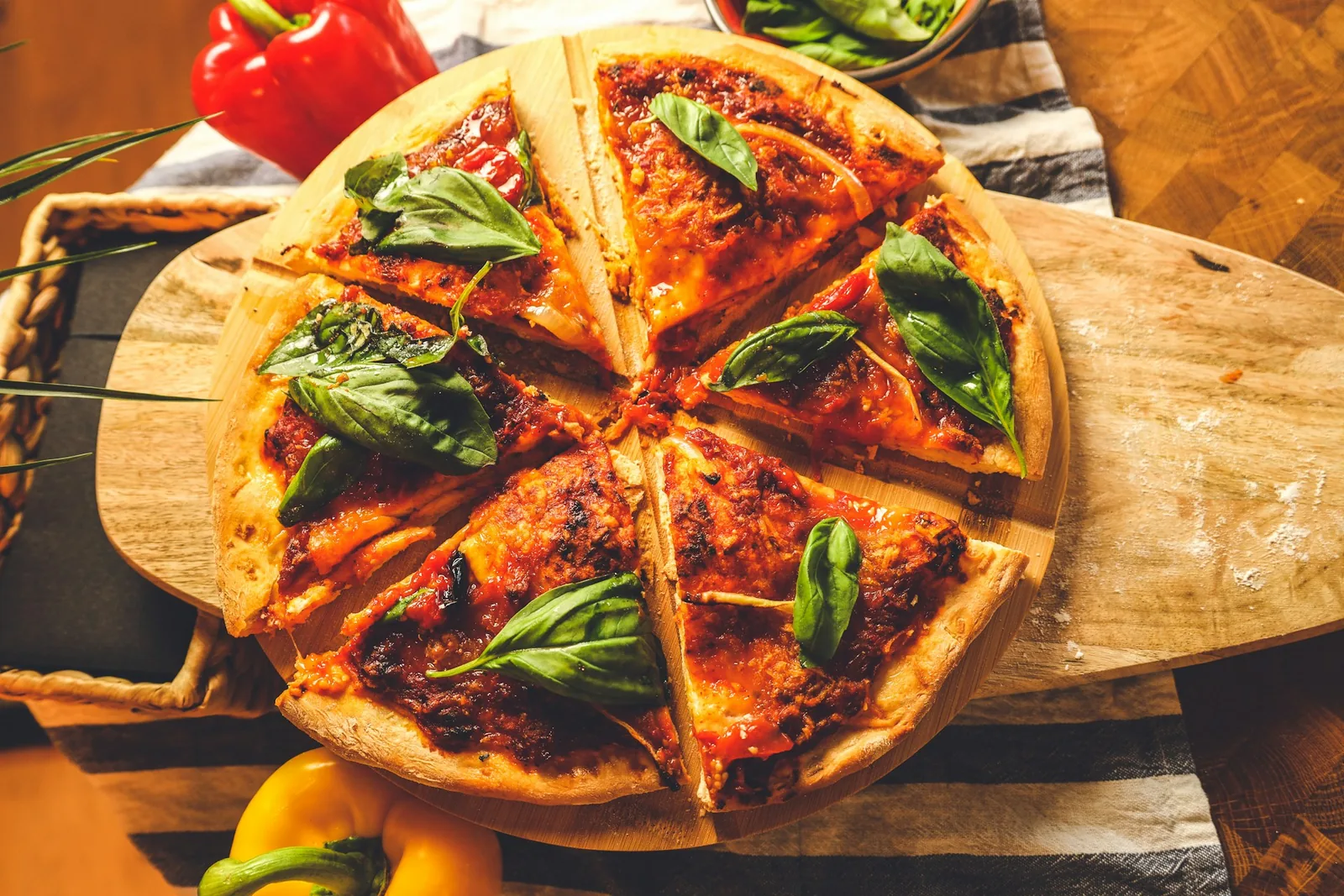
It is cut immediately, usually on the peel or a board, because a pizza left whole traps steam underneath itself. Cutting opens paths for that steam to escape, which is the difference between a crisp base and a limp one.
Then it either goes to a table or into a box, and those are quite different outcomes. A box is a closed container holding something that will release steam for several more minutes, which is why the corners of the box matter and why a takeaway pizza is a slightly different object from the one served in.
If it is going out, this is the moment to have asked for it well done. A drier pizza produces less steam in the box, and that request has to be made at the start rather than at the counter.
Why a busy shop can be faster
This is counter-intuitive and consistently true.
An oven that has been running continuously is at a stable temperature all the way through — deck, walls and air. An oven that has been idle has a hot element and a cooler stone, and the first pizza into it bakes unevenly and slowly.
Ingredients turn over faster too. Dough that has been sitting all afternoon has over-proved slightly; cheese and vegetables have been out longer. On a busy night everything is being replaced constantly, which is one of the arguments our guide to judging a pizzeria makes for trusting a queue.
The wait is longer on a busy night. The pizza is often better.
Where the time actually goes
If a pizza takes twenty minutes, very little of that is your pizza being worked on.
A minute or two of building and a few minutes in the oven is the entire hands-on cost. Everything else is waiting — for a gap on the deck, for the order in front, for a second pizza on the same ticket so they arrive together.
That last one catches people out. An order with a pizza and a hot sub is paced so both are ready at once, which means the faster item waits for the slower. It is the right decision and it does make the pizza’s own clock look worse than it is.
Pizza Questions, Answered.
How long does it take to make a pizza?
The hands-on part is a minute or two of building plus a few minutes in the oven. Any longer wait is mostly queueing for space on the oven deck.
Is pizza dough made fresh each day?
It is usually made a day ahead and proved slowly, often overnight in a cold room. A long cold prove builds better flavour and structure than a fast warm one.
Why is my pizza cut straight out of the oven?
A whole pizza traps steam underneath itself. Cutting opens paths for it to escape, which is what keeps the base from going limp.
Is pizza better when the shop is busy?
Often, yes. An oven running continuously holds a stable temperature all the way through, and ingredients are being replaced constantly rather than sitting.
The short version
The dough was made yesterday and the prep before opening. What follows your order is a couple of minutes of assembly, a few minutes of very hot oven, and a cut. The rest of the wait is the queue.
The Ray’s menu is open daily 10:30am to 9:00pm.

Ray’s Pizza Team
Ray’s Pizza & Sub Shop is a neighborhood pizzeria at 95 Woodstown Rd, Swedesboro, New Jersey, serving pizza, stromboli, hot and cold subs and dinners seven days a week from 10:30am to 9:00pm. These guides are written by the people behind the counter.
Visit Ray’sMore From Ray’s