Ravioli, Stuffed Shells or Ziti?
All three are pasta, cheese and tomato. What separates them is where the filling sits and how much sauce reaches it.
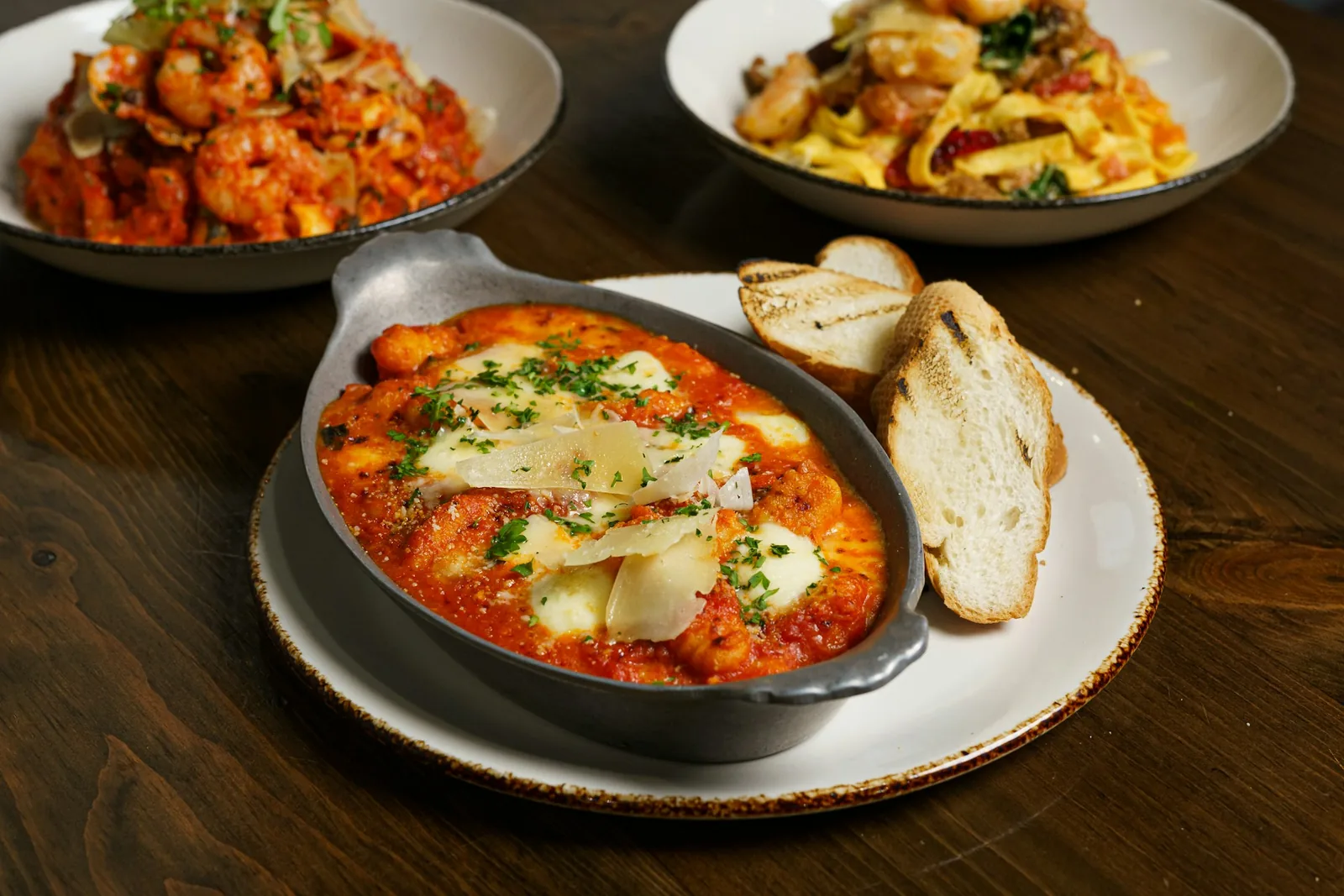
Ravioli is filled pasta — the cheese is sealed inside each parcel. Stuffed shells are large shells piped full of ricotta and baked under sauce. Ziti is plain tube pasta mixed through sauce and cheese and baked.
So the filling is inside, inside, and nowhere respectively. That decides how each one eats.
| Ravioli | Stuffed shells | Ziti | |
|---|---|---|---|
| Filling | Sealed in pasta | Piped into shells | Mixed through |
| Cheese | Inside only | Inside and on top | Throughout |
| Sauce | Around it | Over the top | Right through |
| Eats | Neat, uniform | Rich, distinct pockets | Even, sturdy |
Where the filling sits changes everything
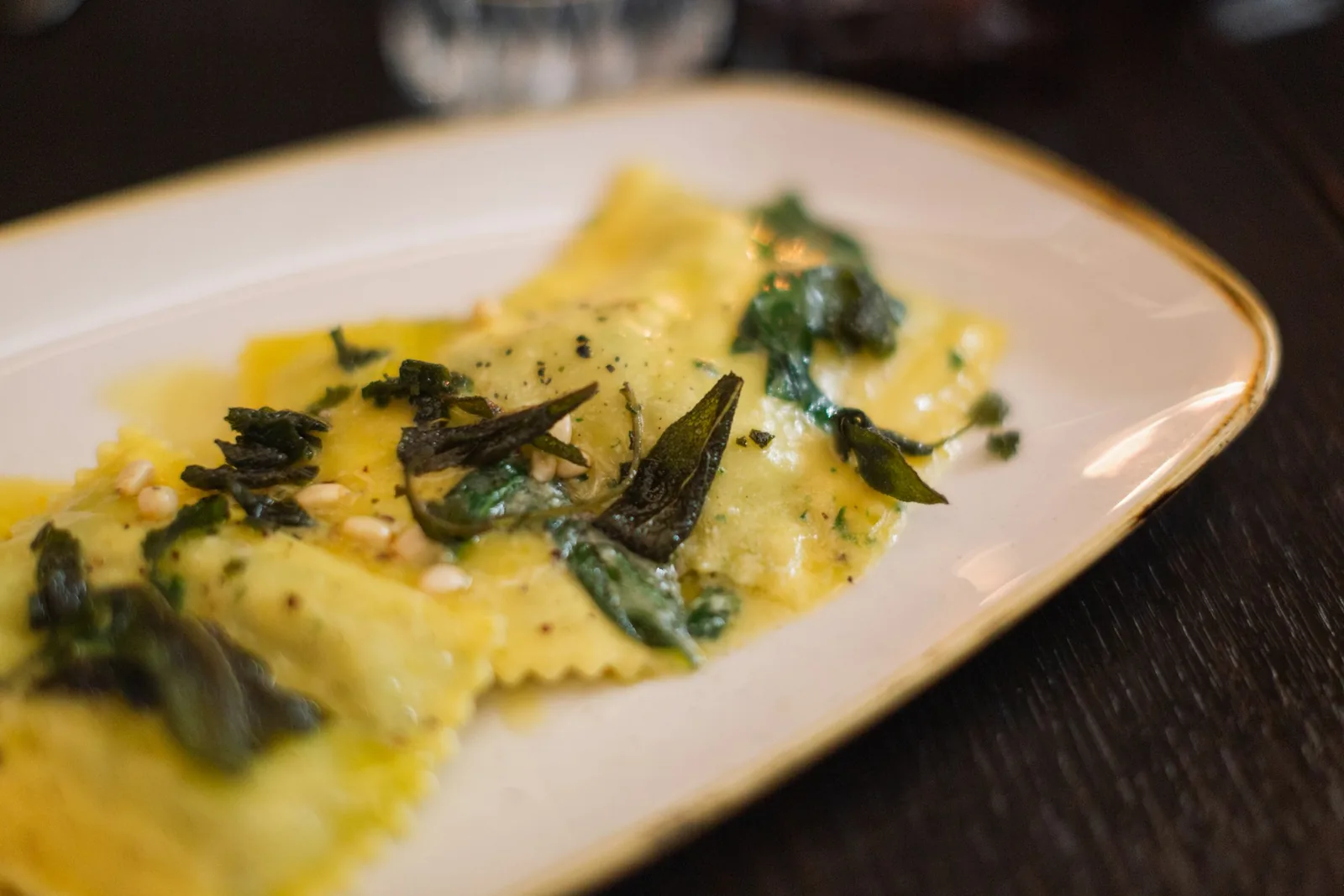
In ravioli the pasta is a wrapper. Each piece is sealed, so the filling stays separate from the sauce and you taste them in sequence rather than together.
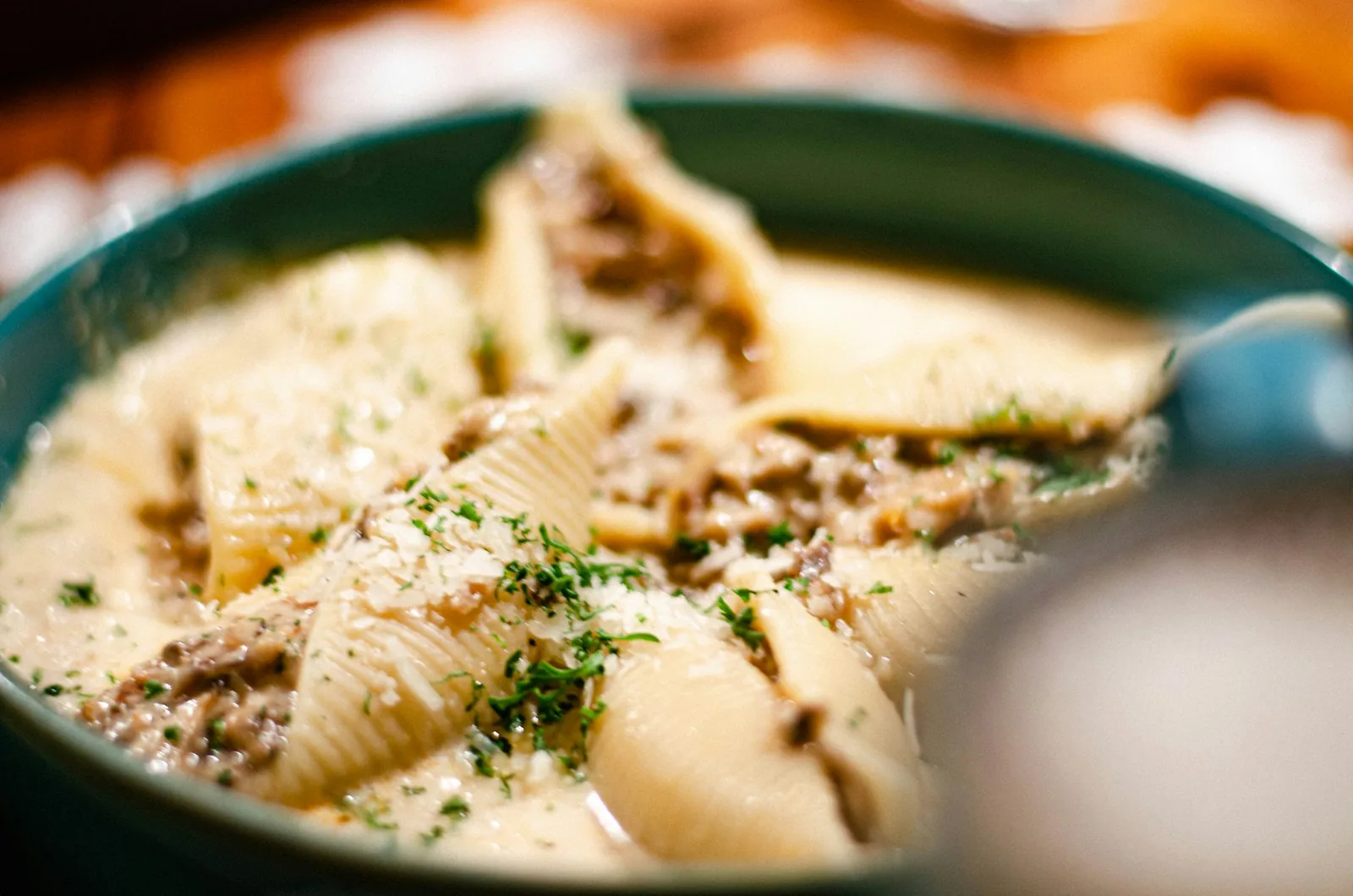
Stuffed shells are open at one end. Sauce gets into the opening and cheese browns where it meets the top, so each shell has a soft interior and a caramelised edge.
Ziti has no filling at all. Everything is mixed before baking, so every forkful is the same — which is either the appeal or the drawback depending on what you want.
Ravioli
The most delicate of the three, and the one most easily overwhelmed. Because each parcel is sealed, a heavy sauce sits outside it rather than combining with it.
That is why ravioli is usually served in a lighter sauce than the other two, and why it tends to arrive as a plated dish rather than a baked one.
Stuffed shells
The richest of the three. A large shell holds a substantial amount of ricotta, and there are usually only a handful on a plate, so each one is a mouthful of filling.
Baked under sauce and cheese, the tops brown while the insides stay soft. The contrast between a browned edge and a creamy centre is the whole point.
Ziti
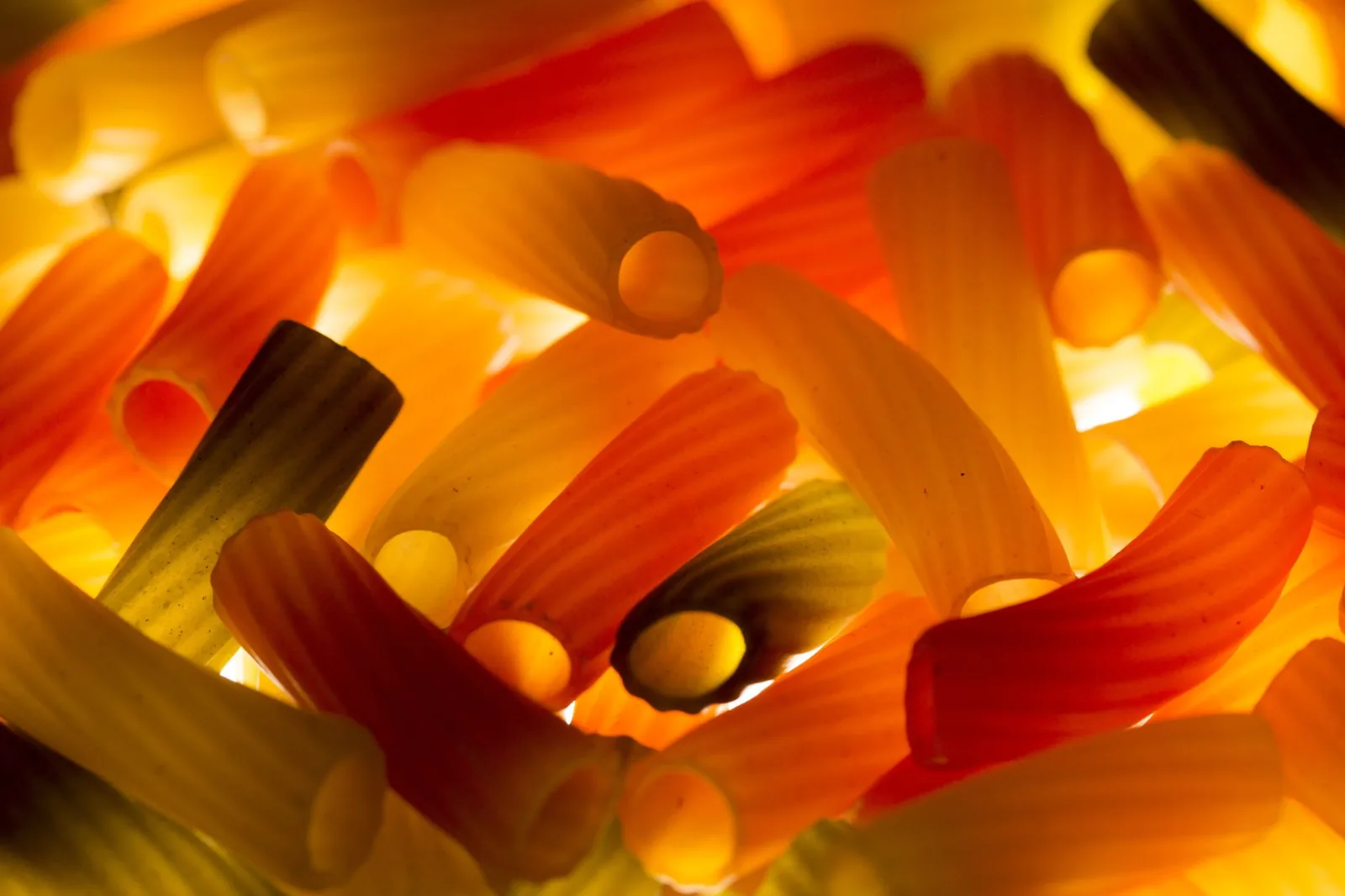
The most forgiving and the most shareable. Tubes, sauce, cheese, baked together until the top sets and the edges catch.
Because everything is combined, ziti holds heat well, portions easily and travels better than either of the others. It is the one to order for a table or to take home.
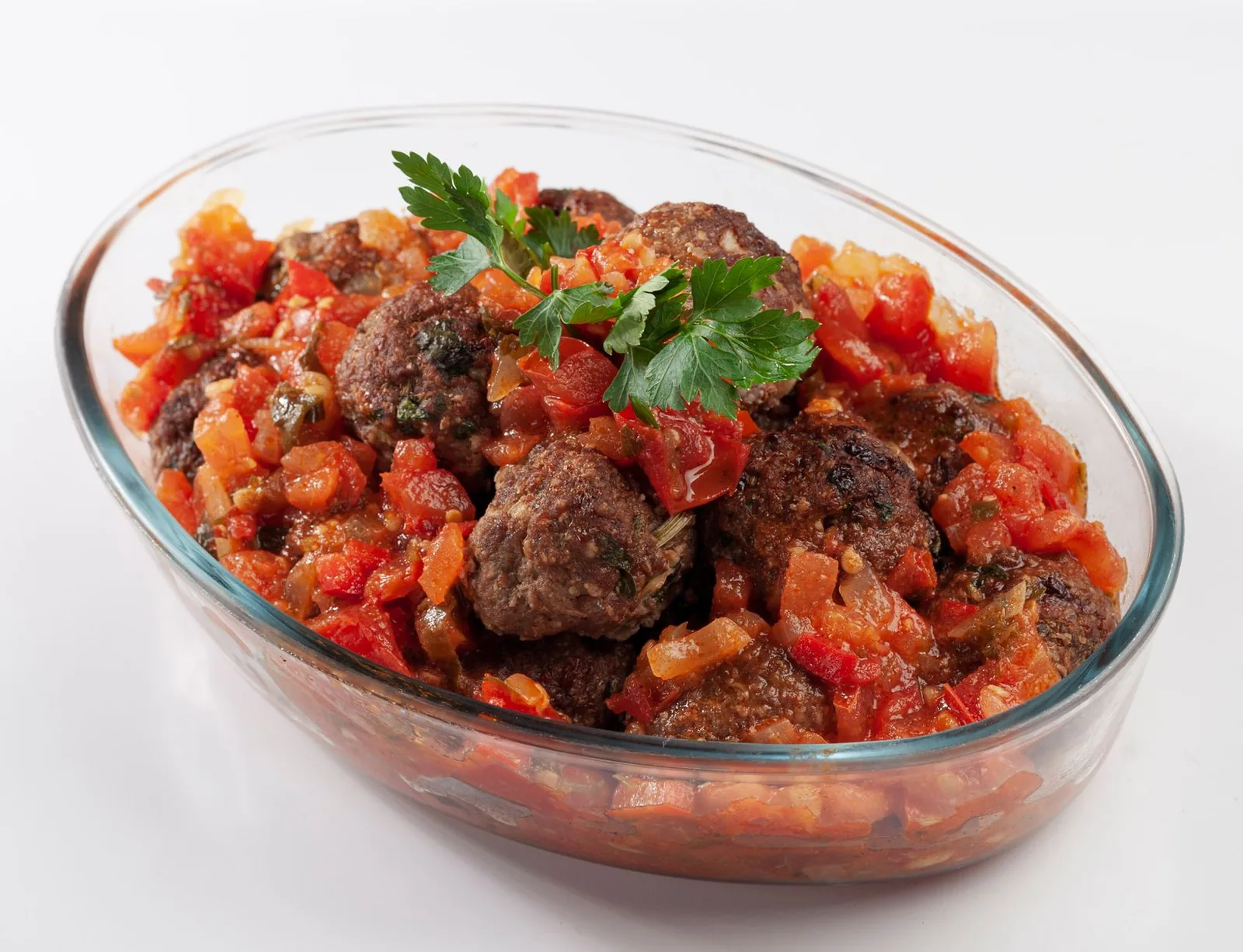
Ray’s serves it as Ziti & Meatballs, which changes it again — meatballs bring salt and fat that plain baked ziti does not have on its own.
That combination is worth understanding as a choice rather than a garnish. Baked ziti on its own is a cheese-and-tomato dish; the pasta and the sauce are doing all the work and the result is comforting but fairly one-note. Adding meatballs turns it into two dishes sharing a plate, with something to cut against the softness.
It is also the practical reason ziti portions look larger than the other two. The pasta is the base rather than the whole dish, so there is more of it.
The ricotta question
This is what actually decides which of these you will prefer, and menus never put it plainly.
Ravioli and stuffed shells are both ricotta dishes. If you like that soft, mild, slightly sweet cheese, they are the ones for you. If you find ricotta bland or claggy, both will disappoint however good the sauce is.
Ziti is not a ricotta dish in the same way. The cheese is mozzarella melted through and browned on top, which is a completely different texture and a much more familiar one.
How each one travels
Most pizzeria pasta leaves the building, and the three behave quite differently on the way home.
Ziti travels best. It is dense, everything is already combined, and it holds heat longer than the other two because there is more mass per portion. It also reheats without changing much.
Stuffed shells travel reasonably well but suffer at the edges. The browned tops that make them good in the restaurant are the first thing to soften in a closed container, and the filling can dry if it is reheated too hard.
Ravioli is the weakest traveller. Thin pasta parcels sitting in sauce keep absorbing it, so what was neat and distinct when it left becomes soft and uniform twenty minutes later. It is the one to eat at the table.
If it is going home, ziti is the safe order. If you are eating in, that consideration disappears and you can pick on taste.
Which to order
- Ravioli if you want something neat and relatively light, or you are eating it at the table rather than taking it home.
- Stuffed shells if you want the richest of the three and you like ricotta.
- Ziti if you are sharing, taking it home, or feeding someone unpredictable.
All three come with bread and butter at Ray’s, which is worth factoring in — a pasta dinner plus bread is a substantial meal, and it changes how much else you need. Our guide to what to order alongside covers that.
Pizza Questions, Answered.
What is the difference between stuffed shells and manicotti?
Both are filled with ricotta and baked, but manicotti are straight tubes and shells are curved and open at one end, which changes how much sauce reaches the filling.
Is baked ziti the same as lasagna?
No. Lasagna is built in layers with flat sheets; ziti is tubes mixed through sauce and cheese. Lasagna holds a slice, ziti is spooned.
Which reheats best?
Ziti, comfortably. Everything is combined, so it warms through evenly. Ravioli can go rubbery and shells dry out at the edges.
Do these dishes come with bread?
At Ray’s, bread and butter are included with dinners. Worth knowing before you order a side as well.
The short version
Filling sealed inside, filling piped in, or no filling at all. Ravioli is the lightest, shells are the richest, ziti is the one that shares and travels.
All three are on the Ray’s menu under Dinners, open daily 10:30am to 9:00pm.
Ray’s Pizza Team
Ray’s Pizza & Sub Shop is a neighborhood pizzeria at 95 Woodstown Rd, Swedesboro, New Jersey, serving pizza, stromboli, hot and cold subs and dinners seven days a week from 10:30am to 9:00pm. These guides are written by the people behind the counter.
Visit Ray’sMore From Ray’s