What Makes a Good Burger
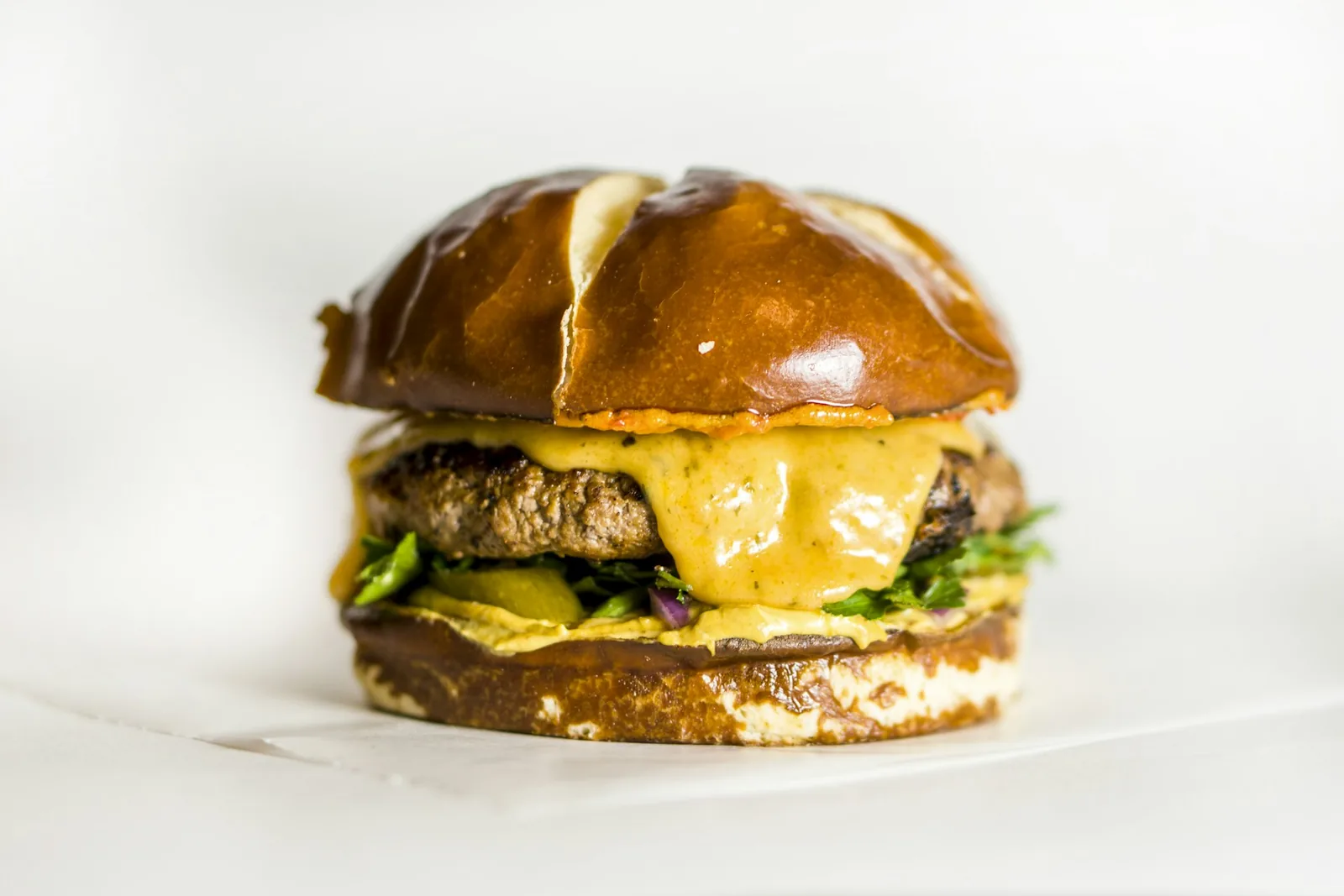
Fat content, a properly hot surface, and not pressing it. Three things decide a burger, and two of them are settled before the meat touches any heat.
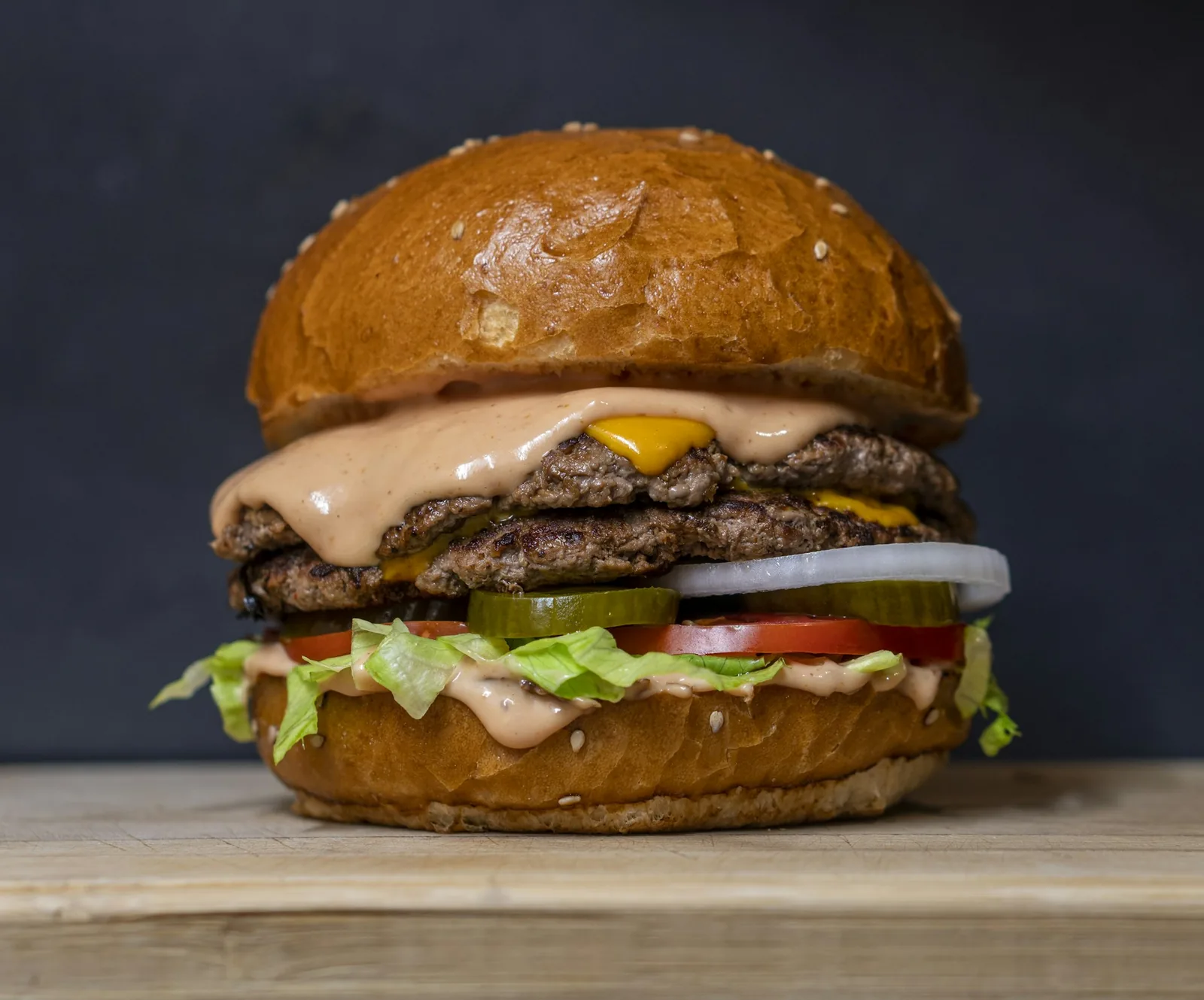
A dry burger is not overcooked so much as under-fatted. The single most reliable predictor of whether a burger is good is how much fat is in the grind, and it is decided long before anything is cooked.
The second is what happens on the heat — specifically whether anyone presses the patty with a spatula, which is the most common and most damaging thing done to a burger anywhere.
| Factor | Gets it right | Gets it wrong |
|---|---|---|
| Fat in the grind | Around a fifth by weight | Very lean mince |
| Handling | Formed loosely | Compacted like clay |
| The surface | Properly hot before it lands | Warm, so it steams |
| Spatula | Left alone | Pressed down |
| After cooking | Rested a minute | Straight into the bun |
Fat is the whole thing
Beef mince sold as very lean makes a poor burger, and no amount of care in the cooking rescues it.
Fat does three separate jobs. It carries flavour, most of which is fat-soluble. It keeps the patty moist as the muscle fibres contract and squeeze out water. And it renders onto the hot surface, which is what produces the browned crust.
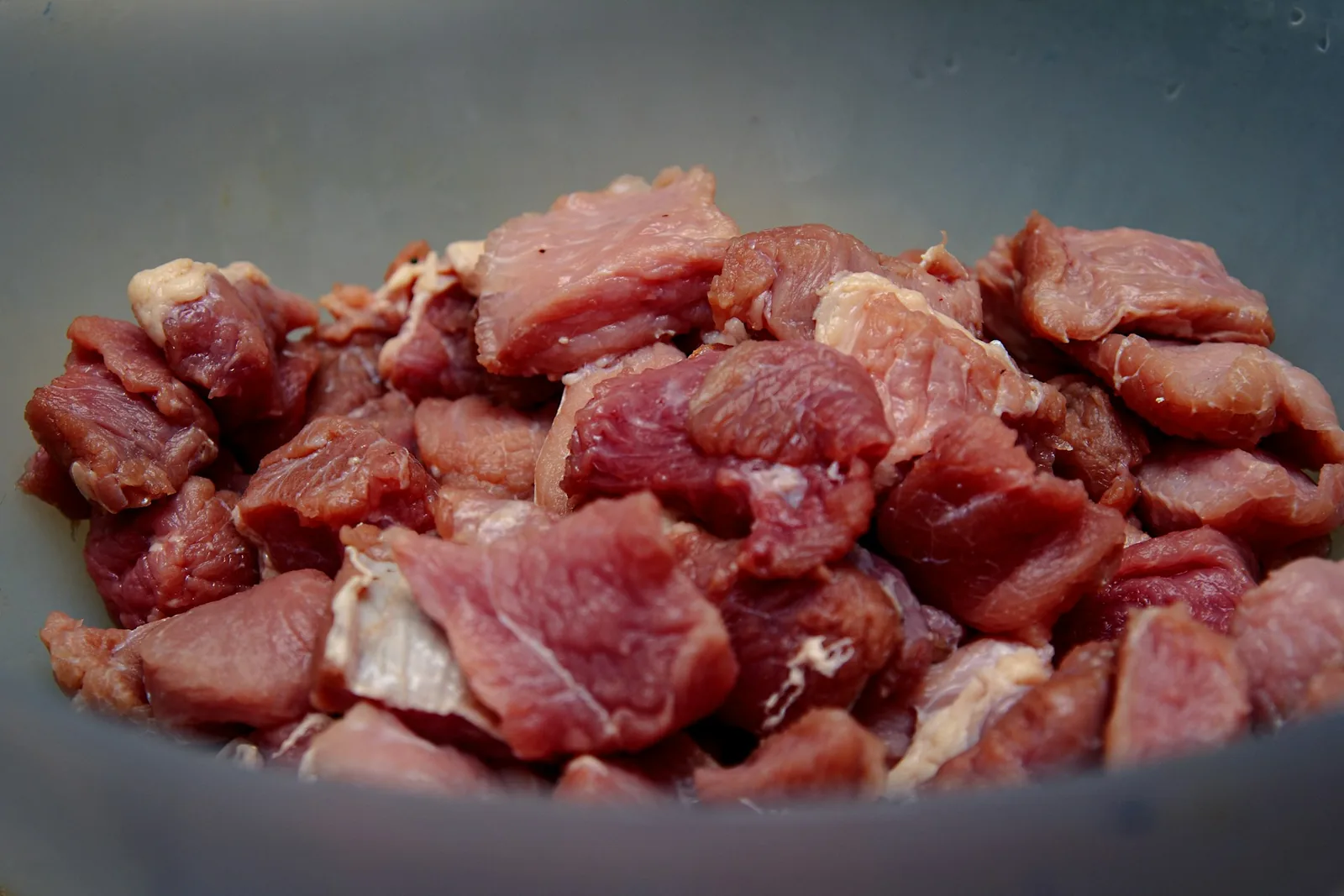
Roughly a fifth fat by weight is the widely used benchmark. Below about a tenth you are cooking something that will be dry however briefly it is on the heat, because there is nothing there to keep it moist.
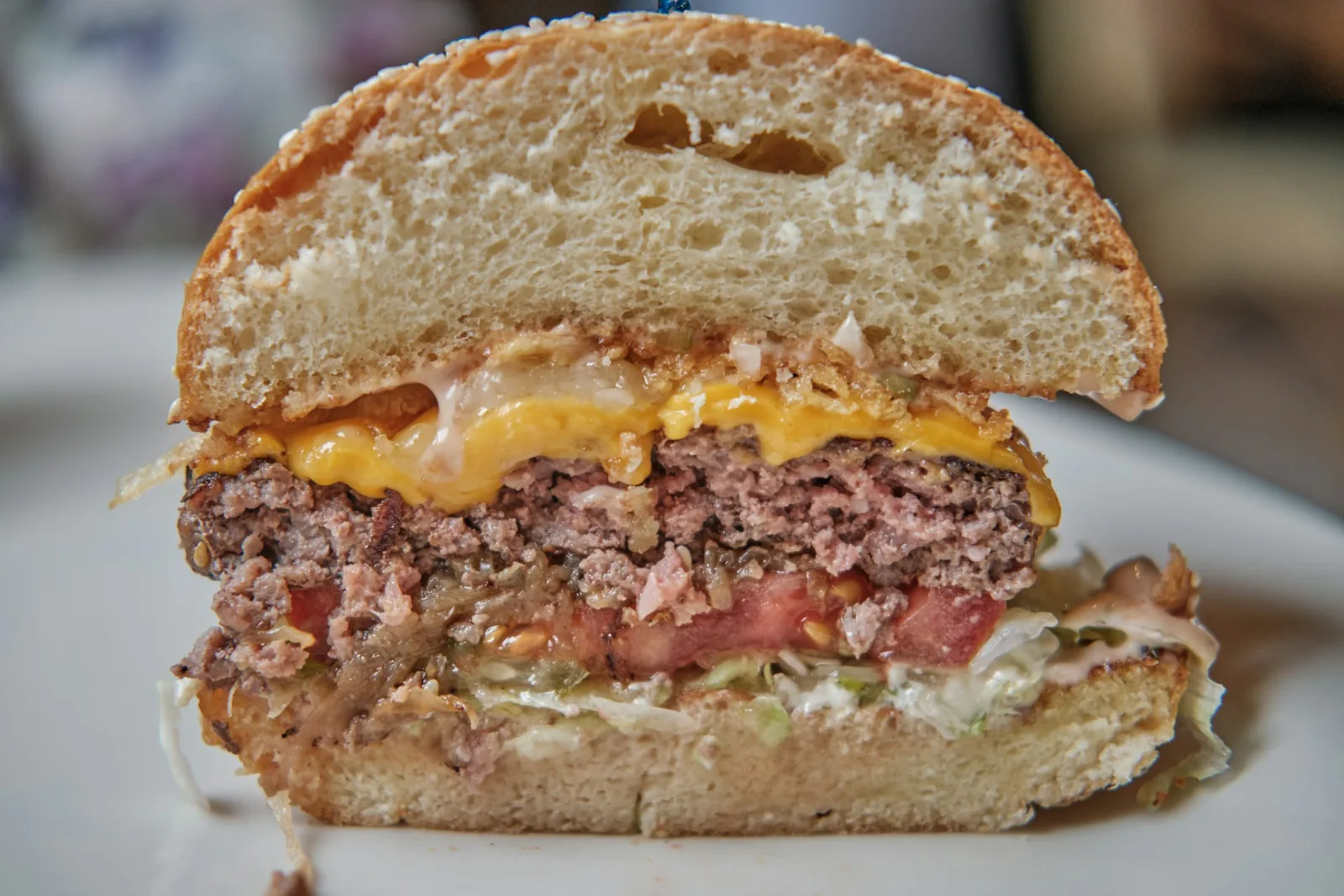
Never press it
The spatula press — leaning on the patty so it sizzles dramatically — is doing exactly one thing: forcing out the rendered fat and juice you just spent time developing.
That sizzle is the sound of the burger getting worse. Everything that hits the surface and burns off is moisture that will not be in the meat when you eat it.
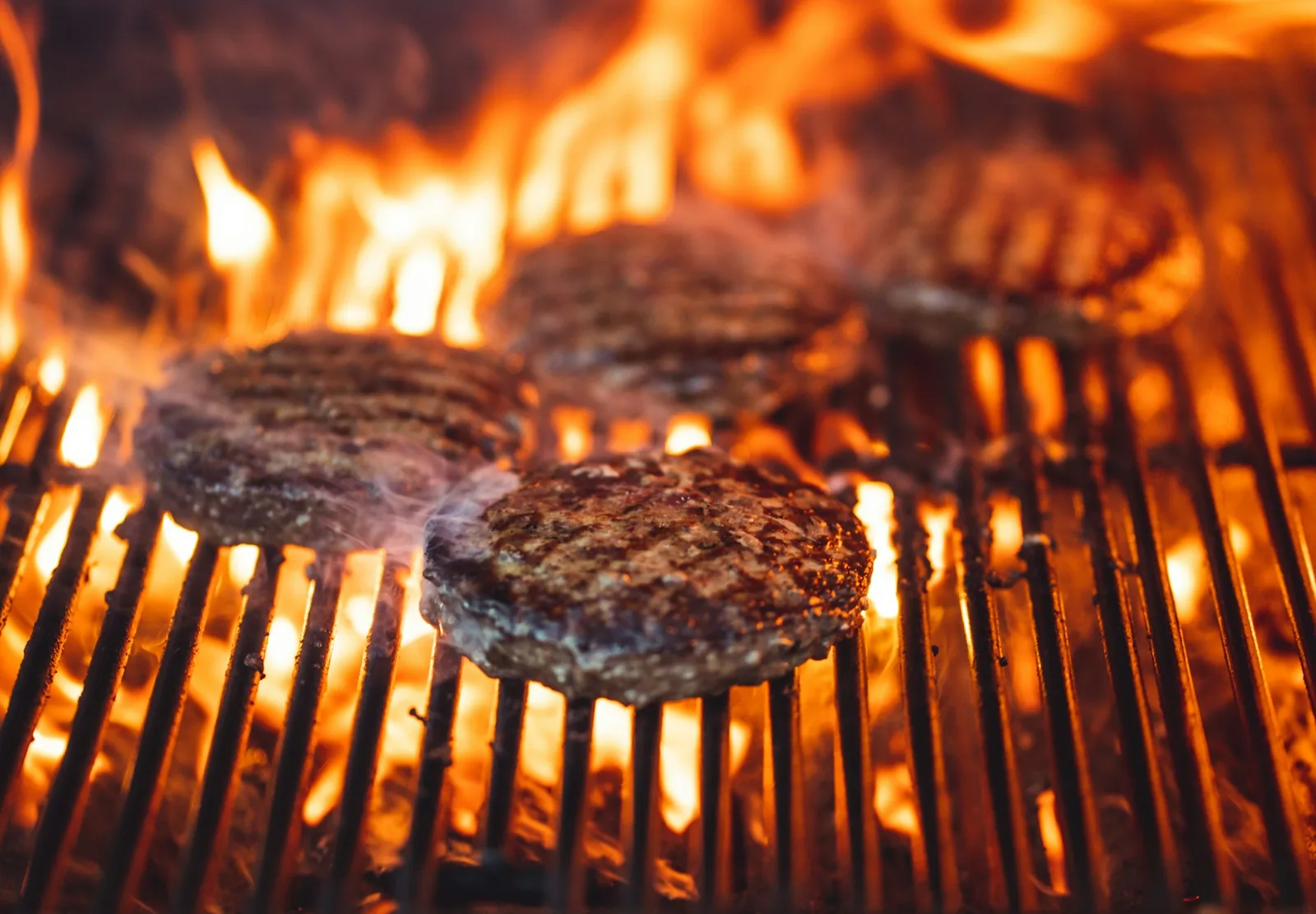
The related mistake happens earlier, at forming. A patty worked and compacted like modelling clay ends up dense and springy. Formed loosely, just enough to hold together, it stays tender — the meat should barely be persuaded into shape.
Heat, and which kind
The surface has to be properly hot before the meat lands. On a moderate heat the patty releases moisture faster than it browns, and it steams in its own liquid instead of searing — grey rather than brown, and no crust.
The two common surfaces do genuinely different things:
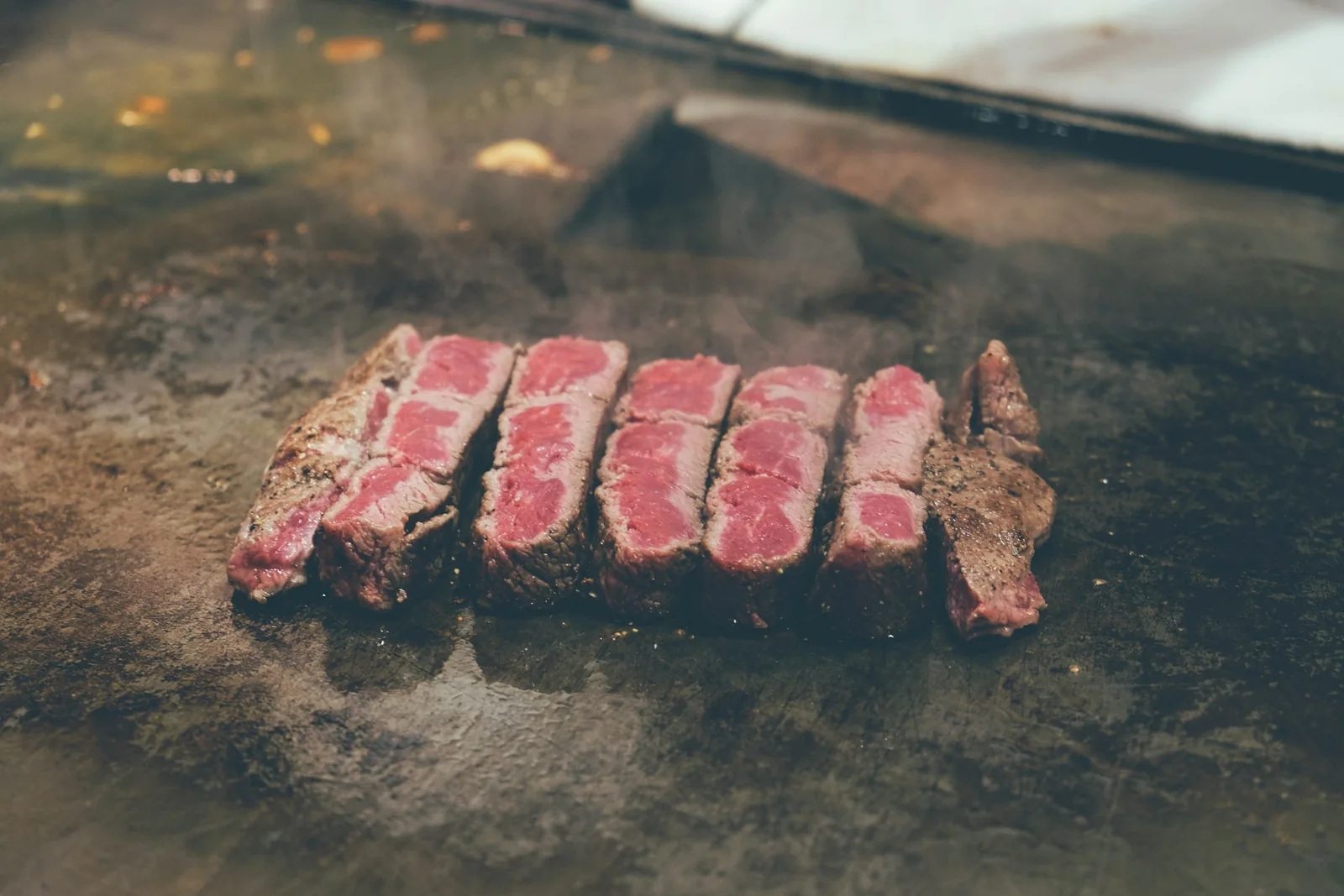
A flat griddle gives full contact across the whole face of the patty, so the entire surface browns. This is the same advantage that makes a pizzeria griddle good for cheese steaks — it is hot, flat, and already at temperature.
An open grill gives contact only along the bars, so you get strong char lines and less browning between them, plus smoke from fat dripping onto the heat. More aroma, less crust.
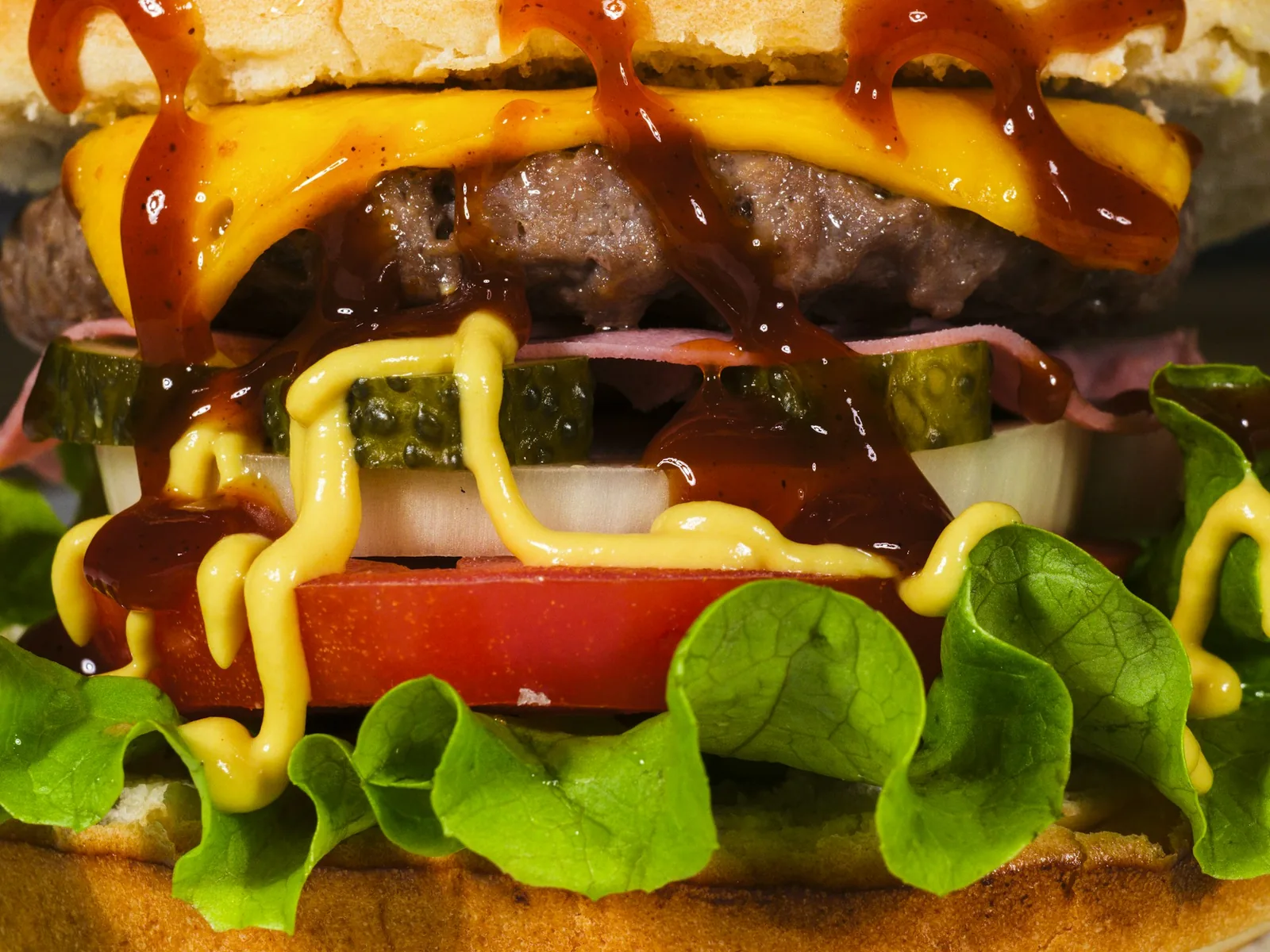
Neither is better. Griddle gives you crust; grill gives you smoke. Knowing which one a kitchen uses tells you what to expect.
Smash or thick
This is a real fork in the road rather than a trend, and the two are pursuing opposite goals.
Smash means a ball of loose mince pressed thin onto a very hot surface once, at the start, and never again. Maximum contact area means maximum crust. It cooks through in a minute or two, so there is no pink middle — the entire point is the browned surface.
Thick means a substantial patty cooked more gently, aiming for a juicy interior with some pink. Less crust, more meat texture.
Note the contradiction: pressing is the entire technique in one and the cardinal sin in the other. The difference is when. Pressing raw mince once, before any juice has developed, sets the shape. Pressing a cooking patty squeezes out juice that already exists.
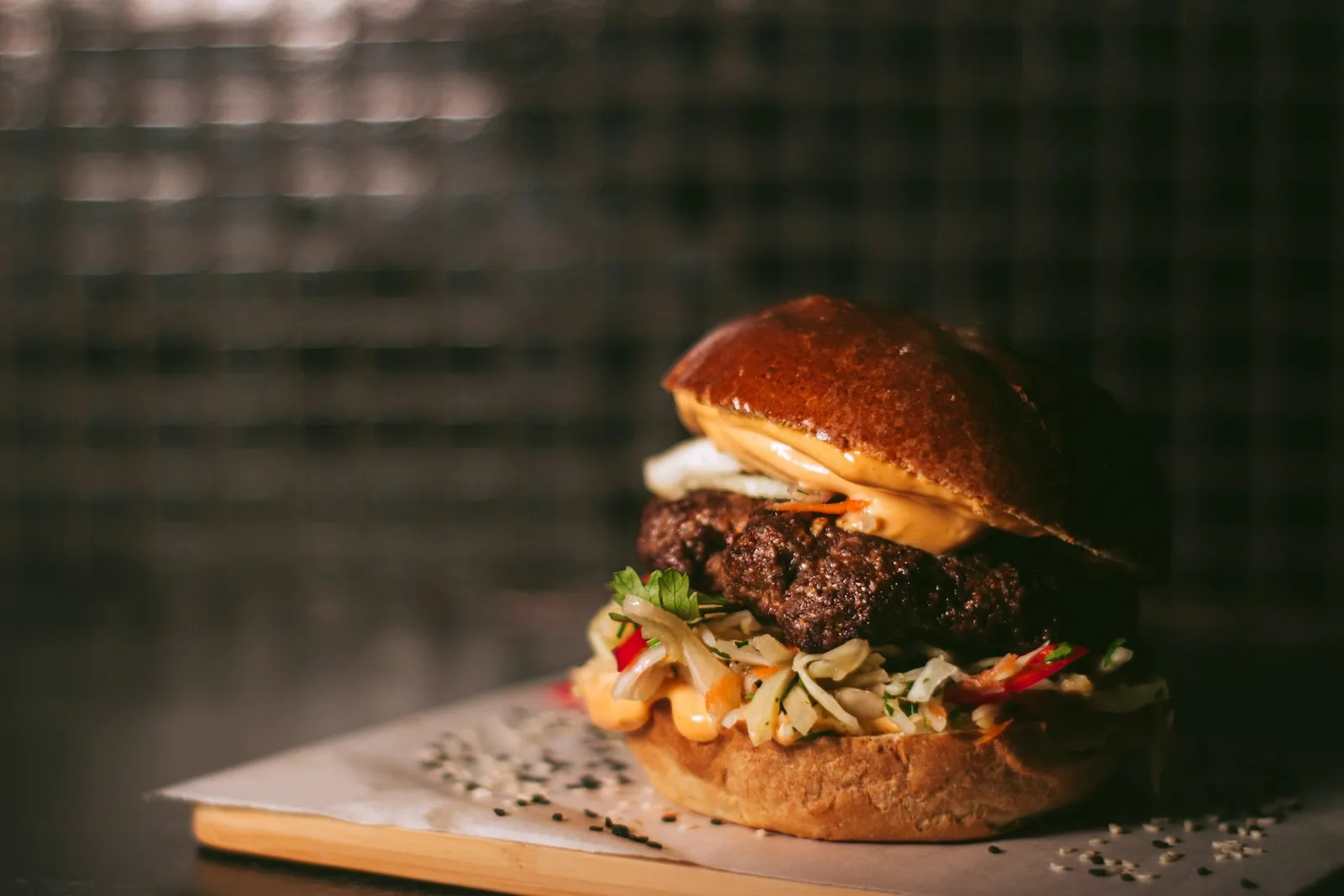
This also explains double burgers. Two thin patties have twice the browned surface of one thick patty of the same weight, which is why they often taste more strongly of beef.
Building around it
The patty is most of the burger, but the assembly can still undo it.
- The bun should be soft and slightly sweet, and toasted on the cut faces. Toasting is a moisture barrier, exactly as it is on a meatball sub.
- Cheese goes on during cooking, not after. Residual heat alone does not melt it properly.
- Salad goes under the patty where it is not being wilted from above.
- Sauce on the bun, not on the meat, so it does not slide off.
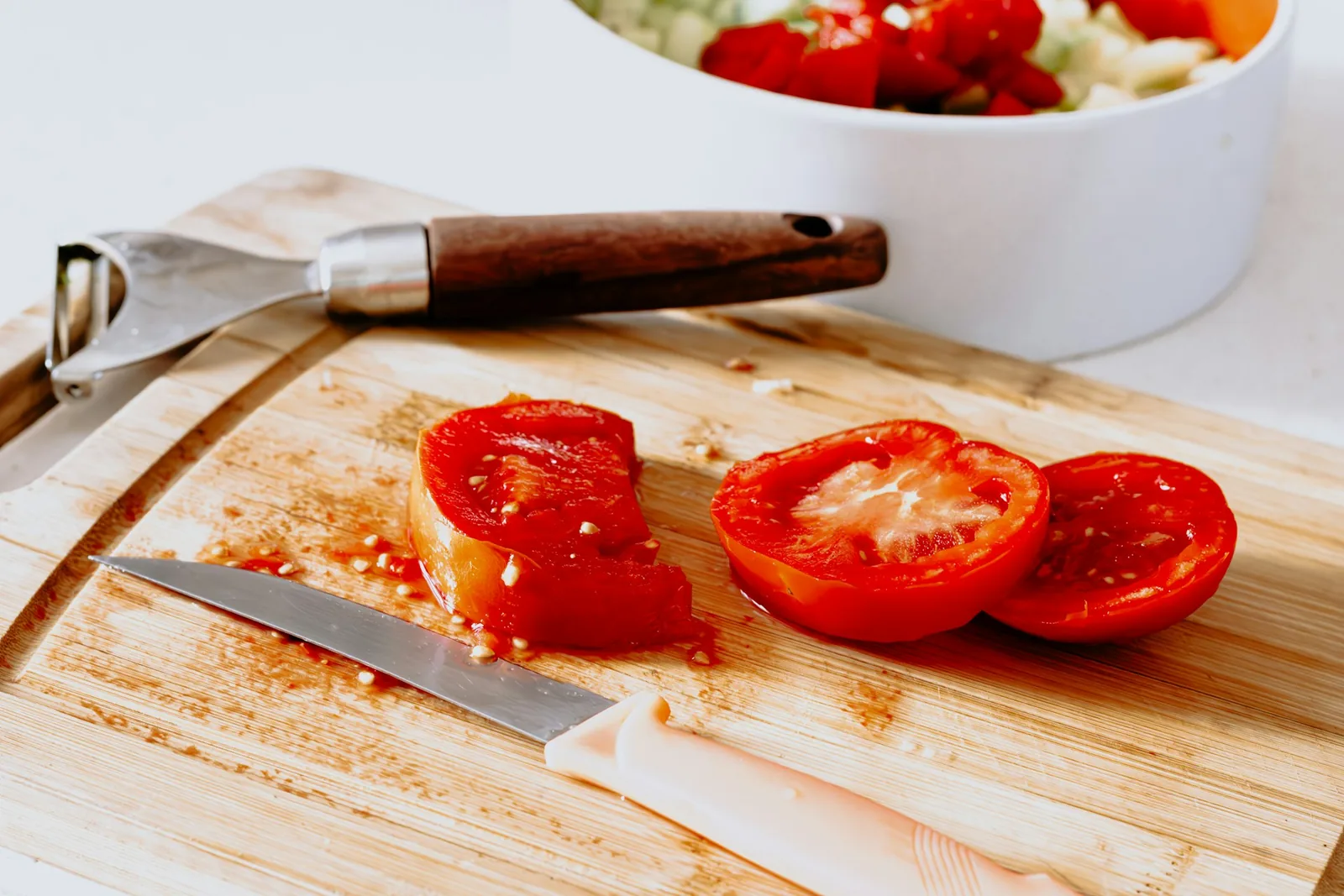
Resting matters too, and takes a minute. A patty cut or bitten straight off the heat loses juice that has been driven toward the centre; given a moment it redistributes. The same principle applies to griddled chicken.
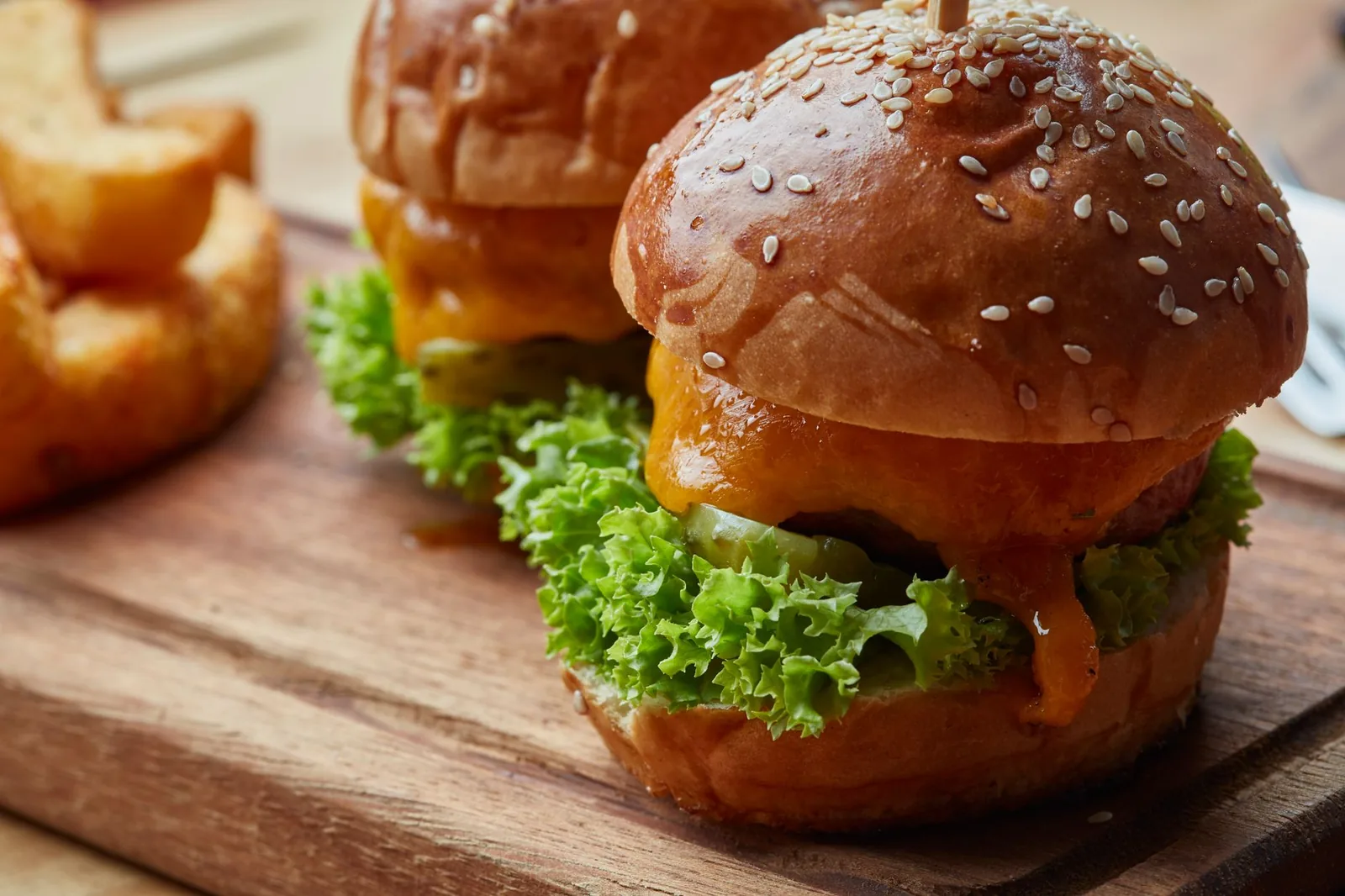
Ray’s carries a burger range and is open daily 10:30am to 9:00pm.
Pizza Questions, Answered.
What fat percentage makes the best burger?
Around a fifth fat by weight is the common benchmark. Very lean mince produces a dry burger no matter how carefully it is cooked.
Why should you not press a burger patty?
Pressing forces out rendered fat and juice, which is exactly what keeps the burger moist. The sizzle is moisture leaving the meat.
What is the difference between a smash burger and a thick burger?
A smash burger is pressed thin once onto a very hot surface for maximum crust and cooks through. A thick patty is cooked more gently for a juicier interior and less crust.
Should a burger rest before eating?
A minute helps. Juice driven toward the centre during cooking redistributes, so less of it ends up in the bun.
The short version
Enough fat in the grind, formed loosely, onto a surface that is properly hot, and then left alone. Cheese on while it cooks, a minute of rest, and a toasted bun. Nothing else about a burger matters nearly as much.
The Ray’s menu is open daily 10:30am to 9:00pm.
Ray’s Pizza Team
Ray’s Pizza & Sub Shop is a neighborhood pizzeria at 95 Woodstown Rd, Swedesboro, New Jersey, serving pizza, stromboli, hot and cold subs and dinners seven days a week from 10:30am to 9:00pm. These guides are written by the people behind the counter.
Visit Ray’sMore From Ray’s