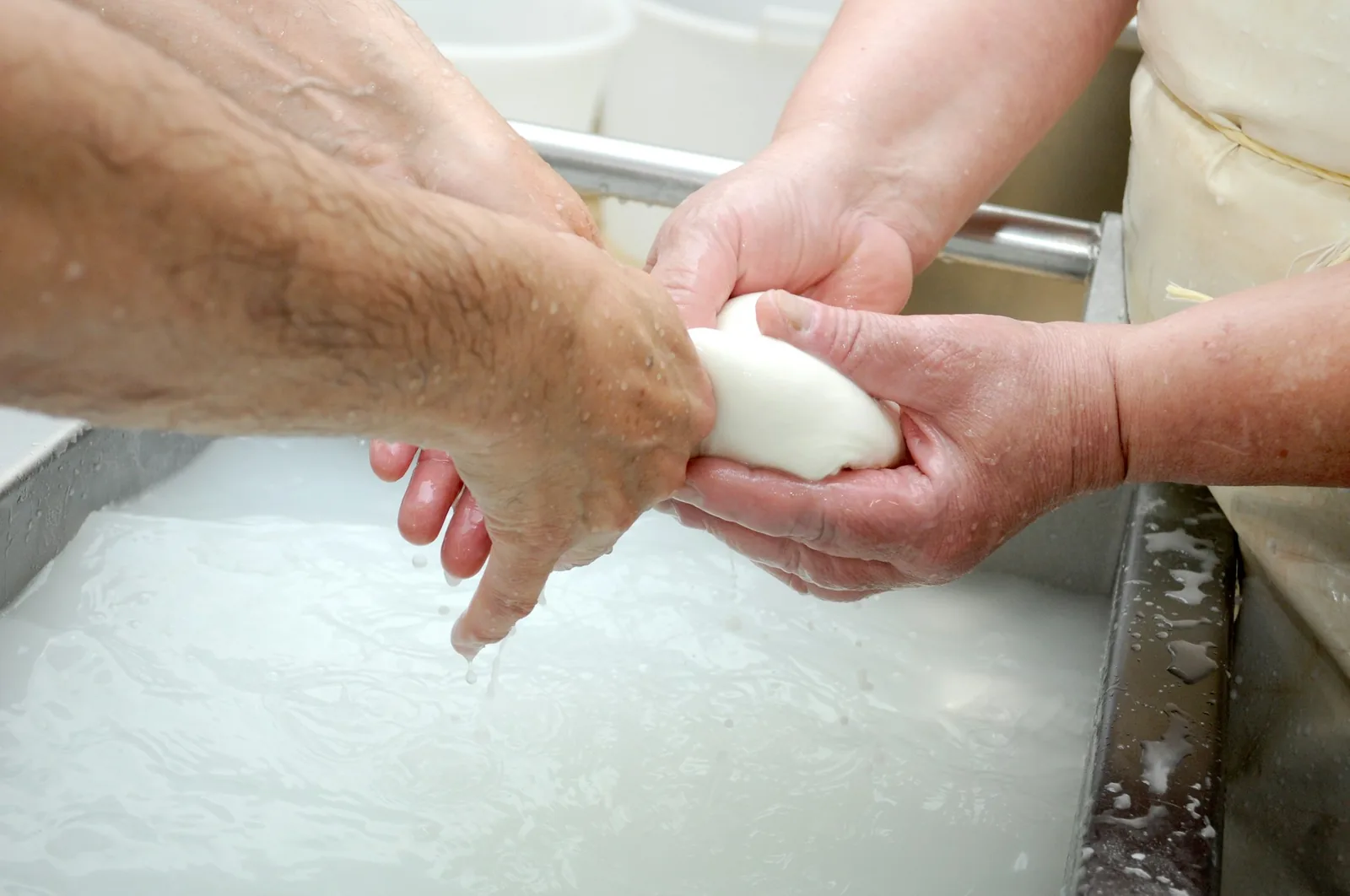
Pizza Dough, Explained
Flour, water, salt and yeast. The variable that matters most is not an ingredient at all – it is time.
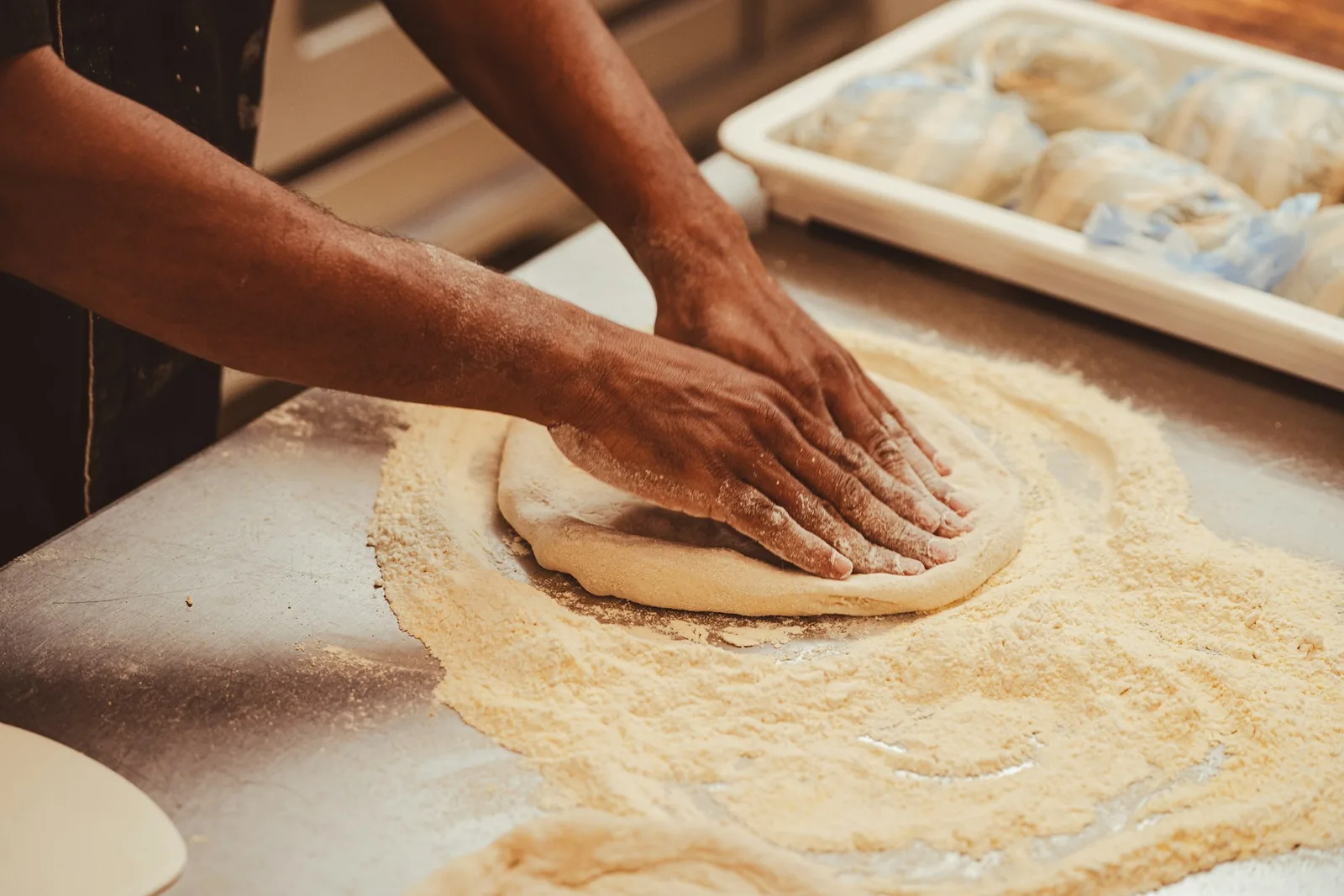
Pizza dough is four ingredients. Flour provides structure, water activates it, salt controls both flavour and fermentation, and yeast produces the gas that makes it rise.
Get the proportions roughly right and you have dough. What separates good dough from ordinary dough is almost entirely how long it is left alone.
| Ingredient | What it does | Too much |
|---|---|---|
| Flour | Builds gluten structure | Dense, tough |
| Water | Hydrates flour, opens crumb | Slack, hard to handle |
| Salt | Flavour, slows fermentation | Yeast stalls |
| Yeast | Produces gas and lift | Fast rise, thin flavour |
| Time | Develops flavour and texture | Dough collapses |
The four ingredients
Flour contains proteins that form gluten when wet and worked. Gluten is the elastic network that traps gas, and it is why dough stretches instead of tearing. Higher-protein bread flour builds more of it than plain flour.
Water hydrates the flour so gluten can form at all, and turns to steam in the oven, which is what puffs the rim.
Salt does two jobs. It seasons — unsalted dough tastes flat and papery — and it slows yeast down, which is useful because a slower rise makes better flavour.
Yeast eats sugars in the flour and gives off carbon dioxide and alcohol. The gas inflates the dough. The by-products are most of the flavour.
Water changes everything
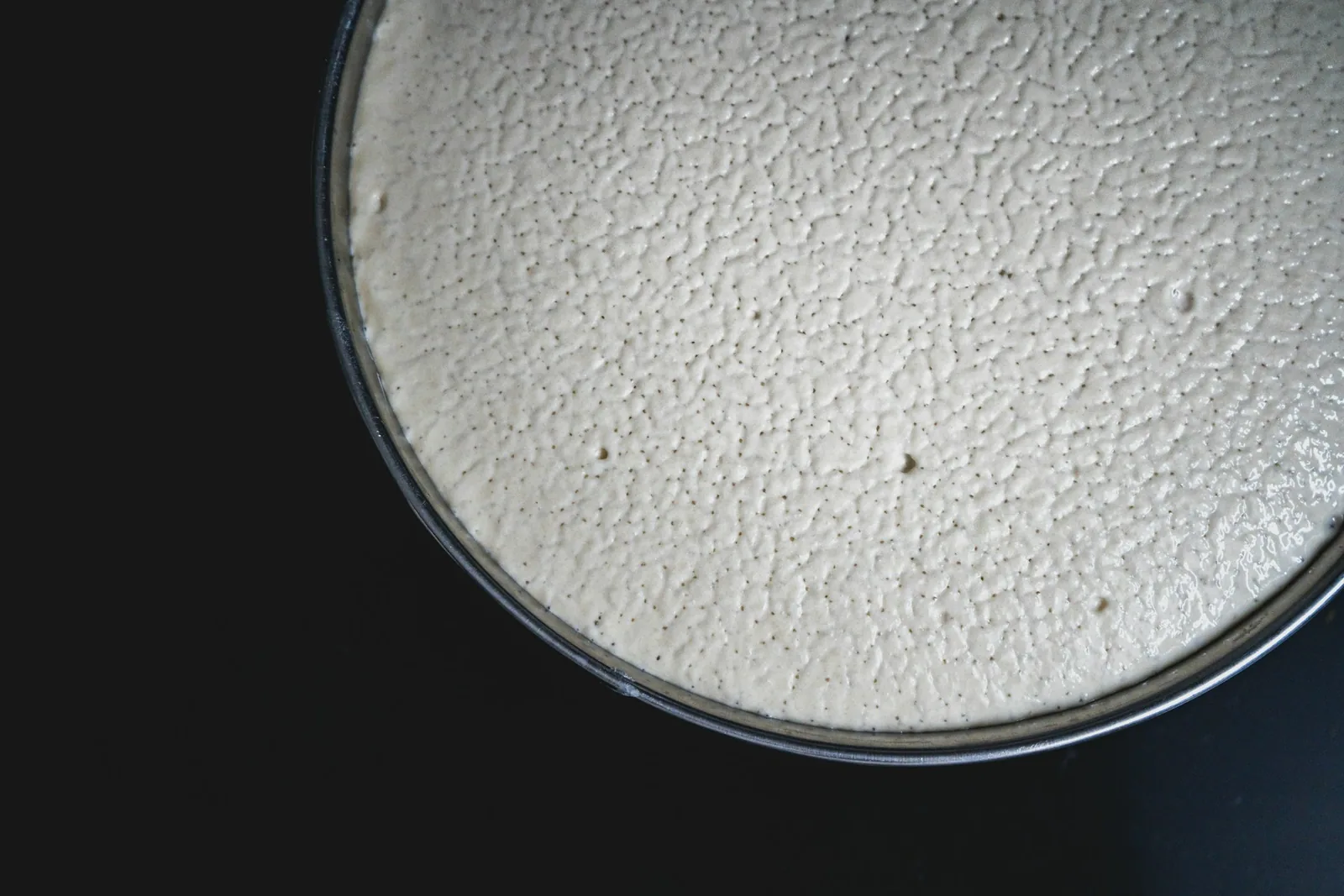
The ratio of water to flour is called hydration, and it is the single biggest lever on what the finished crust is like.
Less water gives a stiffer dough, a tighter crumb and a crust that crisps readily. That is thin-crust territory. More water gives a slack, sticky dough that bakes into an open, airy, chewy crumb with big irregular holes.
Wetter dough is harder to handle and needs a hotter oven. That is the trade-off, and it is why very wet doughs belong to styles baked in seconds rather than minutes.
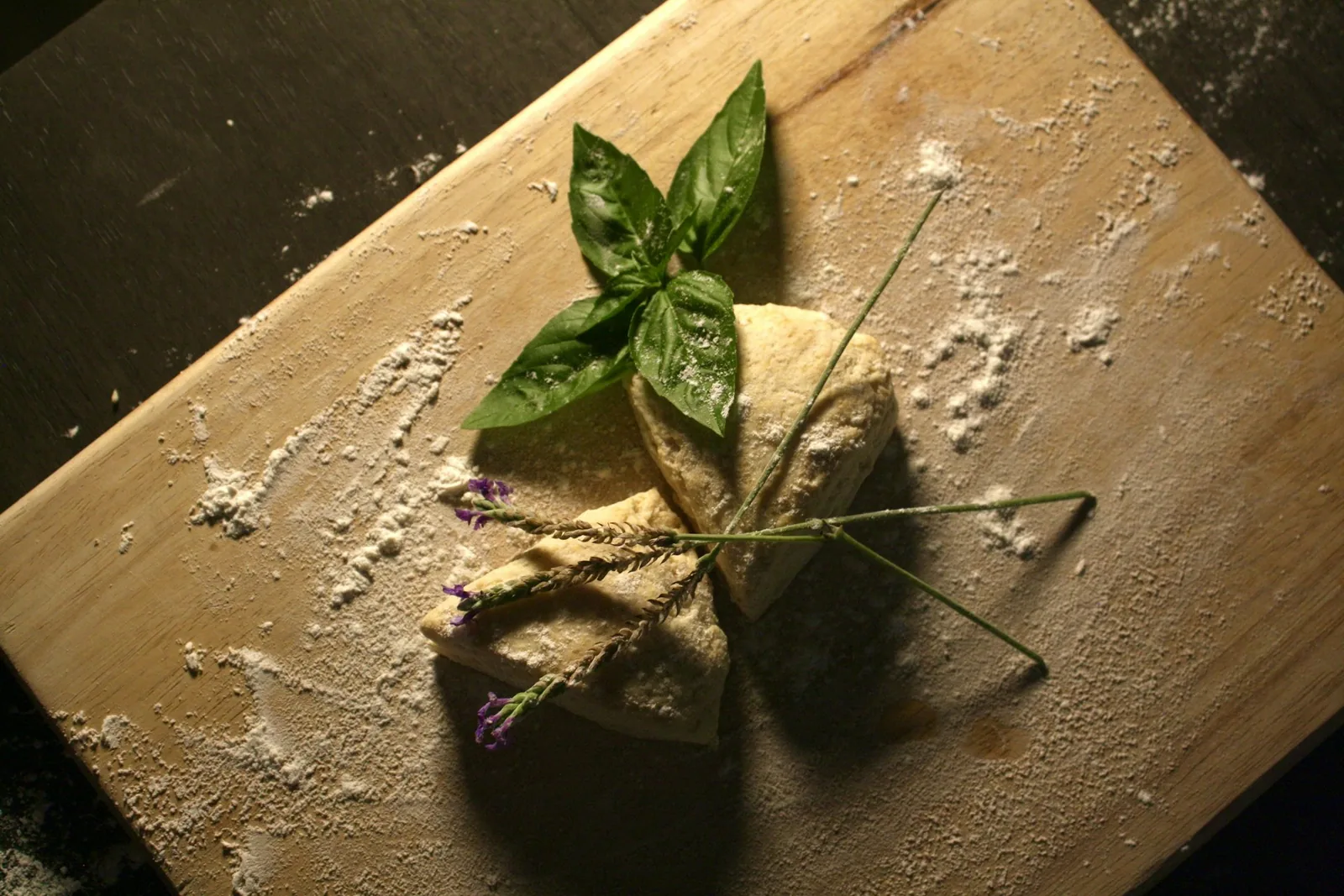
Why time matters more than technique
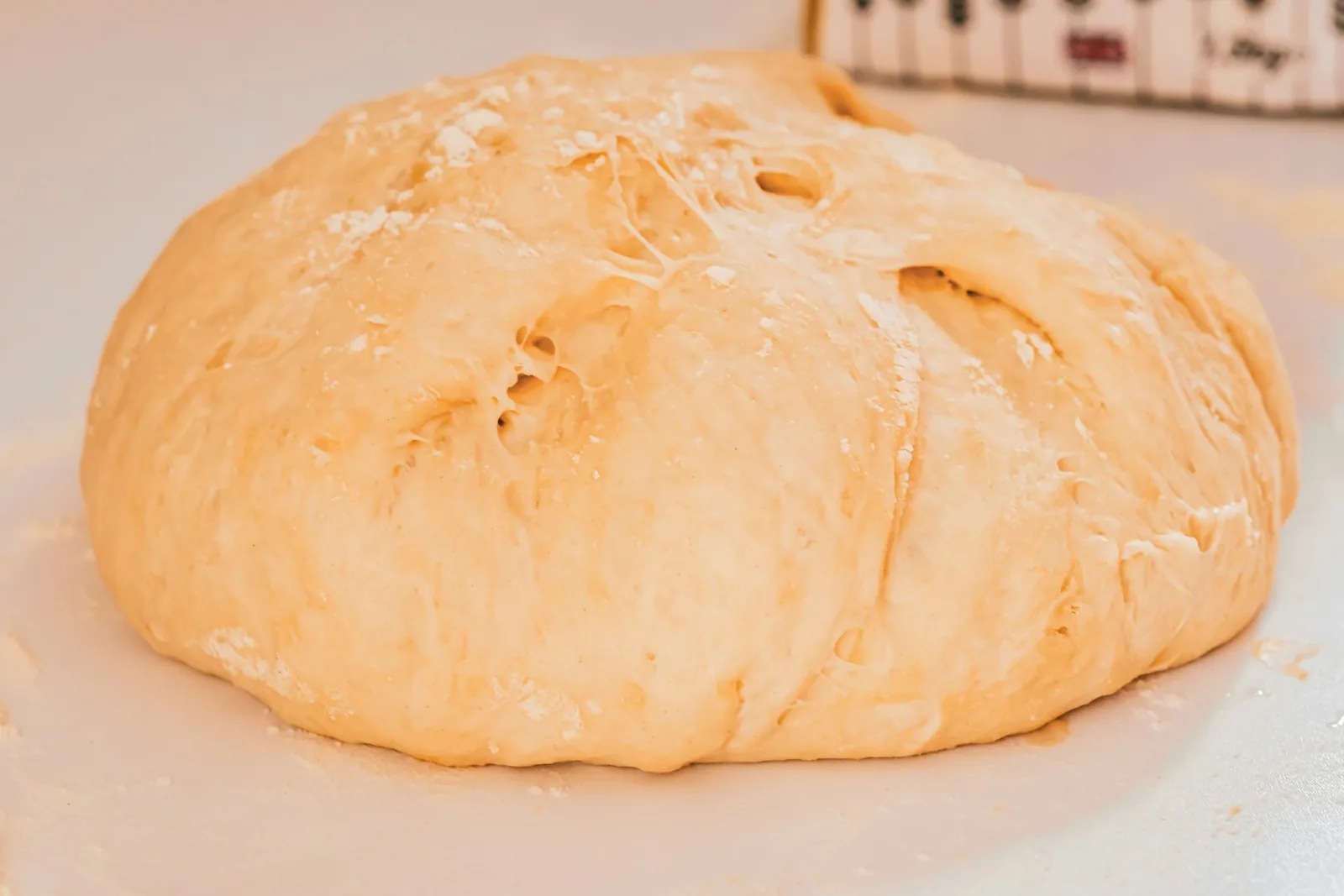
Dough left to ferment for a day or two in a cold fridge tastes noticeably better than dough proved in an hour on a warm counter. This is the difference most home bakers never make, and it costs nothing.
Slow fermentation gives enzymes time to break starch into simpler sugars and lets the yeast produce a wider range of aromatic by-products. Fast dough rises just as much; it simply has no flavour in it yet.
Slow fermentation also improves handling. Gluten relaxes over time, so a long-fermented dough stretches instead of springing back.
What kneading actually does
Kneading aligns and develops the gluten network. Working the dough persuades tangled proteins to link into long, elastic strands, which is what lets it hold gas.
Under-kneaded dough tears when stretched and will not hold its shape. Over-kneaded dough — genuinely hard to achieve by hand — goes slack as the structure breaks down again.
Time substitutes for kneading. A dough left long enough develops much of the same structure on its own, which is the principle behind no-knead methods.
Proofing and shaping
Dough is usually divided into balls and given a second, shorter rest before shaping. That rest lets the gluten relax so the ball opens out without fighting back.
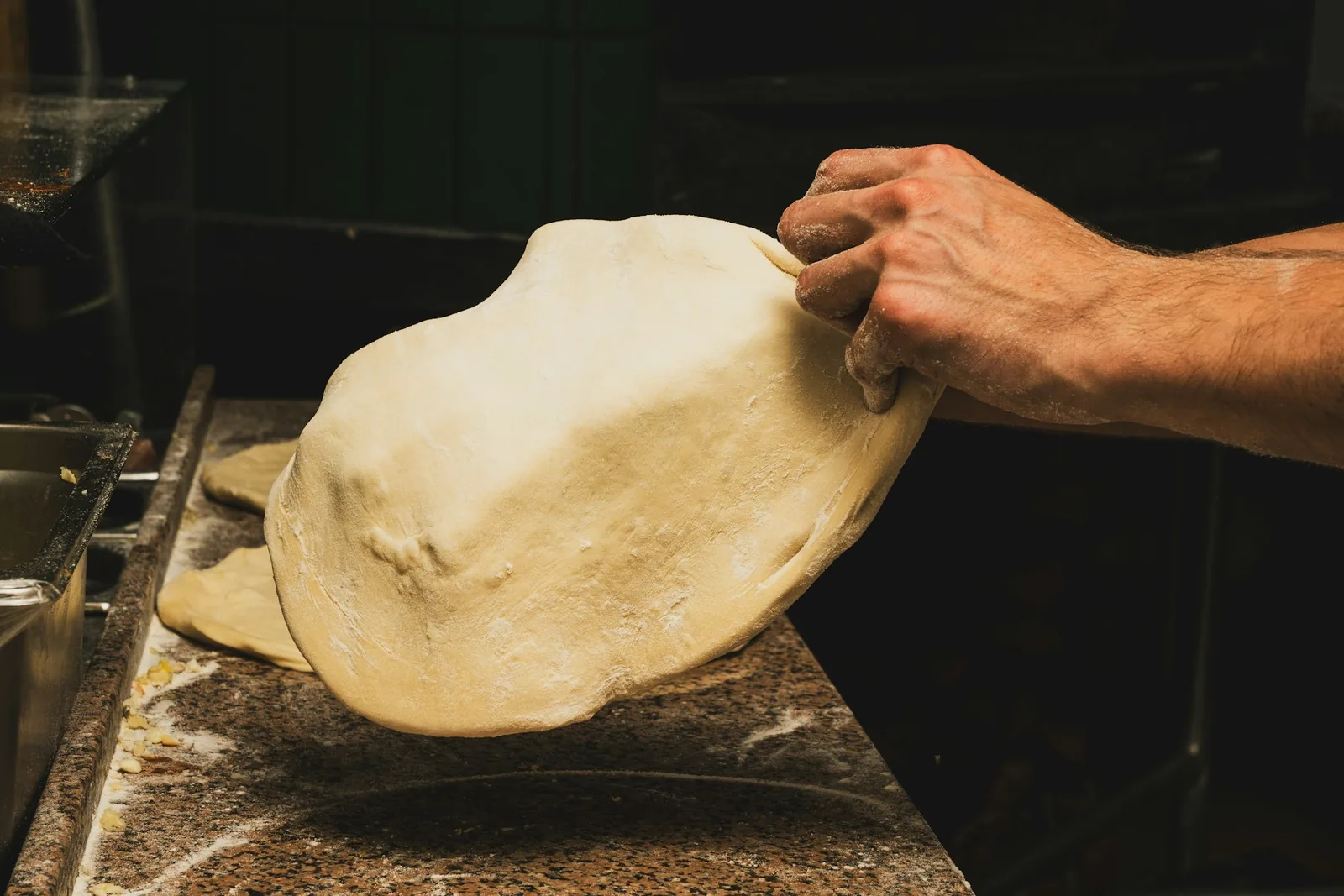
Shaping is where the rim is made. Pressing from the centre outwards pushes gas into the outer edge, which is why a hand-stretched base has a puffed border and a rolled one does not — rolling drives that gas out.
Why restaurant dough is different
A pizzeria has two advantages a home kitchen does not, and neither is skill.
The first is an oven that runs far hotter than a domestic one. Heat that intense sets the outside of the base before the inside can dry out, which is what produces a crust that is crisp underneath and soft within. A home oven at its maximum is usually a few hundred degrees short, so the base spends longer drying and ends up firmer throughout.
The second is volume. A shop making dough daily works on a schedule where every batch gets the same long, cold rest, because the next day’s dough was mixed yesterday as a matter of routine. At home that same discipline requires planning a day ahead, which is the step most people skip.
What usually goes wrong
- Not enough time. An hour on the counter makes bread-flavoured dough and nothing more.
- Too much flour on the bench. Working extra flour in dries the dough and toughens it.
- Rolling instead of stretching. A rolling pin removes the gas you spent a day creating.
- An oven that is not hot enough. Domestic ovens rarely reach pizzeria temperatures, so the base dries before it can spring.
Pizza Questions, Answered.
What flour is best for pizza dough?
A higher-protein bread flour builds more gluten and gives a chewier crust than plain flour. Finely milled Italian 00 flour is common in Neapolitan styles because it suits very hot, very short bakes.
How long should pizza dough rise?
Longer than most recipes suggest. A cold ferment of 24 to 72 hours develops far more flavour than a one-hour rise at room temperature.
Why is my pizza dough tough?
Usually too much flour worked in during shaping, or not enough resting time so the gluten never relaxed. Both make dough that fights back.
Can you freeze pizza dough?
Yes. Freeze it after the first rise, in portioned balls, and thaw in the fridge overnight before shaping.
The short version
Four ingredients, and time doing most of the work. Water content sets the texture, salt controls the pace, kneading builds the structure, and a long cold rest supplies the flavour.
What that dough becomes depends on how it is shaped and baked — our guide to crust styles covers where each one ends up, and what goes on top is its own question. The menu at Ray’s is open daily.


Ray’s Pizza Team
Ray’s Pizza & Sub Shop is a neighborhood pizzeria at 95 Woodstown Rd, Swedesboro, New Jersey, serving pizza, stromboli, hot and cold subs and dinners seven days a week from 10:30am to 9:00pm. These guides are written by the people behind the counter.
Visit Ray’sMore From Ray’s